

A one-page operating model for Claude Code architecture and CCA-F certification prep — synthesized from the last five LearnTeachMaster.org articles.
- Mark Kendall
- 7 minutes ago
- 3 min read

REFERENCE SHEET
The Governed Agentic Architecture
A one-page operating model for Claude Code architecture and CCA-F certification prep — synthesized from the last five LearnTeachMaster.org articles.
The Core Idea
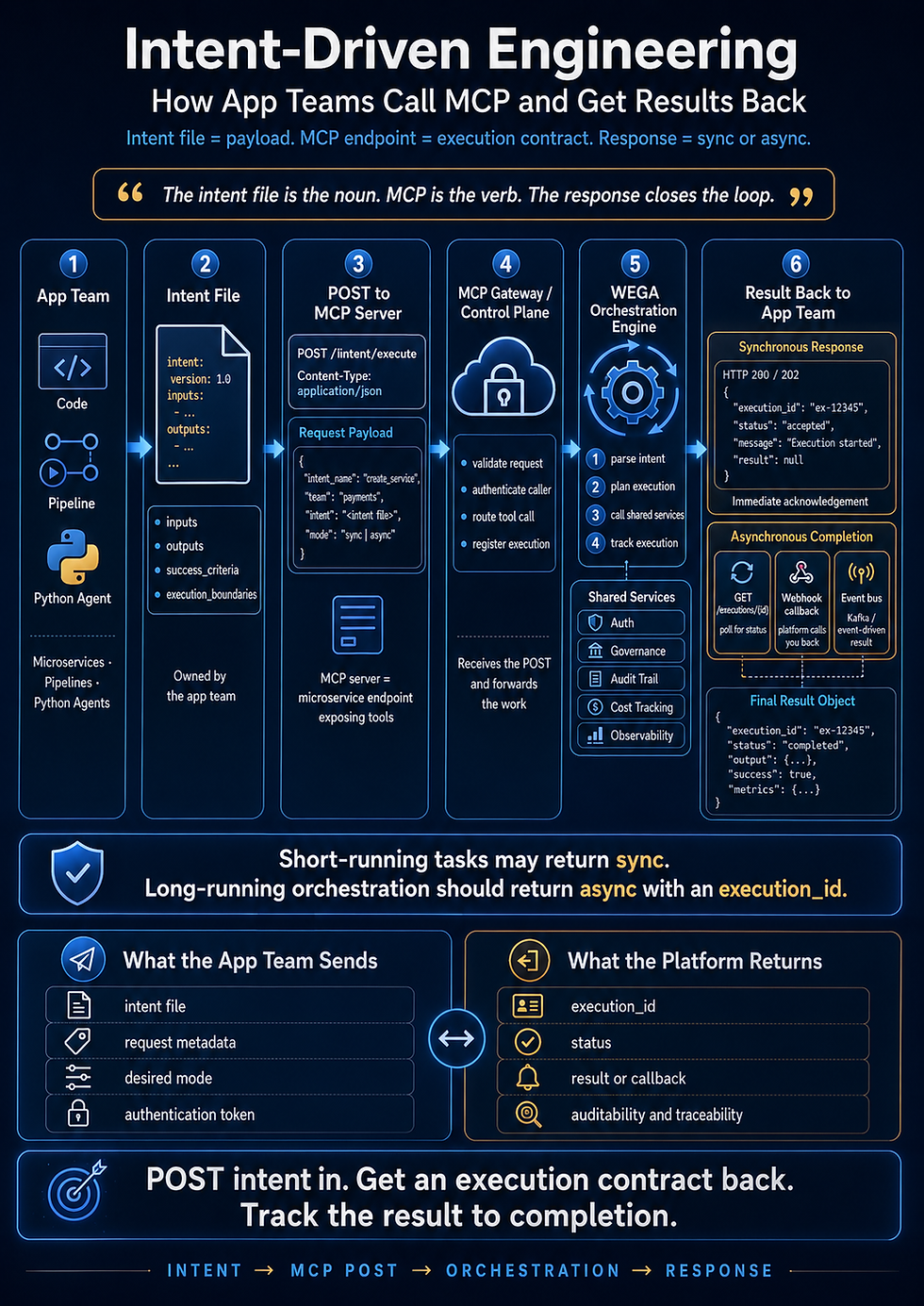
The model is not the architecture. Claude Code can reason, inspect a repository, write code, and delegate work — but capability without structure leaves engineering value on the table. Two things solve this, and they are not the same thing:
• Project structure tells the agent where it is.
• Intent tells the agent where it needs to go.
Every layer below exists to answer one of those two questions, plus a third: what proves the work is actually done.
The Architecture Stack
Where am I? — repository purpose, architecture, stack, conventions, key commands. Keep small: a map, not the contents of every building on it.
Where am I going? — scoped goal, inputs/context, constraints, required outputs, success criteria for this task.
Rules
How do we behave here? — scoped conventions (API, testing, security, DB) that don't belong in permanent context.
Skills
How do we do this, organizationally? — reusable procedural knowledge, loaded when needed, not held permanently in context.
Agents
Who reasons about a bounded piece? — used only for isolation, specialization, parallelism, or independent review. Not a default.
Tools / MCP
What can the system reach? — governed access to repos, APIs, databases, ticketing, cloud, CI/CD.
Hooks
What cannot be optional? — deterministic enforcement: tests, security scans, formatting, prohibited actions.
Settings
What is the system permitted to do? — the permissions boundary, independent of what it knows or reasons.
Validation / Evidence
How do we prove it worked? — tests, scans, schema checks, traceability. Generation is not completion.
Two Distinctions Worth Memorizing
Skills vs. Agents
Skills teach the AI how we do something. Agents reason about a bounded problem. A large percentage of what looks like an “agent” requirement is actually just organizational knowledge that belongs in a Skill. Default to Skills. Reach for an Agent only when you need isolation, specialization, parallelism, or independent review — not because the capability exists.
Intent vs. Context
Context engineering determines what the system needs to know. Intent-driven engineering determines what the system needs to accomplish. Perfect context without precise intent still leaves the outcome undefined. Both are required; neither substitutes for the other.
The Execution Loop
Understand → Plan → Execute → Observe → Validate → Correct → Prove
The loop does not end at “generate.” It ends when success criteria are demonstrably met, or a defined stop condition escalates to a human. Generation is easy; proof is the hard part — a beautiful diagram, a professional-looking Terraform file, or a confident ADR can all be wrong.
Design-Time Checklist
Run this before delegating any non-trivial task to Claude Code:
☐ Repo map exists (CLAUDE.md-equivalent) and stays small
☐ Minimum sufficient context defined at every boundary crossed
☐ Scoped intent artifact defines goal, inputs, constraints, outputs, success criteria
☐ Non-negotiables are enforced by Hooks, not by instruction alone
☐ Required procedural knowledge exists as a Skill, not re-explained in-prompt
☐ Permissions boundary (Settings) matches what the system should be allowed to do
☐ Agent use is justified by isolation, specialization, parallelism, or review — not default
☐ Evidence of success is defined before work starts, not inferred after
The Anti-Pattern to Avoid
Don't build an agent zoo. A repository does not become more agentic because it has twelve agents, twenty skills, and fifty hooks. Every agent is a context boundary; every boundary is a failure path. The rule that eliminates most unnecessary complexity:
Use the minimum sufficient architecture required to satisfy the intent safely and reliably.
Sometimes that's Intent → Claude → Tests → Done. That is a complete, correct architecture when the problem doesn't require more.
CCA-F Mapping
This stack maps directly onto certification material — it's one architecture viewed from two angles, not two separate things to study:
• Skills, Hooks, MCP, Subagents mechanics → the capability and enforcement layers above
• Context engineering → what crosses each boundary, and why less is usually better
• Governance and permissions → Settings + Hooks together define how much autonomy is safe
• Validation and evidence → the exam's emphasis on proof over generation
Source Articles
From Developer to AI Architect: The Autonomous Architectural Workbench — learnteachmaster.org, Aug 21, 2026
Claude Code Gets Better When Your Project Gives It Structure — learnteachmaster.org, Aug 21, 2026
Intent-Driven Engineering Meets Graph Engineering — learnteachmaster.org
Claude Code Plugins at Scale: Building an Enterprise Shared Services Strategy — learnteachmaster.org
TeamBrain: From Sales Handoff Chaos to a Living Project Brain — learnteachmaster.org, Dec 16, 2025
Mark Kendall · Intent-Driven Engineering · Page
Comments