

Agile Isn’t Dead. It’s Outdated in Its Current Form.
- Mark Kendall
- 8 hours ago
- 2 min read

Agile Isn’t Dead. It’s Outdated in Its Current Form.
For more than two decades, Agile transformed software development. It replaced heavyweight planning with rapid iteration, encouraged collaboration, and helped organizations deliver software faster than traditional waterfall approaches ever could.
But Agile was built for a world where humans wrote every line of code.
That world no longer exists.
The rise of AI-assisted development, autonomous agents, advanced code generation, and intent-based systems is fundamentally changing the economics of software engineering. The practices that once optimized delivery are increasingly optimizing the wrong thing.
The question is no longer how fast developers can write code.
The question is how clearly organizations can define what should be built and why.
Agile Solved the Wrong Bottleneck
When Agile emerged, software development was constrained by human implementation capacity.
Developers manually translated requirements into code. Teams estimated effort using story points. Managers measured progress through sprint velocity. Entire organizational structures evolved around improving human coding throughput.
At the time, this made perfect sense.
Today, AI systems can generate thousands of lines of production-ready code in minutes. Boilerplate, scaffolding, testing frameworks, API integrations, documentation, and even architectural recommendations can be produced at a speed that would have seemed impossible just a few years ago.
The bottleneck has shifted.
Implementation is no longer the primary constraint.
Understanding the business problem is.
From User Stories to Intent
Traditional Agile revolves around user stories.
Teams spend significant time creating, refining, estimating, prioritizing, grooming, and managing backlogs. Success is often measured by how many stories are completed during a sprint.
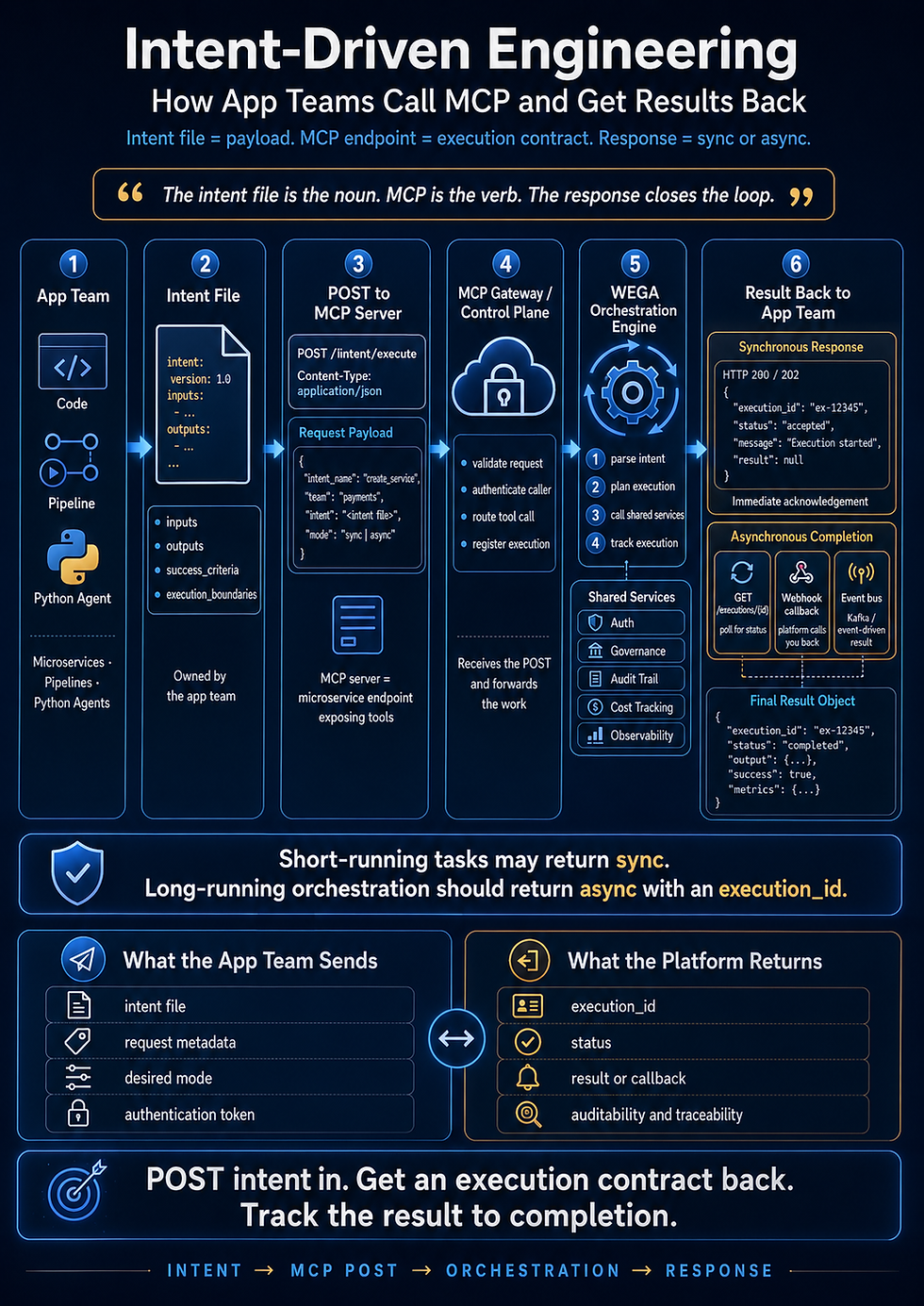
Intent-Driven Engineering takes a different approach.
Instead of focusing on individual features, teams focus on defining intent:
What business outcome are we trying to achieve?
What constraints
Comments