

Article 7: The Claude Certified Architect Mindset — Designing for Production, Not Demos
- Mark Kendall
- 2 hours ago
- 9 min read

Article 7: The Claude Certified Architect Mindset — Designing for Production, Not Demos
Why This Certification Matters
The Claude Certified Architect – Foundations exam is not just asking whether you know Claude Code, MCP, the Claude API, or the Claude Agent SDK.
It is asking whether you can make architectural decisions.
That is the key distinction.
A developer can ask Claude to generate code.
An engineer can wire Claude into a workflow.
But an architect must decide when to use an agent, when to use a tool, when to use a workflow gate, when to escalate to a human, when to preserve context, when to split the task, and when to stop the automation before it becomes dangerous.
That is the mindset this exam is testing.
According to the official exam guide, the certification validates whether practitioners can make informed tradeoff decisions when implementing real-world solutions with Claude. The exam covers Claude Code, the Claude Agent SDK, the Claude API, and Model Context Protocol, also known as MCP. These are the core technologies used to build production-grade Claude applications.
That phrase matters: production-grade.
This is not a certification about prompts alone.
It is not a certification about clever demos.
It is not a certification about asking Claude to write a function.
This certification is about building reliable AI-enabled systems that can survive real users, real ambiguity, real failures, real tools, real codebases, real business rules, and real enterprise expectations.
That is why I believe this certification is valuable.
It lines up directly with what modern enterprise AI engineering is becoming.
The Five Domains Are Really One Architecture
The exam guide divides the certification into five domains:
Agentic Architecture & Orchestration
Tool Design & MCP Integration
Claude Code Configuration & Workflows
Prompt Engineering & Structured Output
Context Management & Reliability
At first glance, those look like five separate study areas.
But from an architect’s point of view, they are not separate.
They are five layers of the same production system.
Agentic architecture defines how Claude thinks and acts.
Tool design defines what Claude is allowed to touch.
Claude Code workflows define how Claude participates in engineering delivery.
Prompt engineering and structured output define how Claude communicates reliably.
Context management and reliability define whether the system keeps its memory, accuracy, and trust over time.
That is the whole picture.
A weak architect studies these as vocabulary terms.
A strong architect studies them as an operating model.
The exam is scenario-based, which means the questions are not likely to say, “What is MCP?” and then give you a definition question. Instead, the exam will place you inside a realistic situation: a customer support agent, a CI/CD review flow, a multi-agent research pipeline, a structured extraction system, or a Claude Code development workflow.
Then it will ask: what should you do next?
That is why the certification is valuable. It tests judgment.
The Architect’s First Responsibility: Know When Prompting Is Not Enough
One of the most important lessons in the exam guide is this:
Prompt instructions are not deterministic controls.
That single idea may be one of the most important architectural lessons in all of enterprise AI.
If the system must follow a business rule every time, do not rely only on the prompt.
For example, if a customer support agent must verify identity before looking up an order or processing a refund, the correct design is not just to say in the system prompt, “Always verify the customer first.”
That may work most of the time.
But production systems are not judged by what happens most of the time. They are judged by what happens when the system fails.
If the consequence is financial, legal, operational, or customer-impacting, the correct architecture is programmatic enforcement.
That means a hook, prerequisite gate, tool-call interceptor, or workflow guardrail should block the dangerous action until the required prerequisite is complete.
This is the difference between demo thinking and architect thinking.
Demo thinking says:
“Claude usually follows the instruction.”
Architect thinking says:
“What prevents Claude from violating the rule when the conversation gets messy?”
That is the shift.
Agentic Loops: The Heartbeat of Claude Applications
A core concept in the certification is the agentic loop.
In plain terms, the loop works like this:
Claude receives the user request.
Claude decides whether it needs a tool.
If it needs a tool, the application executes the tool.
The tool result is appended back into the conversation.
Claude then decides the next step.
The loop continues until Claude reaches a final answer.
The key technical detail is the stop reason.
If the stop reason is tool_use, the system should execute the requested tool and continue.
If the stop reason is end_turn, the system should stop and return the final response.
This is a foundational design pattern.
The wrong approach is to parse the assistant’s natural language and guess whether the task is finished. Another weak approach is to rely only on arbitrary iteration limits. Iteration limits may be useful as safety backups, but they should not be the primary completion mechanism.
The architect should design the loop around the model’s actual control signals.
That is how reliable agentic execution starts.
Multi-Agent Systems Need a Coordinator, Not Chaos
Another major exam theme is multi-agent orchestration.
The guide emphasizes coordinator-subagent patterns. This is extremely important.
In a multi-agent system, the coordinator should manage decomposition, delegation, routing, aggregation, error handling, and final synthesis.
The subagents should have specialized roles.
For example:
A search agent searches.
A document agent analyzes documents.
A synthesis agent combines findings.
A report agent writes the final output.
But these agents should not communicate randomly with each other.
The coordinator should remain the hub.
That gives the system observability, control, and recoverability.
This is classic enterprise architecture thinking. You do not want unmanaged point-to-point chaos. You want controlled orchestration.
One of the most important exam points is that subagents do not automatically inherit the coordinator’s context. The coordinator must explicitly pass the needed context into the subagent prompt.
That means if the search agent found five sources, and the synthesis agent needs those sources, the coordinator must pass the findings, source URLs, document names, page numbers, dates, and other metadata directly into the synthesis agent’s prompt.
This is not just a technical detail.
It is an architectural reliability principle.
If context is not explicitly passed, the downstream agent cannot be trusted to know it.
MCP Is the Enterprise Integration Layer
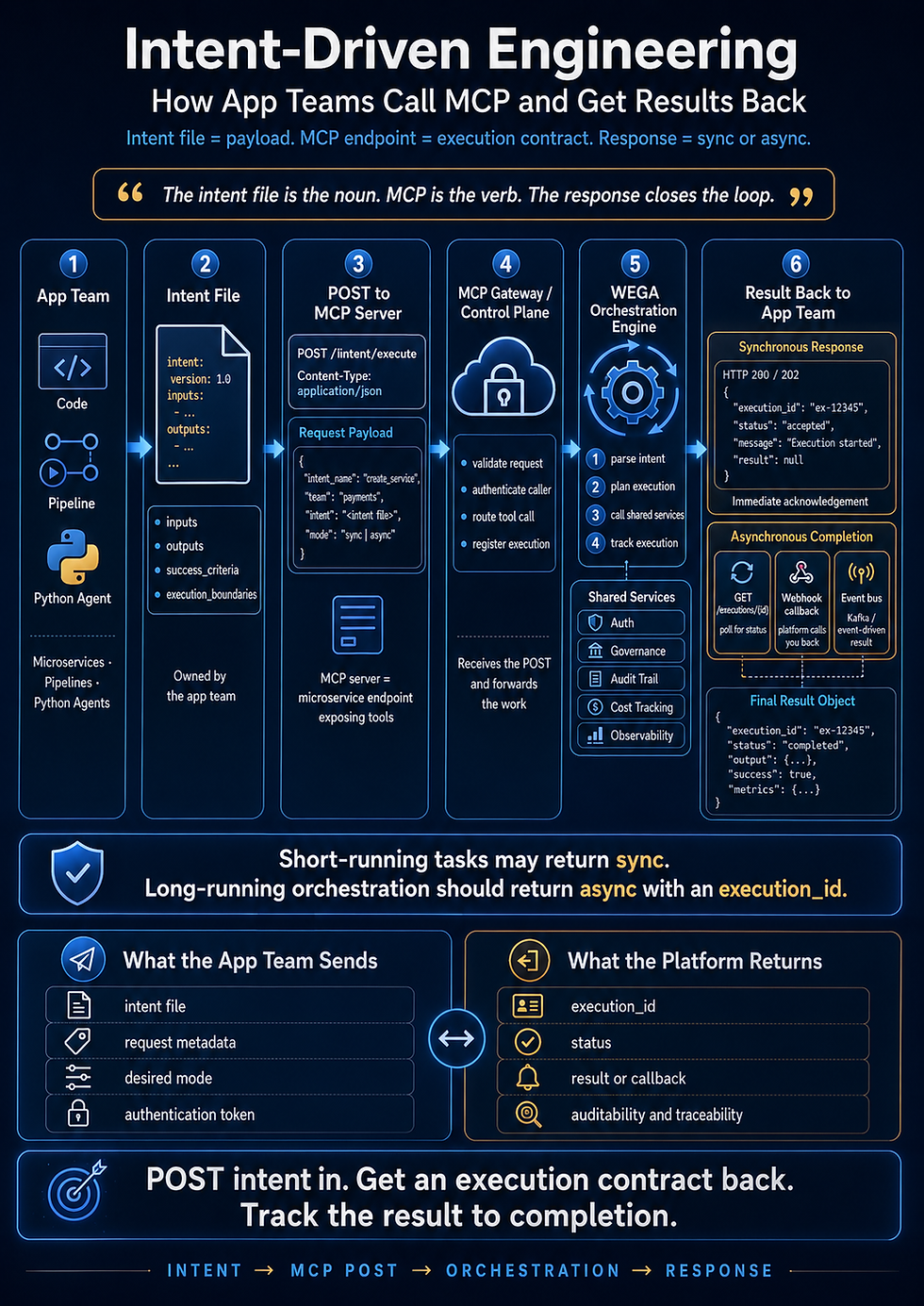
MCP, or Model Context Protocol, matters because it gives Claude a structured way to interact with tools, systems, and resources.
In enterprise terms, MCP is one of the ways Claude reaches into the organization.
It may connect to Jira.
It may connect to Confluence.
It may connect to GitHub.
It may connect to internal APIs.
It may expose database schemas, issue summaries, content catalogs, or operational tools.
But the exam guide makes one thing very clear: tool design matters.
A tool is not just a function.
A tool is an interface that Claude must understand.
That means tool descriptions are critical. Minimal descriptions lead to unreliable tool selection. If two tools sound similar, Claude may choose the wrong one.
For example, if one tool is called get_customer and another is called lookup_order, vague descriptions are not enough. The tool descriptions should explain:
What the tool does
When to use it
What inputs it accepts
What it returns
What edge cases exist
When not to use it
How it differs from similar tools
This is very practical.
A lot of teams will blame the model when tool selection fails. But often the real problem is that the tools were poorly described, overlapping, or too generic.
The architect’s job is to make the tool landscape understandable.
Claude Code Configuration Is Team Architecture
Claude Code is not just a coding assistant.
Used correctly, Claude Code becomes part of the team’s engineering operating model.
That is why the certification covers CLAUDE.md, slash commands, skills, rules, MCP configuration, plan mode, direct execution, CI/CD integration, and memory inspection.
The guide makes an important distinction between personal configuration and project configuration.
User-level configuration lives in places like ~/.claude/CLAUDE.md and applies only to one person.
Project-level configuration belongs in the repository so the team shares it.
That is a major architecture point.
If the team’s coding standards, testing conventions, API patterns, and review rules live only in one developer’s local setup, then Claude will behave differently for each person.
That is not an enterprise operating model.
For team adoption, the instructions must be version-controlled, visible, reviewable, and shared.
A practical Claude Code project structure might look like this:
repo-root/
.mcp.json
.claude/
commands/
skills/
codebase-analysis/
migration-planner/
rules/
This kind of structure turns Claude Code from a personal assistant into a team platform.
That is where the productivity gains become real.
Plan Mode vs Direct Execution
The exam guide also emphasizes when to use plan mode versus direct execution.
This is a very architectural decision.
Direct execution is right when the task is simple, scoped, and obvious.
For example:
Add one validation check.
Fix one bug with a clear stack trace.
Update one function.
Change one message.
Plan mode is right when the work has architectural consequences.
For example:
Restructure a monolith into microservices.
Migrate a library across dozens of files.
Change authentication flow.
Introduce a new integration pattern.
Refactor a large module.
Plan mode lets Claude explore, reason, compare approaches, and produce an implementation plan before changing code.
This matters because AI can move fast in the wrong direction.
An architect does not only ask, “Can Claude make the change?”
The architect asks:
“Does Claude understand the codebase well enough to safely make the change?”
Plan mode is how you slow the system down just enough to avoid expensive rework.
Structured Output Is How AI Becomes System-Compatible
Another major domain is prompt engineering and structured output.
This is where many enterprise AI systems either become useful or fall apart.
A conversational answer is fine for a human.
But downstream systems need structure.
They need JSON.
They need schemas.
They need required fields.
They need optional fields.
They need enums.
They need null handling.
They need confidence scores.
They need validation.
They need retry loops.
The guide emphasizes tool use with JSON schemas as the most reliable way to get schema-compliant structured output.
That is important.
Asking Claude to “return valid JSON” is not the strongest approach. A stronger approach is to define a tool with a JSON schema and have Claude call that tool with structured parameters.
That reduces syntax errors.
But the architect still has to remember something else:
Schema correctness is not the same as semantic correctness.
The JSON may be valid, but the extracted invoice total may still be wrong.
That is why validation-retry loops matter.
For example, if extracted line items do not add up to the stated total, the system should detect the mismatch and send Claude a follow-up request with the original document, the failed extraction, and the specific validation error.
This is how you build an extraction pipeline, not just an extraction prompt.
Reliability Is Mostly Context Management
The fifth domain is Context Management & Reliability.
This is where experienced architects should pay close attention.
Large language models are context-dependent. If the right facts are missing, buried, summarized poorly, or pushed into the middle of a long context window, the answer may degrade.
The guide calls out several important patterns:
Preserve key facts.
Trim verbose tool outputs.
Use structured case facts.
Avoid losing source attribution.
Use scratchpad files during long codebase exploration.
Use subagents to isolate verbose discovery.
Use /compact when context becomes overloaded.
Preserve provenance in synthesis.
This is exactly what enterprise AI teams need to learn.
Context is not just “more tokens.”
Context is architecture.
In a customer case, the important facts may be order number, refund amount, dates, account status, policy category, and customer expectation.
In a codebase, the important facts may be entry points, dependency flows, test coverage, architectural constraints, and changed files.
In research, the important facts may be claims, sources, publication dates, confidence, and conflicts.
A good Claude architect does not just throw everything into the prompt.
A good Claude architect designs the context layer.
The Real Exam Skill: Choosing the Best Next Move
The exam is multiple choice, but the real skill is architectural judgment.
When something fails, the correct answer is usually not “add more words to the prompt.”
Sometimes the right answer is:
Improve the tool description.
Split a generic tool into specific tools.
Add a hook.
Use programmatic enforcement.
Pass context explicitly.
Use plan mode.
Use path-scoped rules.
Use an independent review instance.
Use batch processing only for latency-tolerant work.
Route low-confidence output to a human.
Preserve claim-source mappings.
Add structured error metadata.
This is what the exam is really testing.
Can you identify the root cause?
Is the problem tool selection?
Is it tool ordering?
Is it missing context?
Is it too many tools?
Is it lack of structured output?
Is it weak escalation criteria?
Is it attention dilution?
Is it stale session context?
Is it unreliable self-review?
Is it a workflow that needs deterministic enforcement?
That is the certified architect mindset.
My Study Takeaway
For this series, I am treating the Claude Certified Architect – Foundations exam as more than a test.
I am treating it as a framework for how enterprise AI engineering should work.
The certification gives us a clean map:
Agents need loops.
Agents need tools.
Tools need descriptions.
Workflows need gates.
Subagents need explicit context.
Claude Code needs shared project configuration.
CI/CD needs non-interactive structured execution.
Structured output needs schemas and validation.
Long sessions need context management.
Production systems need escalation, review, and reliability.
That is the real architecture.
And that is why this certification is worth studying.
Not because it gives us a badge.
Because it forces us to think like production AI architects.
That is the goal.
Learn it.
Teach it.
Master it.
Suggested Wix SEO Title
Claude Certified Architect Foundations: The Production AI Architecture Mindset
Suggested Wix Meta Description
Article 7 in the Claude Certified Architect preparation series explains the production architecture mindset behind Claude Code, MCP, agents, structured output, context management, and reliability.
Suggested URL Slug
claude-certified-architect-production-ai-mindset
Suggested Tags
Claude Code, Claude Certified Architect, Anthropic, MCP, Agentic Architecture, AI Engineering, Structured Output, Context Management, Enterprise AI, Intent-Driven Engineering
:::
This one is a strong “reset article” for the series because it ties the whole exam guide together before we go deeper into each domain.
Comments