

Buyer Beware: A Forward Deployed Engineer Is Not Made by a Course

Buyer Beware: A Forward Deployed Engineer Is Not Made by a Course
Forward Deployed Engineer is becoming one of the hottest titles in AI.
That means the courses are coming.
Udemy courses. Boot camps. Certifications. Three-week programs. Tool tutorials. Python exercises. Agent frameworks. Model labs.
Some of them may be useful.
But buyer beware:
Learning the tools does not make you a Forward Deployed Engineer.
An FDE is not primarily a tool specialist.
An FDE is someone who can walk into an organization where the problem is still fuzzy, figure out what matters, determine whether AI should even be involved, build something useful, integrate it into the real environment, and prove that it created value.
That requires something a course has difficulty providing:
experience dealing with ambiguity.
Start With the Problem, Not the Agent
Imagine an insurance company with 20 claims adjusters.
They spend significant time reviewing relatively small claims.
Now suppose the company determines that claims under $1,000 can sometimes cost more to investigate manually than the financial exposure of paying them.
That is where an agentic workflow might make sense.
The question isn’t:
Which agent framework should we use?
The questions are:
What problem are we solving?
How much does the current process cost?
What decisions could safely be automated?
What dollar threshold requires human approval?
What evidence must the agent review?
What systems does it need access to?
What happens when information is missing?
Where will the workflow run?
Who owns it?
How will it be governed?
How do we measure whether it actually saves money?
Now we’re doing Forward Deployed Engineering.
The agent itself may eventually be the easy part.
The FDE Owns the Journey From Ambiguity to Evidence
My working model is simple:
Orient → Radius → Intent → Build → Prove
Orient
Understand the business.
Who has the problem?
What is happening today?
Why does it matter?
What does success look like?
Radius
Determine how far the solution actually extends.
Does it touch:
applications,
APIs,
data,
security,
identity,
cloud infrastructure,
governance,
compliance,
operations,
human approval?
This is where many demos fall apart when they encounter the enterprise.
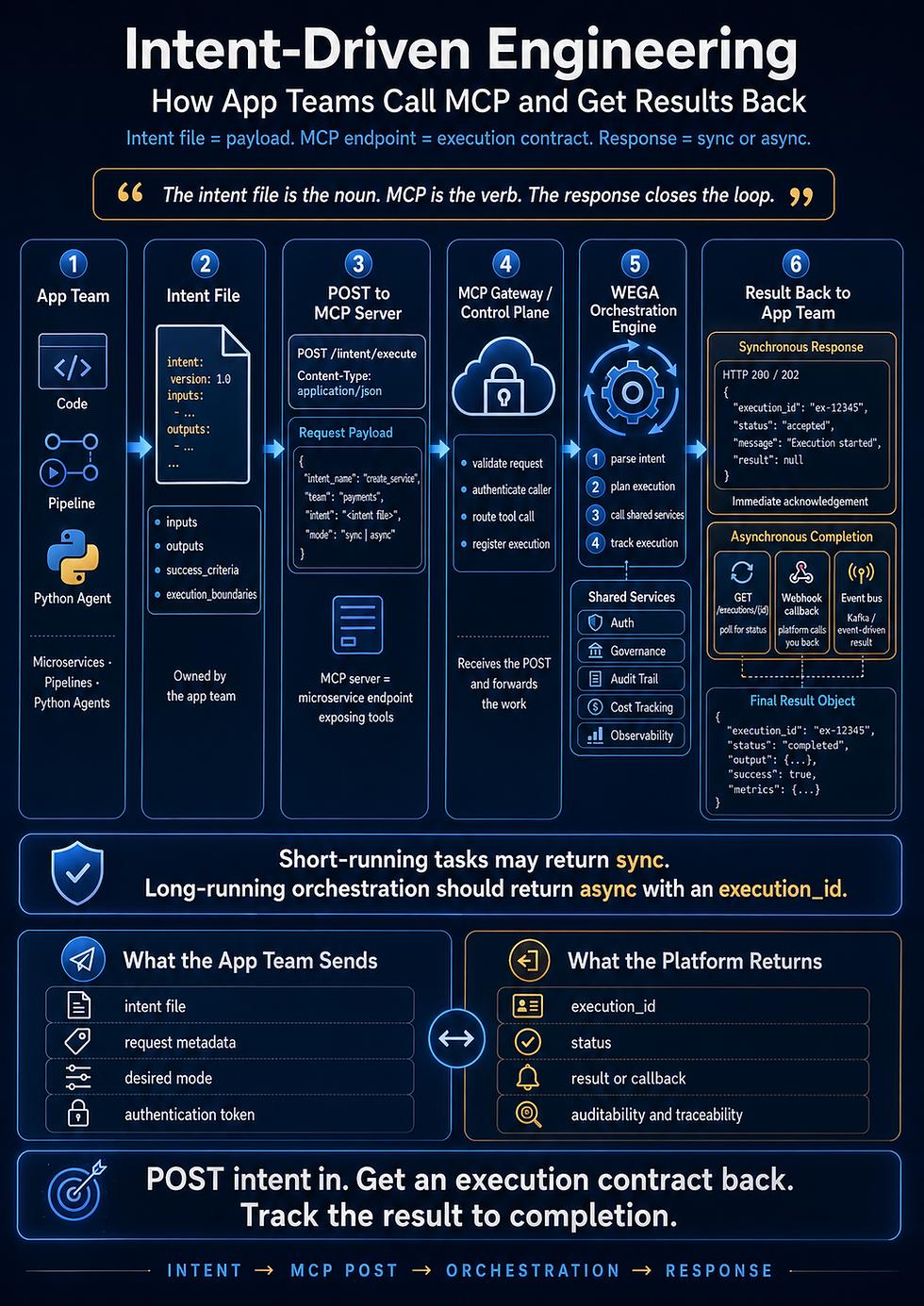
Intent
Clearly state:
the outcome,
authoritative inputs,
expected outputs,
constraints,
success criteria,
evidence required.
Do this before prescribing the implementation.
Build
Now select the capabilities.
Models.
Agents.
APIs.
MCP servers.
Databases.
Cloud services.
Workflow engines.
Existing enterprise systems.
This is also where AI-assisted development changes the economics dramatically.
Once the intent and boundaries are clear, increasingly capable coding agents can generate much of the implementation.
That means memorizing every framework may become less valuable than knowing which problem deserves to be built in the first place.
Prove
This is the part too many AI demonstrations skip.
Did it work?
Did it save money?
Did it reduce cycle time?
Did it improve quality?
Did it stay inside its authority boundaries?
Can we trace the decision back to evidence?
Can the enterprise safely operate it tomorrow?
That is the difference between a demo and a deployed capability.
Learn Tools — But Learn Them When You Need Them
I’m not against courses.
Far from it.
Learn Python.
Learn APIs.
Learn cloud architecture.
Learn AWS, Azure or Google Cloud.
Learn agent orchestration.
Learn MCP.
Learn identity, security, observability and governance.
But don’t spend months trying to memorize the entire AI ecosystem before doing anything.
The ecosystem is moving too quickly.
Instead, learn enough to understand the landscape.
Then build something.
When the project requires deeper knowledge, go deep at that moment.
Today we also have another advantage: AI itself.
Before spending 20 hours watching a course, have AI summarize the curriculum.
Ask:
What would I actually need from this course for the problem I’m trying to solve?
Then study those areas deeply.
That is often much more effective than consuming every lecture sequentially.
Courses Cannot Manufacture Experience
This is the part prospective FDEs should understand.
A course can teach:
agent patterns,
security concepts,
deployment approaches,
governance,
tools,
architecture,
terminology.
It cannot easily recreate what happens when a business leader says:
“This process is costing us too much. Can AI fix it?”
And nobody has written the requirements.
Nobody knows exactly which systems are involved.
Security has concerns.
The data is messy.
The APIs aren’t documented.
Operations wants to know who supports it.
Finance wants the ROI.
Legal wants boundaries.
And leadership wants something working soon.
That’s the job.
So How Do You Get FDE Experience Without Being an FDE?
Create it.
Find a real business problem.
Build the smallest credible solution.
Deploy it.
Measure it.
Document the evidence.
Your GitHub repository, architecture, running application and results may tell an employer considerably more than another certificate.
Build:
problem → intent → working system → evidence
Then do it again.
You don’t need 25 projects.
You need a few projects that demonstrate that you can reason from a business problem all the way to a working, governed solution.
The Question I Would Ask Any FDE Program
Before paying for a Forward Deployed Engineering course, ask one question:
At the end of this program, what will I have actually deployed and what evidence will I have that it worked?
If the answer is primarily:
videos,
quizzes,
labs,
framework exercises,
certificates,
then understand what you’re purchasing.
You’re buying education.
Not experience.
Education can be valuable.
But don’t confuse the two.
The future FDE will not win because they memorized the most AI frameworks.
They will win because they can enter uncertainty, discover what matters, establish boundaries, use the available capabilities, build the right thing and prove that it created value.
That is Forward Deployed Engineering.
Comments