

Certification Article #4: Agentic Architecture — The Difference Between Asking Claude and Operating Claude
- Mark Kendall
- 5 hours ago
- 8 min read

Certification Article #4: Agentic Architecture — The Difference Between Asking Claude and Operating Claude
Most engineers begin with Claude Code the same way they begin with any AI tool: they ask it to write code.
That is useful, but it is not the certification-level understanding.
The real shift happens when we stop treating Claude Code as a chat assistant and start treating it as an agentic engineering runtime. That means Claude is not just answering prompts. It is reading the repo, forming plans, using tools, calling subagents, following project rules, executing workflows, and producing evidence that the work is complete.
That is the mindset this certification is testing.
Claude Code is described by Anthropic as an AI-powered coding assistant that can help build features, fix bugs, and automate development tasks while understanding the codebase. That single idea matters: the codebase is not background information — it is the operating environment.
The Core Idea: Prompting Is Not the Architecture
A prompt is an instruction.
An architecture is a system of responsibilities, boundaries, tools, rules, and feedback.
Most teams fail with AI coding tools because they stay at the prompt level. They ask:
“Can you build this?”
“Can you fix this?”
“Can you write the tests?”
That works for small tasks, but it does not scale across a real enterprise repo.
A certification-level architect thinks differently. The architect asks:
What context does Claude need?
What tools should Claude be allowed to use?
What parts of the work should be delegated to subagents?
What rules must always be enforced?
What evidence proves the change is correct?
What should happen automatically before, during, and after the task?
That is agentic architecture.
Claude Code as a Delivery Loop
A strong Claude Code workflow is not one giant prompt. It is a loop.
The basic loop looks like this:
Intent
↓
Repo Context
↓
Plan
↓
Task Breakdown
↓
Implementation
↓
Validation
↓
Evidence
↓
Review
↓
Delivery
That loop is the heart of Intent-Driven Engineering.
The intent explains what outcome we want. The repo context tells Claude where the truth lives. The plan defines the approach. The task breakdown controls scope. The implementation changes the code. The validation proves the change works. The evidence gives humans confidence. The review prepares the work for delivery.
The mistake is skipping straight from intent to implementation.
That is how teams get random AI output.
The professional move is to make Claude operate inside a delivery loop.
The Five Building Blocks of Agentic Claude Code
For certification preparation, I would think about Claude Code architecture in five building blocks:
1. Context
2. Tools
3. Skills
4. Subagents
5. Hooks
Each one has a different job.
Context tells Claude what matters.
Tools allow Claude to act.
Skills package reusable procedures.
Subagents specialize work.
Hooks enforce behavior automatically.
Together, these move Claude Code from “assistant” to “operating model.”
1. Context: The Fuel of the Agent
Claude Code becomes powerful when it understands the repo, the structure, the files, the conventions, and the intended outcome.
Context is not just dumping more text into a prompt. Context must be selected, organized, and bounded.
Bad context says:
“Here is everything. Figure it out.”
Good context says:
“Here is the intent, here are the relevant files, here are the constraints, here is the expected evidence, and here is what not to change.”
For certification, this is huge. Agentic systems are only as good as the context they are allowed to reason over.
In an enterprise setting, context usually comes from multiple places:
Repo files
Architecture docs
Jira stories
Confluence pages
API specs
Design files
Test results
Deployment logs
Security rules
Coding standards
That is why MCP matters.
2. MCP: Connecting Claude to Enterprise Knowledge
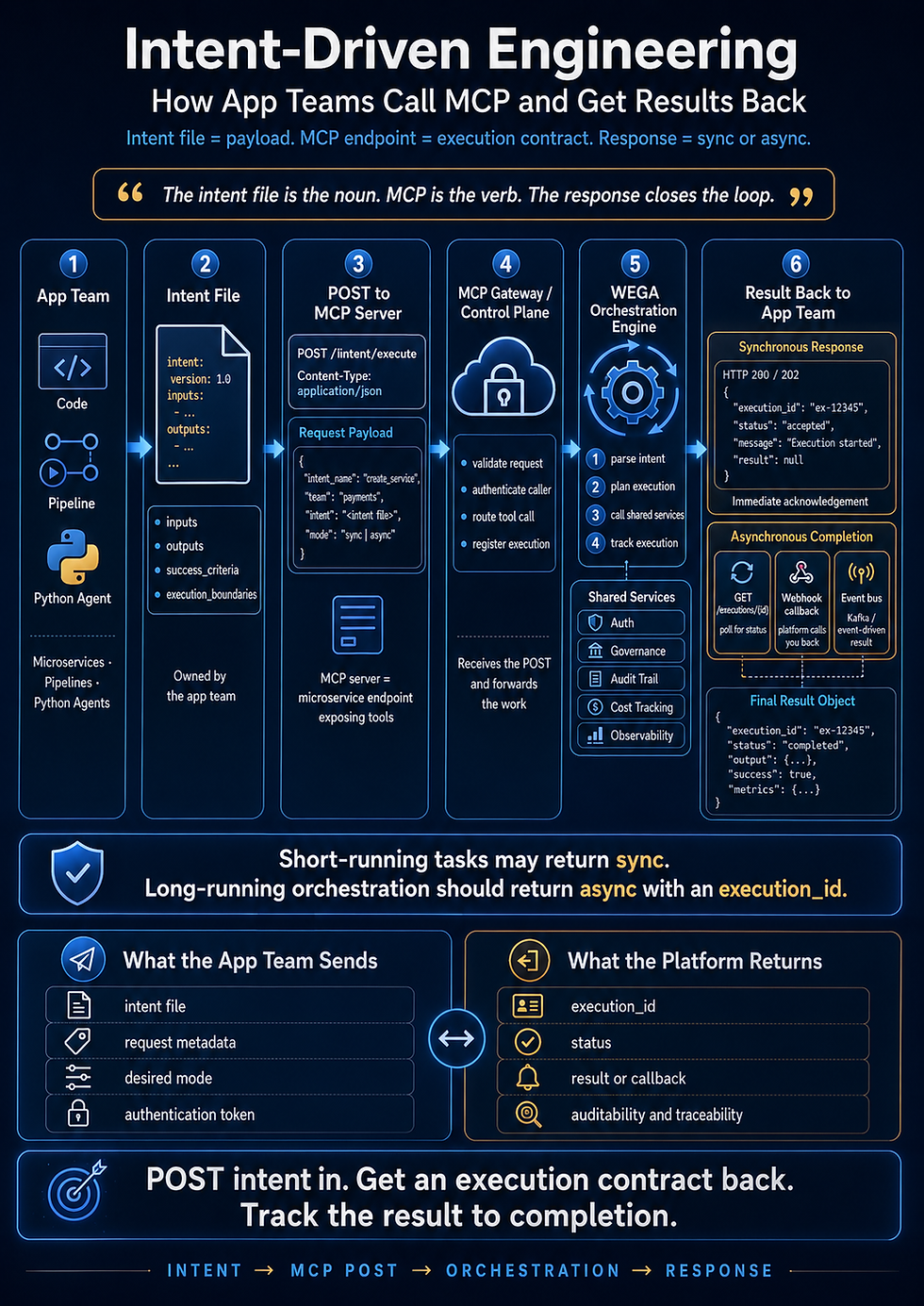
MCP, or Model Context Protocol, allows Claude Code to connect to external tools and data sources. Anthropic describes MCP as an open standard for connecting AI systems to tools and data sources, including external enterprise systems.
This is one of the biggest architecture ideas in the entire certification path.
Without MCP, Claude mostly sees what is local or manually pasted.
With MCP, Claude can reason across the systems where enterprise truth actually lives.
That can include:
Jira
Confluence
GitHub
GitLab
Databases
Internal APIs
Documentation stores
Design systems
Monitoring platforms
The certification-level idea is not merely “Claude can connect to tools.”
The real idea is this:
Claude Code becomes more reliable when the enterprise context is connected, governed, and intentionally scoped.
That means the architect must decide which systems Claude can access, what permissions it should have, what data it should retrieve, and how that data should influence the delivery loop.
3. Skills: Reusable Delivery Knowledge
Skills are one of the most important concepts for scaling Claude Code across teams. Anthropic describes skills as a way to create, manage, and share capabilities that extend Claude’s behavior in Claude Code.
In plain English, a skill is a reusable playbook.
Instead of teaching Claude the same process over and over, you package the process.
For example:
Skill: Create API Feature
Skill: Review Terraform Change
Skill: Generate Unit Tests
Skill: Validate Security Controls
Skill: Produce Delivery Evidence
Skill: Prepare Pull Request Summary
This matters because enterprises do not scale by heroic prompting.
They scale by repeatable patterns.
A strong skill should answer:
What is the goal?
When should this skill be used?
What files or inputs does it need?
What steps should Claude follow?
What rules must it obey?
What output should it produce?
What evidence should it return?
That is the difference between casual usage and an operating model.
A casual user says:
“Claude, write my tests.”
An architect says:
“Use the test-generation skill. Follow the repo test conventions. Cover happy path, edge cases, error handling, and regression risk. Run the test command. Return evidence.”
That is a much stronger system.
4. Subagents: Specialization and Context Control
Subagents are specialized AI agents that can be created for task-specific workflows and improved context management inside Claude Code.
This is another major certification concept.
The reason subagents matter is simple: not every task should be handled by the same general-purpose agent.
A security review is different from a frontend implementation.
A database migration is different from a test strategy.
A deployment review is different from a documentation update.
So instead of one giant Claude session trying to do everything, the architect can split the work into specialized roles:
Feature Planner Agent
Frontend Agent
Backend Agent
Database Agent
Test Agent
Security Agent
DevOps Agent
Documentation Agent
Reviewer Agent
This creates cleaner thinking.
The main agent can orchestrate the work, while subagents handle focused analysis or execution.
A good architecture might look like this:
User Intent
↓
Claude Code Orchestrator
↓
Plan Agent
↓
Implementation Agents
├── Frontend Agent
├── Backend Agent
├── Database Agent
└── Test Agent
↓
Review Agent
↓
Evidence Package
The key exam concept is that subagents are not just “extra bots.”
They are a way to control specialization, reduce context pollution, and improve reliability.
5. Hooks: Automation and Guardrails
Hooks are user-defined shell commands, HTTP endpoints, or LLM prompts that execute automatically at specific points in Claude Code’s lifecycle.
This is where Claude Code starts to feel like a real engineering platform.
Hooks let the architect enforce behavior automatically.
For example:
Before Claude edits files:
Check branch status
After Claude edits files:
Run formatter
Before Claude completes:
Run tests
Before risky command:
Block or require approval
After tool usage:
Log activity for audit
Anthropic also describes hooks as useful for enforcing project rules, automating repetitive tasks, and integrating Claude Code with existing tools.
That is the important architecture move.
Hooks convert “please remember to do this” into “the system always does this.”
That is how you get enterprise reliability.
A weak workflow says:
“Claude, please run tests when you are done.”
A strong workflow says:
“The post-change hook runs the test command and blocks completion if validation fails.”
That is the difference between suggestion and governance.
The Architect’s Mental Model
Here is the certification mental model I would memorize:
Claude Code is the agentic runtime.
The repo is the operating environment.
The intent is the mission.
The plan is the control structure.
The tools are the action layer.
MCP is the enterprise context layer.
Skills are reusable delivery patterns.
Subagents are specialized workers.
Hooks are automation and governance.
Evidence is the proof of delivery.
That paragraph alone is worth studying.
It pulls the whole architecture together.
What Most Teams Get Wrong
Most teams do not fail because Claude Code is weak.
They fail because they use it with no operating model.
They let every developer prompt differently.
They do not define intent files.
They do not create shared skills.
They do not use subagents for specialization.
They do not connect enterprise context.
They do not enforce validation with hooks.
They do not require evidence.
Then they conclude, “Claude Code is not faster than Copilot.”
That is the wrong comparison.
Copilot is often used as an in-editor coding assistant. Claude Code, when properly configured, can become a repo-aware agentic delivery system.
The value is not just faster typing.
The value is better flow.
Certification Pattern: From Request to Governed Delivery
A certification-style scenario might say:
A team wants Claude Code to implement features across several repositories. The organization requires security checks, test evidence, architecture consistency, and integration with Jira and Confluence. What architecture should be used?
The right answer is not:
“Ask Claude to code carefully.”
The stronger answer is:
Use an agentic delivery architecture.
1. Capture the feature intent.
2. Pull relevant repo and enterprise context.
3. Use MCP to connect Jira, Confluence, and other approved systems.
4. Use a planning skill to create the implementation plan.
5. Delegate specialized work to subagents.
6. Use hooks to enforce formatting, testing, security checks, and audit logging.
7. Require an evidence package before delivery.
8. Human reviews the final result before merge.
That is certification-grade thinking.
The Big Shift: Claude Code Needs Architecture Around It
The deeper lesson is this:
Claude Code does not remove the need for architecture.
It increases the value of architecture.
The architect’s job is no longer only to define boxes, APIs, and deployment patterns.
The architect now defines how AI agents participate in delivery.
That includes:
How work enters the system
How context is selected
How tools are granted
How tasks are delegated
How quality is enforced
How risks are controlled
How evidence is generated
How humans stay in control
This is the future of engineering leadership.
The best engineers will not simply know how to prompt.
They will know how to design AI-assisted delivery systems.
Exam Readiness Checklist
Before moving on, make sure you can explain these ideas without notes:
What makes Claude Code agentic?
Why is repo context different from a normal chat prompt?
What problem does MCP solve?
When would you use a skill instead of a one-time prompt?
Why are subagents useful for complex delivery?
How do hooks improve reliability?
What evidence should Claude produce before delivery?
How does this support enterprise governance?
If you can answer those questions, you are no longer studying Claude Code as a tool.
You are studying Claude Code as an architecture.
That is exactly where we need to be for certification.
Final Takeaway
Article #4 is the turning point.
The first level is learning the vocabulary.
The second level is understanding the Claude Code mindset.
The third level is comparing tools and seeing where Claude Code is different.
This fourth level is where the architecture becomes clear:
Claude Code becomes powerful when it is operated as a governed agentic delivery system.
That system needs context, tools, MCP, skills, subagents, hooks, validation, and evidence.
That is the certification path.
That is also the enterprise path.
And that is why this is bigger than code generation.
This is the beginning of AI-native engineering architecture.
:::
This one is a strong foundation piece for the 60-article certification run. The next good move for Article #5 would be “Context Management and Reliability: Why Claude Fails When the Context Is Wrong.”
Comments