

Claude Architect Certification Articles 40–44: The Architecture Is Not the Tool — It Is the Loop
- Mark Kendall
- 4 minutes ago
- 7 min read

Claude Architect Certification Articles 40–44: The Architecture Is Not the Tool — It Is the Loop
At this point in the certification journey, we should stop thinking about Claude Code as a smarter coding assistant.
That is too small.
For an architect, Claude Code is not just a prompt box. It is an operating environment. It can read a codebase, reason across files, use tools, delegate work, run commands, preserve project memory, call MCP servers, trigger hooks, apply skills, and operate through structured workflows.
That means the real exam question is not:
“Can Claude write code?”
The real architect-level question is:
“Can I design a reliable engineering loop around Claude?”
That is the shift.
A developer may use Claude Code to complete a task. An architect designs the environment where Claude Code can repeatedly complete the right task, in the right repo, with the right context, under the right constraints, with evidence that it worked.
That is what Articles 40 through 44 are about.
40. Subagents: Delegation With Boundaries
Subagents matter because they let the architect separate work by role, context, and responsibility.
Instead of asking one giant Claude session to do everything, you can create focused agents that specialize in a specific job.
One subagent might inspect security issues.
Another might review API contracts.
Another might validate frontend behavior.
Another might check test coverage.
Another might summarize architectural risk before a pull request.
That matters because enterprise work is rarely one clean task. It is usually a chain of concerns:
Does the implementation match the intent?
Did it follow repo standards?
Did it break the API?
Did it include tests?
Did it introduce security exposure?
Did it produce evidence?
A strong Claude Code architecture does not depend on one heroic prompt. It creates a small team of focused agents.
For certification purposes, remember this:
Subagents are not just “extra helpers.” They are architectural separation of concerns.
A good subagent should have:
A clear purpose
A narrow responsibility
Limited tool access where appropriate
A repeatable prompt
A defined output format
A clear place in the workflow
The mistake is creating a vague agent called “senior engineer” and expecting magic.
The better pattern is:
Intent Reviewer Agent
Checks whether the requested feature is clear, complete, and testable.
Repo Pattern Agent
Finds existing project conventions before code is changed.
Implementation Agent
Builds the feature according to the intent and repo patterns.
Evidence Agent
Runs tests, collects screenshots, checks logs, and summarizes proof.
Release Decision Agent
States whether the work is ready, risky, or blocked.
That is architecture.
The architect is not just asking Claude to code. The architect is designing how intelligence moves through the engineering system.
41. Hooks: Turning Good Habits Into Automation
Hooks are where Claude Code starts to feel less like a chat tool and more like an engineering control system.
A hook is an automated action triggered by an event.
That means the architect can define what should happen before or after certain operations.
For example:
Before Claude edits files, run a policy check.
After Claude changes code, run formatting.
After tests complete, capture results.
Before a commit, check whether the intent file was updated.
After a pull request is prepared, generate an evidence summary.
This is important because most teams do not fail because they lack intelligence. They fail because they rely on people remembering the process.
Hooks reduce that weakness.
They turn expectations into enforcement.
For certification, the key idea is:
Hooks help make Claude Code workflows repeatable, observable, and governed.
A human can forget to run tests.
A hook does not.
A human can forget to capture evidence.
A hook does not.
A human can skip the security checklist because the sprint is late.
A hook does not care about the sprint.
That is why hooks matter in enterprise architecture.
They are not just automation. They are governance.
In Intent-Driven Engineering, hooks are especially powerful because they can connect the intent file to the actual delivery process.
A simple delivery loop might look like this:
Read the intent file.
Inspect repo context.
Generate an implementation plan.
Make code changes.
Run tests.
Capture evidence.
Compare output back to intent.
Decide whether the work is ready.
Hooks can support that loop by making sure key steps are not skipped.
That is the difference between a prompt and a system.
42. Skills: Packaging Repeatable Expertise
Skills are reusable capability packages.
This is where architects should get very interested.
A skill can capture how your organization wants Claude to perform a recurring task. Instead of teaching Claude the same thing over and over, you package the instruction, examples, workflow, and constraints into a reusable form.
That means a skill can represent organizational knowledge.
For example:
How we write API contracts
How we generate test evidence
How we inspect Terraform
How we review React components
How we write secure logging
How we create implementation plans
How we produce release notes
How we validate against an intent file
This is where AI adoption becomes enterprise-grade.
Without skills, every engineer improvises.
With skills, the organization starts to standardize its best practices.
That is a huge certification concept.
The architect should not only ask, “Can Claude do this?”
The architect should ask:
“Should this be packaged as a reusable skill?”
If the answer is yes, then the work should not stay trapped in one conversation.
It should become part of the engineering system.
A good skill should be:
Specific
Reusable
Easy to invoke
Grounded in actual team standards
Updated as the organization learns
Paired with examples where possible
The goal is not to create hundreds of random skills.
The goal is to create a small number of high-value skills that make every engineer better.
For Intent-Driven Engineering, one of the most important skills would be an Intent-to-Evidence Skill.
That skill would take a feature intent and guide Claude through implementation, validation, test execution, and evidence generation.
That is not just productivity.
That is a new operating model.
43. Memory: The Project Should Teach the Agent
Memory matters because Claude Code should not have to rediscover the same project facts every time.
The project has rules.
The repo has patterns.
The team has preferences.
The system has constraints.
The architecture has decisions.
If those things live only in people’s heads, Claude will guess. And guessing is where enterprise AI gets dangerous.
Memory gives Claude a better starting point.
The most important idea is that memory should not be treated as a junk drawer. It should be curated.
A good project memory file should tell Claude things like:
What this repo does
How it is structured
How to run it locally
How to test it
What patterns must be followed
What files should not be changed casually
What security rules matter
What deployment assumptions exist
What “done” means for this team
That is why CLAUDE.md or similar memory files matter so much in Claude Code workflows.
They help convert tribal knowledge into executable guidance.
For the certification, the architect-level lesson is:
Memory is not just convenience. Memory is context governance.
Bad memory creates bad behavior.
Good memory creates consistent behavior.
The architect should decide what belongs in memory, what belongs in an intent file, what belongs in a skill, and what belongs in a hook.
Those are not the same thing.
An intent file describes the desired outcome.
A memory file describes durable project context.
A skill describes repeatable capability.
A hook automates process enforcement.
A subagent performs a specialized role.
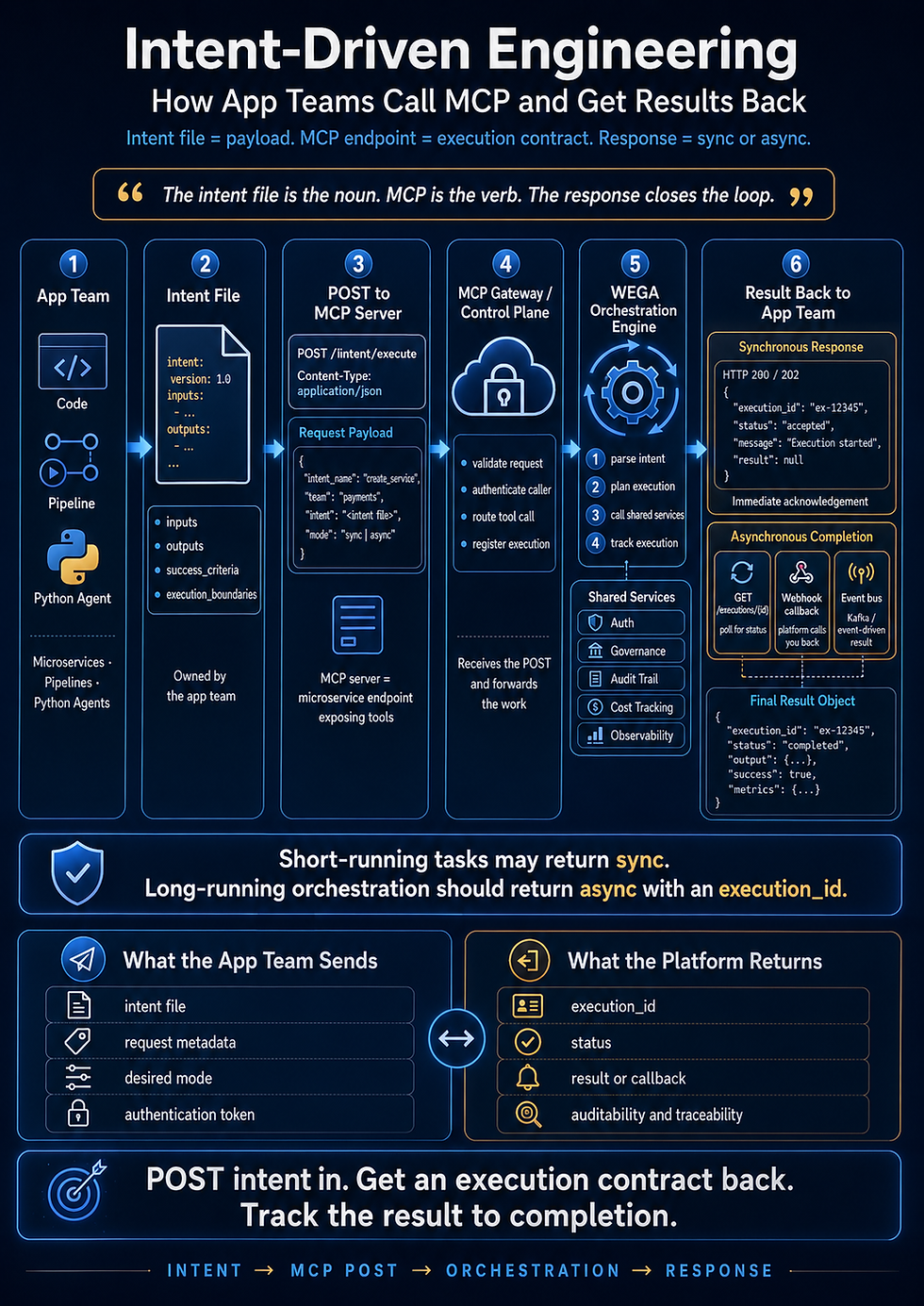
MCP connects external tools and data.
Together, those pieces create the Claude Code operating environment.
44. MCP and the SDK: Connecting Claude to the Enterprise
MCP matters because enterprise work does not live inside one repo.
Real work is spread across Jira, Confluence, GitHub, SharePoint, Slack, databases, design systems, observability tools, CI/CD pipelines, cloud platforms, security scanners, and internal APIs.
If Claude only sees the local codebase, it is useful.
If Claude can safely connect to enterprise context, it becomes much more powerful.
That is the role of MCP.
MCP allows Claude to connect to external systems through a structured protocol. For an architect, this is important because the future of AI engineering is not just better prompting. It is better context access.
The architect has to ask:
What systems should Claude be allowed to access?
What should be read-only?
What can be modified?
What requires approval?
What should be logged?
What data should never be exposed?
What tools are safe in development but not production?
What evidence should be captured when MCP tools are used?
This is where enterprise architecture, security, and AI engineering come together.
The SDK takes this even further.
The SDK allows teams to build custom workflows using Claude Code capabilities programmatically. That matters when a team wants repeatable automation beyond an interactive coding session.
For example, a company might build a workflow that:
Reads a Jira story.
Pulls related Confluence architecture notes.
Finds the correct repo.
Generates or updates an intent file.
Launches Claude Code with the right context.
Runs implementation agents.
Executes tests.
Captures evidence.
Opens a pull request.
Produces a release-readiness summary.
That is not a chat session.
That is an engineering workflow.
That is the difference between using AI and architecting with AI.
The Combined Lesson: Claude Code Is a System of Control Points
Articles 40 through 44 all point to one big idea:
Claude Code becomes powerful when the architect designs control points around it.
Subagents create role separation.
Hooks create automated enforcement.
Skills package repeatable expertise.
Memory preserves durable project context.
MCP connects enterprise knowledge and tools.
The SDK enables repeatable workflows.
Together, they form the foundation of agentic engineering architecture.
The certification will likely reward this kind of thinking.
Not because you memorized every command.
Not because you know every feature name.
But because you understand how to build a safe, repeatable, governed AI engineering system.
That is what an architect does.
A coder asks:
“Can Claude build this?”
An architect asks:
“Can Claude build this repeatedly, safely, with context, controls, evidence, and a clear delivery decision?”
That is the standard.
That is also the heart of Intent-Driven Engineering.
The intent is the starting point.
The repo is the working environment.
Memory provides durable context.
Skills provide reusable expertise.
Subagents divide the work.
Hooks enforce the process.
MCP connects enterprise knowledge.
The SDK turns the pattern into automation.
Evidence proves the result.
And the architect decides whether the work is ready.uAnd that is what we need to understand before taking the Claude Architcertification exam.
:::This one is a solid “middle of the series” architecture article. Next natural combined article would be 45–49: designing the full Claude Code delivery loop from intent to PR to evidence to release decision.
Comments