

Claude Architect Certification Articles 45–49: From Intent to Pull Request to Release Decision
- Mark Kendall
- 4 hours ago
- 8 min read

Claude Architect Certification Articles 45–49: From Intent to Pull Request to Release Decision
At this point in the Claude Architect certification journey, we should be past the basic question of whether Claude Code can help us write software.
Of course it can.
That is not the architect-level question.
The real question is:
Can we design a repeatable delivery loop where Claude Code takes intent, understands the repo, makes safe changes, validates the result, captures evidence, and helps the team decide whether the work is ready to ship?
That is the architecture.
Articles 45 through 49 are about that full loop.
Not just prompts.
Not just code generation.
Not just a smart terminal assistant.
This is about using Claude Code as part of an engineering operating model.
The loop looks like this:
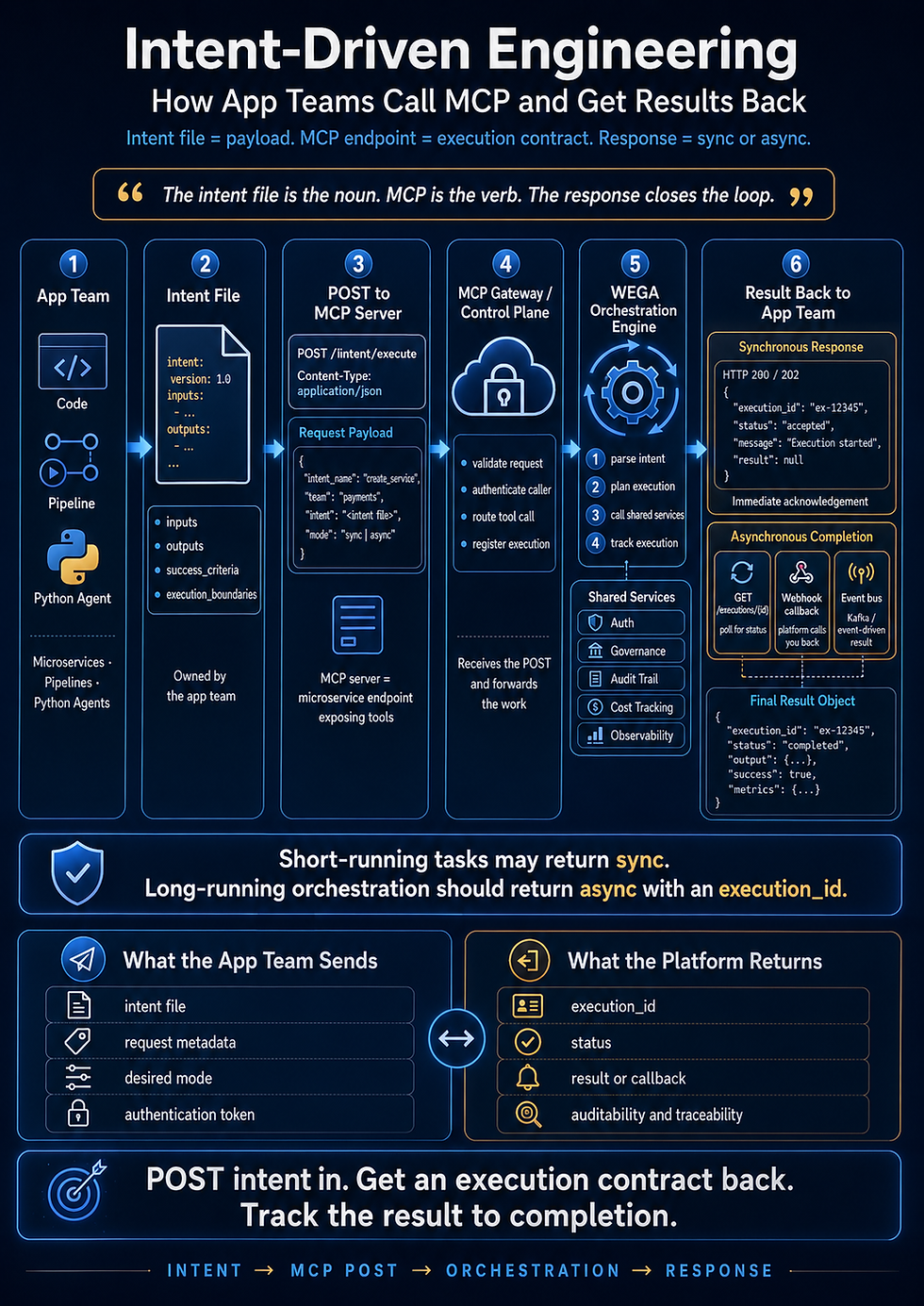
Intent → Context → Plan → Build → Validate → Evidence → Pull Request → Release Decision
That is the heart of Intent-Driven Engineering.
And it is exactly the kind of thinking an architect should bring into the certification exam.
45. Intent: The Starting Point Is Not a Prompt
A lot of teams start with a prompt.
That is fine for experimentation.
But enterprise delivery should not start with a loose prompt.
It should start with intent.
A prompt is usually temporary. It lives inside a conversation. It may be incomplete, emotional, vague, or missing constraints.
An intent file is different.
An intent file is structured. It captures what needs to be built, why it matters, what constraints apply, what systems are involved, what “done” means, and how the result should be validated.
That matters because Claude Code is only as strong as the context and direction we give it.
A weak prompt says:
“Add login to the app.”
A stronger intent says:
“Add role-based login using the existing authentication pattern in this repo. Preserve current session behavior. Do not introduce a new identity provider. Add tests for admin and standard user flows. Capture evidence showing successful login, failed login, and restricted page access.”
That is a completely different level of instruction.
The first prompt asks Claude to guess.
The second intent asks Claude to operate within boundaries.
For the certification, this is a major architectural lesson:
Intent reduces ambiguity before the agent touches the codebase.
That does not mean the intent has to be huge. In fact, the best intent files are often short and clear.
A good intent should answer:
What outcome do we want?
Why does it matter?
What repo or system is affected?
What constraints must be respected?
What existing patterns should Claude follow?
What should not be changed?
What tests or checks prove success?
What evidence should be captured?
What decision should be possible at the end?
This is where the architect earns their money.
The architect turns vague desire into executable direction.
Claude Code then becomes much more effective because it is no longer being asked to invent the project goal from scratch.
It is being asked to fulfill a defined engineering intent.
46. Context: Claude Must Understand the Repo Before It Builds
The next step is repo context.
This is one of the most important parts of using Claude Code well.
Before Claude builds anything, it needs to understand how the project already works.
That means it should inspect the codebase, identify patterns, understand folder structure, find existing services, review tests, check configuration, and learn how the team has already solved similar problems.
A poor workflow jumps straight from request to code.
A better workflow forces a context pass first.
That context pass might ask Claude to determine:
What framework is being used?
Where are routes, components, services, models, and tests located?
What naming conventions exist?
How does the project handle errors?
How does the project handle authentication?
How does the project call APIs?
What testing tools are already present?
What commands run the app?
What files should be avoided?
What existing pattern most closely matches the requested change?
This is not wasted time.
This is how we prevent Claude from creating code that technically works but does not belong in the repo.
Enterprise systems already have shape.
They have patterns.
They have standards.
They have scars.
They have weird decisions made three years ago because of some integration nobody wants to talk about anymore.
Claude has to respect that.
That is why memory files, repo exploration, and context gathering matter.
A strong Claude Code loop might begin with:
“Read the intent file. Inspect the repo. Do not modify code yet. First produce a context summary and implementation plan.”
That one instruction changes everything.
It tells Claude to slow down, understand the system, and produce a plan before taking action.
For the certification, remember this:
An architect does not reward fast code. An architect rewards context-aware code.
Fast code that violates repo patterns creates rework.
Context-aware code creates trust.
47. Plan and Build: The Agent Should Work in Small, Reviewable Steps
Once intent and context are clear, Claude can plan and build.
But even here, the architect should avoid the trap of one giant instruction.
The better pattern is small, reviewable steps.
Claude Code is powerful, but enterprise architecture still benefits from staged execution.
A good implementation workflow may look like this:
Read the intent.
Summarize the goal.
Inspect the repo.
Identify affected files.
Propose an implementation plan.
Make the smallest useful change.
Run local checks.
Adjust based on failures.
Add or update tests.
Produce evidence.
That sounds slower.
It is usually faster.
Why?
Because it avoids chaos.
When Claude makes a huge set of changes all at once, the team may end up with code that is hard to review, hard to test, and hard to trust.
When Claude works in small steps, the team can see the reasoning path.
The architect should also define boundaries.
For example:
Do not rewrite unrelated files.
Do not change public API contracts unless the intent explicitly says so.
Do not introduce new dependencies without approval.
Do not modify infrastructure unless required.
Do not delete tests to make the build pass.
Do not bypass security checks.
Do not invent environment variables without documenting them.
Do not treat a successful build as full evidence.
That last point is important.
A passing build is good.
But it is not always enough.
If the intent was to fix a user workflow, then the evidence should show the user workflow.
If the intent was to improve an API, then the evidence should show request and response behavior.
If the intent was to update infrastructure, then the evidence should show plan, policy, deployment, and rollback considerations.
This is where architects think differently.
A developer may ask:
“Did the code compile?”
An architect asks:
“Does the delivered change satisfy the intent without creating unacceptable risk?”
That is the level of thinking we need for the exam.
48. Validate and Capture Evidence: Trust Comes From Proof
The next stage is validation.
This is where a lot of AI-assisted development falls apart.
The code looks good.
The explanation sounds confident.
The agent says the work is complete.
But where is the proof?
For enterprise work, confidence is not enough.
We need evidence.
Evidence is what turns AI-generated work into reviewable engineering work.
Validation can include:
Unit tests
Integration tests
End-to-end tests
Linting
Type checks
Build results
Security scans
API contract checks
Screenshots
Logs
Test reports
Browser validation
Performance checks
Manual verification notes
The type of evidence depends on the intent.
If the work is a React page, screenshots and Playwright results may matter.
If the work is a backend API, request and response examples may matter.
If the work is database-related, migration output and rollback notes may matter.
If the work is DevOps-related, deployment logs and environment checks may matter.
The key certification principle is:
Evidence should match the risk of the change.
Not every change needs a massive validation process.
A copy change does not need the same evidence as an authentication change.
A UI tweak does not need the same evidence as a production deployment change.
An architect designs the right level of validation.
This is where hooks, skills, and subagents can help.
A test evidence skill can define the standard format.
A validation subagent can inspect whether evidence is complete.
A hook can automatically run checks after changes.
A memory file can remind Claude what “done” means for the repo.
An MCP server can pull related Jira acceptance criteria or Confluence design notes.
Together, these turn validation into a system instead of a heroic human habit.
That is the difference between playing with AI and operating with AI.
The output should not just be:
“I made the change.”
The output should be:
“I made the change, here is what changed, here are the files touched, here are the tests run, here is the evidence, here are the risks, and here is the release recommendation.”
That is architect-level delivery.
49. Pull Request and Release Decision: The Final Output Is a Decision
The final stage is not the pull request.
The final stage is the release decision.
That is subtle but important.
A pull request is a package of code changes.
A release decision is a judgment about whether those changes should move forward.
Claude Code can help with both.
For the pull request, Claude can prepare:
Summary of changes
Files modified
Tests run
Evidence captured
Screenshots or logs
Risk notes
Rollback considerations
Known limitations
Acceptance criteria mapping
That is useful.
But the architect should push one step further.
The architect should ask:
“Based on the intent, repo context, validation evidence, and remaining risk, should this move forward?”
That release decision might be:
Ready
The change satisfies the intent, tests pass, evidence is complete, and risk is low.
Ready with caution
The change works, but there are known limitations, partial test coverage, or environment assumptions.
Blocked
The change cannot be safely released because validation failed, requirements are unclear, or dependencies are missing.
Needs human review
The change touches sensitive areas such as security, data, production infrastructure, payments, identity, or compliance.
This is where Claude Code becomes part of a responsible engineering process.
It should not blindly ship.
It should help the team decide.
That is especially important in large companies.
Enterprise leaders do not just need faster code.
They need safer acceleration.
They need to know what changed, why it changed, how it was tested, what risk remains, and whether the work is ready for the next environment.
This connects directly to the UAT-to-production problem that so many teams face.
Often, the issue is not that people cannot code.
The issue is that no one has clean evidence, clear ownership, reliable environment configuration, or a confident release decision.
Claude Code can help, but only if the architect designs the loop correctly.
The loop has to produce more than code.
It has to produce clarity.
The Combined Lesson: The Delivery Loop Is the Architecture
Articles 45 through 49 are really about one big idea:
The delivery loop is the architecture.
Intent is the starting point.
Context keeps the work grounded.
Planning keeps the work controlled.
Building creates the change.
Validation proves the change.
Evidence makes the work reviewable.
The pull request packages the work.
The release decision determines whether the work should move forward.
That is the full loop.
This is what separates serious Claude Code architecture from casual AI coding.
A casual user says:
“Claude, build this.”
An architect says:
“Claude, read the intent, inspect the repo, plan the change, build within constraints, validate the result, capture evidence, summarize risk, and recommend a delivery decision.”
That is the difference.
For the certification exam, this matters because architects are expected to think beyond tool usage.
They need to understand how Claude Code fits into real software delivery.
They need to know how context, permissions, memory, hooks, skills, subagents, MCP, and SDK workflows combine into a governed engineering system.
And they need to understand the purpose of that system.
The purpose is not just speed.
The purpose is controlled acceleration.
Faster delivery with less confusion.
More automation with more evidence.
More AI assistance with better governance.
More engineering output with clearer decisions.
That is why Intent-Driven Engineering fits so naturally with Claude Code.
The intent defines the target.
Claude Code helps execute.
The evidence proves the result.
The architect decides what happens next.
That is the pattern.
That is the operating model.
And that is the mindseo carry into the Claude Architect certification exam.
:::This one sets up the next batch nicely. 50–54 should probably be the “enterprise architecture” post: permissions, security, MCP boundaries, governance, auditability, and when not to let the agent act.
Comments