

Claude Architect Certification Articles 55–60: The Architect’s Exam Mindset
- Mark Kendall
- 4 hours ago
- 7 min read

Claude Architect Certification Articles 55–60: The Architect’s Exam Mindset
This is the final article in the main Claude Architect certification preparation series.
Article 60.
That feels like the right number.
Not because 60 articles makes anyone magically certified.
Not because reading these posts replaces the official documentation, hands-on practice, or real architecture experience.
But because 60 focused articles is enough to build a serious mental model.
And that is what this certification is really about.
It is not just asking:
“Do you know Claude Code?”
It is asking:
“Can you think like an architect using Claude Code, Claude models, agents, MCP, SDK workflows, tools, memory, permissions, and evidence?”
That is different.
A developer may focus on getting Claude to complete a task.
An architect focuses on designing the system where Claude can complete the right task safely, repeatedly, and with proof.
That is the mindset to carry into the exam.
55. Simplicity Wins: Do Not Over-Architect the Answer
One of the biggest traps in any architecture exam is over-engineering.
The candidate sees a scenario and immediately wants to use everything:
Agents.
Subagents.
MCP.
SDK.
Hooks.
Skills.
Memory.
RAG.
Vector databases.
Workflow orchestration.
Cloud deployment.
Governance dashboards.
Observability.
All of those can be useful.
But not all of them belong in every answer.
Architects are not rewarded for throwing every tool at a problem.
Architects are rewarded for choosing the simplest design that satisfies the requirement safely.
That is a major exam principle.
If the task is small, use Claude Code directly.
If the task is repo-local, keep it repo-local.
If the team needs repeatable project guidance, use memory.
If the task repeats across repos, package it as a skill.
If specialized review is needed, use a subagent.
If rules must be enforced automatically, use hooks.
If enterprise systems must be accessed, use MCP.
If the workflow must run programmatically or at scale, use the SDK.
If the requirement is just to ask Claude a question from an app, the API may be enough.
That is architectural judgment.
The best answer is often not the most advanced answer.
The best answer is the answer with the fewest moving parts that still meets the goal.
For the exam, remember this:
Use the smallest reliable architecture that satisfies the intent, risk, and operating model.
That one sentence can save you from bad answers.
56. Tool Selection: Claude Code, API, SDK, MCP, or Agents?
A big part of the exam mindset is knowing which tool belongs where.
Claude Code is strong when the work is close to the repository.
Use Claude Code when the task involves:
Reading and modifying code
Understanding repo structure
Running local commands
Creating tests
Refactoring
Explaining implementation
Preparing pull requests
Validating code changes
The Claude API is useful when you want to bring Claude into an application or service.
Use the API when the task involves:
A custom app experience
Text generation
Classification
Summarization
Structured output
Reasoning over supplied context
A backend service calling Claude directly
The SDK becomes important when you want to build repeatable agentic workflows programmatically.
Use the SDK when the task involves:
Running Claude Code-like capabilities from code
Automating multi-step workflows
Managing sessions
Applying permissions
Using hooks
Coordinating tools
Building internal developer automation
MCP is useful when Claude needs controlled access to external systems.
Use MCP when the task involves:
Jira
Confluence
GitHub
SharePoint
Databases
Internal APIs
Observability systems
Cloud tools
Enterprise knowledge sources
Subagents are useful when work should be divided into specialist roles.
Use subagents when the task involves:
Security review
Test review
Architecture review
Repo pattern inspection
Evidence validation
Release readiness
Specialized domain checks
Hooks are useful when behavior must be enforced.
Use hooks when the task involves:
Running tests after changes
Formatting code
Checking for secrets
Blocking unsafe commands
Capturing evidence
Validating intent files
Enforcing workflow steps
Skills are useful when expertise should be reused.
Use skills when the task involves:
Repeatable patterns
Team standards
Common reviews
Shared engineering practices
Cross-repo consistency
Memory is useful when durable project context matters.
Use memory when the task involves:
Repo rules
Team conventions
Setup instructions
Testing commands
Architecture notes
Files to avoid
Definitions of done
That is the map.
The exam may not ask it exactly this way.
But scenario questions usually test this thinking.
They describe a need, a risk, a workflow, or a team problem.
Then they expect the architect to choose the right level of Claude architecture.
57. Scenario Thinking: Read the Problem Like an Architect
Most architecture questions are not vocabulary questions.
They are scenario questions.
That means the answer depends on context.
When reading a scenario, slow down.
Do not jump straight to the tool.
First identify the shape of the problem.
Ask:
What is the actual goal?
Is the team trying to generate code, reduce defects, speed up onboarding, improve release quality, automate reviews, connect enterprise knowledge, or standardize delivery?
Where does the work happen?
Is it inside one repo, across multiple repos, inside a custom application, across enterprise systems, or inside a CI/CD workflow?
What is the risk level?
Is this documentation, UI, backend logic, authentication, infrastructure, customer data, production deployment, or compliance-sensitive work?
What level of autonomy is appropriate?
Can Claude act directly, act with limits, act with approval, or only assist?
What evidence is required?
Is a code diff enough? Are tests required? Screenshots? Logs? Security scan? API response examples? Release notes?
What needs to be repeatable?
Is this a one-time task, a team workflow, an enterprise standard, or a platform capability?
That is how architects read questions.
They do not just match keywords.
They interpret intent, risk, control, and evidence.
For example, if the scenario says:
“A team wants Claude to help implement features in a repo and create pull requests.”
That points toward Claude Code, memory, tests, evidence, and PR summaries.
If the scenario says:
“Multiple teams need the same secure API review process.”
That points toward skills, hooks, governance, and possibly subagents.
If the scenario says:
“Claude needs to read Jira, Confluence, and GitHub to understand delivery context.”
That points toward MCP, permissions, and auditability.
If the scenario says:
“The company wants to automate this workflow from a backend service.”
That points toward the SDK or API, depending on how agentic the workflow needs to be.
If the scenario says:
“The task touches production credentials or customer data.”
That points toward least privilege, human approval, restricted access, and strong auditability.
The exam is testing judgment.
Not just memory.
58. The Architect’s Default Loop
If you get stuck on a scenario, come back to the default loop.
Intent → Context → Plan → Build → Validate → Evidence → Pull Request → Release Decision
That loop is the backbone.
It applies to almost everything.
Intent defines the outcome.
Context grounds the work.
Plan makes the approach visible.
Build creates the change.
Validate proves it works.
Evidence makes the result reviewable.
Pull request packages the work.
Release decision determines what should happen next.
This is the operating model.
For a simple change, the loop may be lightweight.
For a high-risk change, the loop should be strict.
But the loop still applies.
This is where Claude Code becomes more than a code generator.
It becomes part of a delivery system.
The architect should design the loop around the risk of the work.
For low-risk work:
Short intent
Basic repo context
Simple validation
Lightweight evidence
For medium-risk work:
Clear intent
Repo pattern inspection
Tests
PR summary
Evidence report
For high-risk work:
Strong intent
Human approval
Security review
Test suite
Audit trail
Rollback plan
Release decision
This is how to think.
Not every problem needs a giant architecture.
But every serious problem needs a loop.
For the exam, remember:
The loop should match the risk.
That is a clean architecture answer.
59. What the Exam Is Really Rewarding
A good certification exam does not reward random memorization.
It rewards the ability to recognize patterns.
For this exam, the patterns are clear.
It rewards understanding that context matters.
Claude is better when it has the right project context, durable memory, clear instructions, and access to relevant tools.
It rewards understanding that autonomy must be controlled.
Claude should not have unlimited authority. Permissions, approvals, and risk boundaries matter.
It rewards understanding that enterprise systems are connected.
Real engineering work touches Jira, Confluence, GitHub, CI/CD, cloud platforms, observability, and internal APIs. MCP matters because context lives outside the repo.
It rewards understanding that repeatability matters.
If a workflow is valuable, make it repeatable through skills, hooks, subagents, memory, or SDK automation.
It rewards understanding that evidence matters.
Claude should not just say the work is done. It should show what changed, what was tested, what passed, what failed, and what risk remains.
It rewards understanding that architects choose the appropriate tool.
Not everything requires an agent.
Not everything requires MCP.
Not everything requires the SDK.
Not everything should be automated.
A strong architect knows when to keep it simple.
That is the big lesson.
The exam is probably not trying to trick you into using the most complex answer.
It is trying to see whether you can choose the right answer.
Safe.
Simple.
Grounded.
Repeatable.
Evidence-driven.
That is the pattern.
60. The Magic Number: Final Mindset Before the Test
So here we are.
Article 60.
This is the magic number for this preparation series.
Sixty articles is enough to build the shape of the exam in your head.
Now the job is not to create more content forever.
The job is to study what matters.
Go back and read the articles.
Look for recurring ideas.
The recurring ideas are the exam.
Intent.
Context.
Tools.
Permissions.
Memory.
Hooks.
Skills.
Subagents.
MCP.
SDK.
API.
Evidence.
Auditability.
Human approval.
Release decision.
Simplicity.
Governance.
Those are the pillars.
If I had to walk into the exam tomorrow, I would carry this mindset:
Start with the goal.
Do not start with the tool.
Understand the context.
The repo, the team, the system, the risk, and the environment all matter.
Choose the simplest working architecture.
Do not overbuild.
Control the agent.
Permissions, security, and approval points matter.
Connect the right context.
Use MCP when enterprise knowledge and tools are required.
Package what repeats.
Use skills, memory, hooks, and subagents to make good work reusable.
Automate when appropriate.
Use the SDK when the workflow needs to run programmatically and repeatedly.
Prove the result.
Evidence is what makes AI work trustworthy.
Keep humans responsible for high-risk decisions.
The agent can assist, but accountability stays with people.
That is the architect mindset.
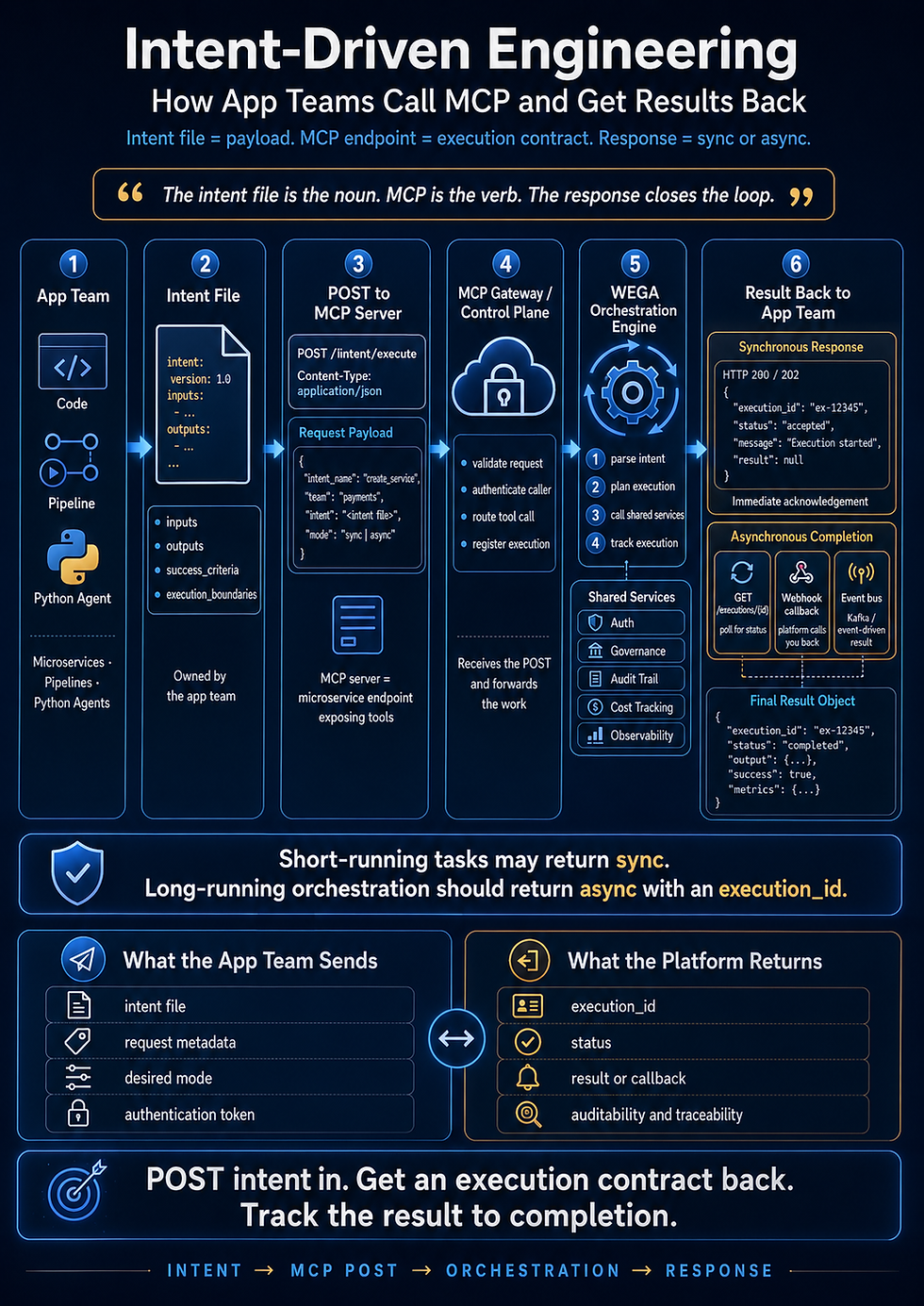
And that is also the Intent-Driven Engineering mindset.
The intent defines the outcome.
Claude Code helps execute.
The architecture defines the boundaries.
The evidence proves the result.
The human makes the decision.
That is the loop.
That is the system.
That is the exam.
And that is where this 60-article series lands.
Not as the final word on Claude Code.
Not as a replacement for hands-on practice.
But as a strong preparation foundation for someone who already knows engineering, already knows architecture, already understands enterprise delivery, and now wants to bring Claude Code into that world responsibly.
Sixty arles.
One mindset.
Do not just use Claude Code. Architect with it.
:::That wraps the main 60. Next post should be the capstone summary: “Claude Architect Certification: The 60-Article Field Guide” with links, final study checklist, exam-day mindset, and a clean table of what to use when.
Comments