

Claude Architect Certification Prep: Articles 33–36 Combined
- Mark Kendall
- 21 hours ago
- 7 min read

Claude Architect Certification Prep: Articles 33–36 Combined
The Architect’s Core Skill: Turning Chaos Into an Executable System
At this point in the certification journey, the exam is no longer just asking whether you know what Claude Code, MCP, tools, prompts, agents, and context windows are.
It is testing whether you can architect with them.
That is a different thing.
A developer may ask, “Can Claude write the code?”
An architect asks:
What should Claude know?
What should Claude be allowed to do?
What should be handled by tools?
What needs evidence?
Where can the system fail?
How do we know the answer is reliable enough to act on?
That is the mindset these chapters are about.
Articles 33 through 36 are really one big idea:
Claude architecture is not magic. It is disciplined context, disciplined tools, disciplined workflows, and disciplined validation.
That is what we need to understand before exam day.
1. The Architect Does Not Start With the Model
One of the biggest traps in AI architecture is starting with the model.
That sounds backwards, because Claude is the centerpiece. But architecturally, the model is only one part of the system.
The correct starting point is the business intent.
What is the user trying to accomplish?
What decision needs to be made?
What action needs to happen?
What system needs to change?
What evidence will prove the work was completed correctly?
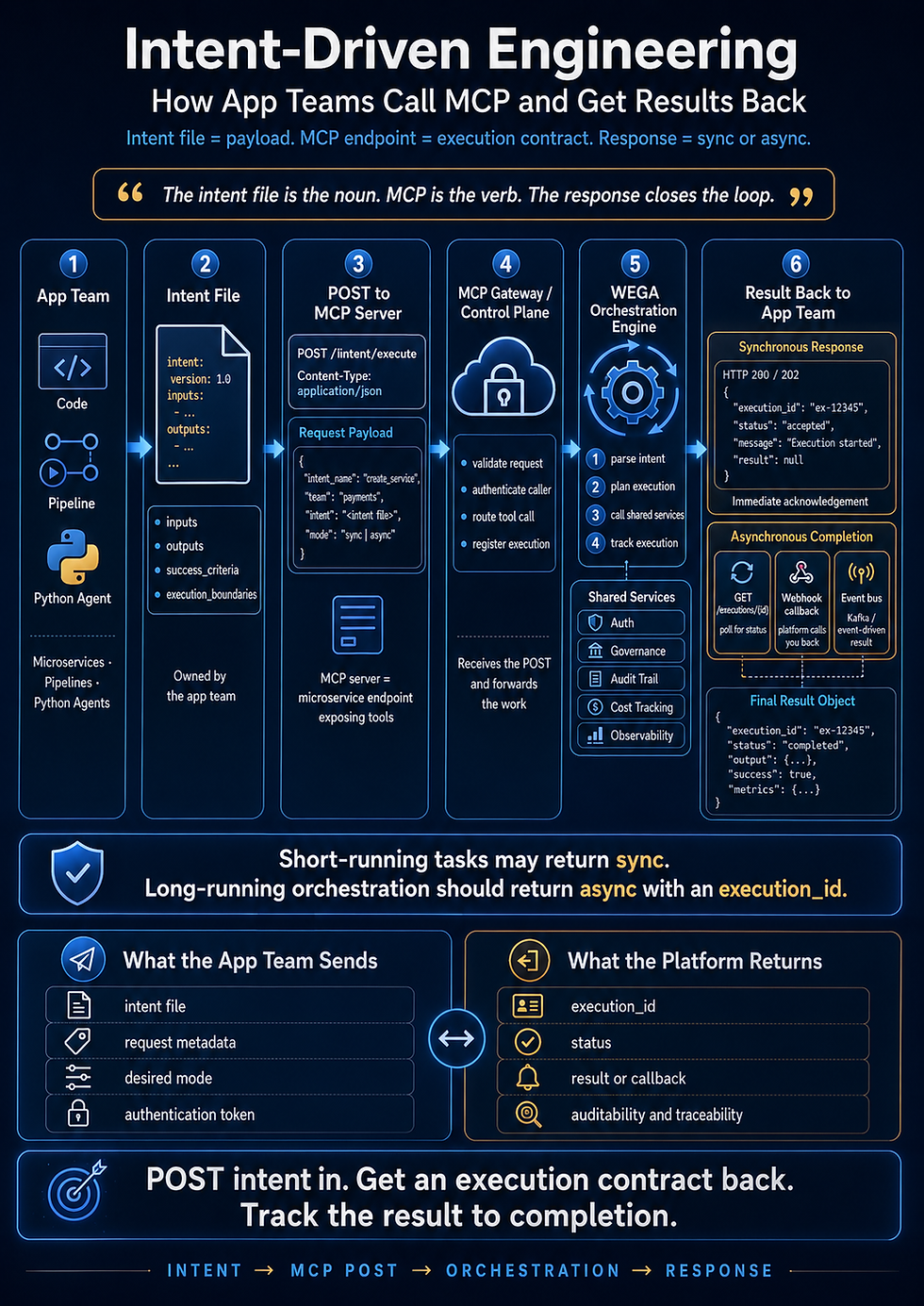
That is why Intent-Driven Engineering matters so much.
An intent file gives the AI system a clear operating frame before it begins acting. Without that, Claude is forced to infer too much.
And inference is where risk starts.
A good intent file should define:
the goal
the scope
the constraints
the expected output
the tools available
the evidence required
the stop conditions
the definition of done
For the certification exam, this is a major mindset shift.
Claude Code is not just a coding assistant. It is an execution environment that needs architectural boundaries.
2. Context Is the System Boundary
Context management is one of the most important exam topics because context is where Claude’s reasoning happens.
Bad context creates bad reasoning.
Too little context creates guessing.
Too much context creates noise.
Wrong context creates confident mistakes.
An architect has to decide what belongs in context and what does not.
There are several types of context:
Project Context
This includes the repository structure, coding standards, framework choices, build commands, deployment patterns, test strategy, and team conventions.
This is where files like CLAUDE.md, memory files, README files, intent files, and repo documentation become important.
The point is not to dump everything into Claude.
The point is to give Claude the right working map.
Task Context
This is the specific thing Claude is trying to do right now.
For example:
“Add a new API endpoint for customer status lookup.”
That task needs focused context:
relevant files
existing endpoint patterns
auth rules
error-handling standards
test requirements
acceptance criteria
Enterprise Context
This is where most companies fail.
Enterprise context includes architecture standards, security rules, regulatory constraints, cloud policies, approved patterns, data boundaries, and deployment governance.
Claude cannot magically know those things unless the architecture provides them.
That is why the architect must design a context layer.
The exam may not use the phrase “enterprise context layer,” but that is exactly the idea.
3. Tools Are Not Add-Ons. Tools Are Architecture.
A tool is not just a convenience.
A tool changes what Claude can actually do.
Without tools, Claude can reason and generate.
With tools, Claude can inspect, retrieve, test, modify, validate, deploy, and report.
That means tool design is an architectural decision.
The key question is:
Should Claude answer from memory, or should Claude call a tool?
For high-confidence systems, the answer is often: call the tool.
Use tools when the task requires:
current data
external system access
file inspection
API calls
database lookup
test execution
build validation
search
structured retrieval
repeatable operations
This is where MCP matters.
MCP gives Claude a clean way to connect to external capabilities: GitHub, Jira, Confluence, databases, file systems, cloud services, internal tools, or custom enterprise systems.
For the exam, remember this:
MCP is not just integration. MCP is how the model safely reaches outside itself.
That is a very important architectural idea.
4. The Architect Must Separate Reasoning From Action
This is another exam-level concept.
Claude can reason.
Claude can also act through tools.
But reasoning and acting should not be treated as the same thing.
Reasoning is where Claude evaluates the problem.
Action is where Claude changes something.
A well-designed workflow often looks like this:
Understand the intent.
Gather context.
Plan the work.
Identify files, systems, or tools needed.
Execute the smallest safe step.
Validate the result.
Produce evidence.
Decide whether to continue, stop, or escalate.
This is the opposite of reckless automation.
The architect does not want Claude blindly editing files, calling APIs, or deploying changes without control.
The architect wants Claude to move through a governed loop.
That loop may include:
planning
tool calls
test execution
evidence collection
human approval
rollback options
final summary
That is how agentic workflows become enterprise-ready.
5. Agents Are Best When They Have Clear Jobs
Agentic architecture can sound exciting, but the exam will reward simplicity.
Do not create agents just because agents sound advanced.
Create agents when separation of responsibility improves the system.
For example, a strong architecture might use:
A Planning Agent
Breaks the intent into steps.
A Code Agent
Implements the change.
A Test Agent
Runs tests, reads failures, and recommends fixes.
A Security Agent
Checks for secrets, unsafe patterns, dependency issues, and policy violations.
A Documentation Agent
Updates README, usage notes, API docs, or release notes.
An Orchestrator
Coordinates the flow and decides what happens next.
But the architect must ask:
Is this complexity necessary?
For a small task, one Claude Code session with good context may be enough.
For a larger enterprise workflow, agents can help.
The certification mindset is not “use the most advanced pattern.”
The certification mindset is:
Use the simplest pattern that gives reliable, explainable, validated results.
That sentence is worth remembering.
6. Structured Output Reduces Ambiguity
One of the most practical things an architect can do is require structured output.
When Claude returns free-form text, the result may be useful to a person, but harder for a system to validate.
When Claude returns structured output, downstream systems can parse, evaluate, test, route, approve, or reject it.
Examples include:
{
"decision": "proceed",
"confidence": 0.86,
"risks": ["missing integration test", "unclear rollback plan"],
"next_action": "run test suite",
"evidence_required": ["test results", "diff summary"]
}
This matters for:
tool responses
workflow decisions
test reports
risk assessments
PR summaries
deployment gates
architecture reviews
For the exam, think of structured output as a reliability technique.
It makes Claude easier to govern.
7. Reliability Comes From Evidence, Not Confidence
This may be the most important concept in this whole section.
Claude can sound confident.
That does not mean the result is correct.
Enterprise architecture needs evidence.
Evidence can include:
tests passed
build succeeded
file diff reviewed
tool output verified
API response confirmed
logs inspected
policy checks passed
human approval captured
rollback plan documented
The architect should not ask, “Does Claude think it is done?”
The architect should ask:
What evidence proves it is done?
That is a certification-level answer.
In Claude Code workflows, this means the system should not stop at generated code. It should continue to validation.
Code generation is not the finish line.
Validated delivery is the finish line.
8. Stop Conditions Are Part of the Design
A good AI workflow knows when to stop.
This sounds simple, but it is critical.
Without stop conditions, an agentic loop may:
keep retrying bad fixes
drift away from the original intent
over-edit the codebase
hide uncertainty
create unnecessary complexity
continue after hitting a policy boundary
Stop conditions should be explicit.
Examples:
Stop if tests fail three times.
Stop if required files are missing.
Stop if production credentials are needed.
Stop if the task requires business approval.
Stop if confidence is below threshold.
Stop if the requested change violates architecture standards.
Stop after producing a plan and wait for approval before implementation.
This is how an architect controls risk.
Agentic systems need freedom, but not unlimited freedom.
9. The Clean Exam Pattern
If I had to reduce Articles 33–36 into one exam pattern, it would be this:
Intent
↓
Context
↓
Plan
↓
Tool Use
↓
Action
↓
Validation
↓
Evidence
↓
Decision
That pattern shows up everywhere.
For coding workflows.
For MCP tool use.
For agent orchestration.
For structured output.
For enterprise governance.
For Claude Code reliability.
If you can explain that loop clearly, you are thinking like the architect the exam is trying to identify.
10. What You Should Know for the Exam
For these chapters, make sure you can explain the following without overcomplicating it:
Claude needs the right context, not unlimited context.
MCP is the architecture layer that lets Claude safely connect to tools and systems.
Tools should be used when the answer requires current, external, verifiable, or system-specific information.
Agents should have clear responsibilities and should not be added unless they improve reliability or manage complexity.
Structured output makes AI behavior easier to validate, route, and govern.
Stop conditions prevent runaway automation.
Evidence is more important than model confidence.
The architect’s job is not to make Claude sound smart.
The architect’s job is to make Claude useful, safe, reliable, and governable.
Final Takeaway
The Claude Certified Architect exam is not just testing AI vocabulary.
It is testing architectural judgment.
Can you design a system where Claude has the right context, the right tools, the right boundaries, and the right validation?
Can you decide when to use a simple prompt, when to use Claude Code, when to add MCP, when to orchestrate agents, and when to stop?
That is the real skill.
And that is why Intent-Driven Engineering fits so naturally into this world.
Intent creates the starting point.
Context creates the reasoning boundary.
Tools create capability.
Agents create workflow.
Evidence creates trust.
Stop conditions create control.
That is the architecture.
That is the exam.
And that is the future of serious AI engineering.
:::
Comments