

How to Take a Raw Epic and Turn It into a Governed, Production-Ready Plan
- Mark Kendall
- Jan 27
- 5 min read

How to Take a Raw Epic and Turn It into a Governed, Production-Ready Plan
(A Practical, Repeatable Method Any Company Can Use)
Most enterprise initiatives fail for a simple reason:
Everyone starts building before anyone actually agrees on what’s being built.
What I’m about to describe is a real, end-to-end method we used to take a raw, vaguely defined epic and turn it into:
A production-ready delivery plan
A clean architectural boundary
A future roadmap
Machine-readable governance guardrails
And continuous drift detection built into CI/CD
This is not theory.
It’s not Agile theater.
It’s not consulting fluff.
It’s a practical, repeatable system any company can apply to any epic or any repository.
Step 1 — Start With the Customer’s Raw Epic (Even Though It’s Wrong)
Every engagement starts the same way.
A stakeholder or customer brings you an epic that sounds like this:
“We need a cloud-agnostic integration platform that supports async and sync APIs, dynamic routing, multiple backends, persistence, dashboards, and future scalability.”
In other words:
they tell you what they think they want.
At this stage, the epic is always:
Over-scoped
Under-specified
Politically shaped
Technically dangerous
Operationally unrealistic
And that’s normal.
This epic is just raw intent, not a build plan.
Step 2 — The Reality Check Refinement Session
This is the most important step and the one almost nobody does properly.
You sit down with stakeholders and ask uncomfortable but necessary questions:
What already exists today?
What’s already deployed?
What’s actually broken?
What must be delivered to Production this quarter?
What is genuinely future-state platform work?
What would blow up delivery if we tried to do everything at once?
This is where fantasy gets separated from physics.
In our case, the reality was:
We already had multiple microservices running in Dev
They already worked in an asynchronous “post office” model
They were not hardened
They had weak logging and testing
They were not production-ready
And they were absolutely not a new platform yet
So we split the epic into two truths:
Truth #1 — Near-Term Delivery
Harden what already exists and get it safely into Production.
Truth #2 — Future Evolution
Design a future hybrid async/sync platform, but don’t build it yet.
That single separation saved months of chaos.
Step 3 — Refine the Epic Into a Real, Winnable Scope
We rewrote the epic so it now meant this:
Harden existing microservices
Add production-grade logging
Add correlation IDs
Add integration and contract testing
Promote Dev → UAT → Prod
Create a rollout and cutover plan
At the same time:
Produce a formal architecture
Produce a future roadmap
Define async vs sync policy
Define external system boundaries
Design-only. No new runtime. No new platform.
Now the epic became:
Deliverable in ~10 weeks
Safe
Valuable
Politically defensible
Operationally sane
Step 4 — Use AI as a Thinking Partner, Not a Code Generator
This is where AI actually adds value.
We ran multiple AI passes to:
Stress-test the scope
Identify hidden architectural bombs
Surface delivery risks
Clarify async vs sync implications
Normalize acceptance criteria
Translate vague language into operational reality
This wasn’t “generate code.”
It was:
Architecture review
Scope sanity checking
Risk modeling
Delivery sequencing
AI acted like a brutally honest senior architect in the room.
Step 5 — Get Management Alignment on the Refined Epic
This is the political inflection point.
We showed management:
What the customer thought they wanted
What was actually safe to deliver
What would go to Production now
What would be designed only
What would become a new epic later
The key outcome:
Management agreed to the refined epic.
That agreement is critical.
Because everything after this point is now anchored to a shared truth.
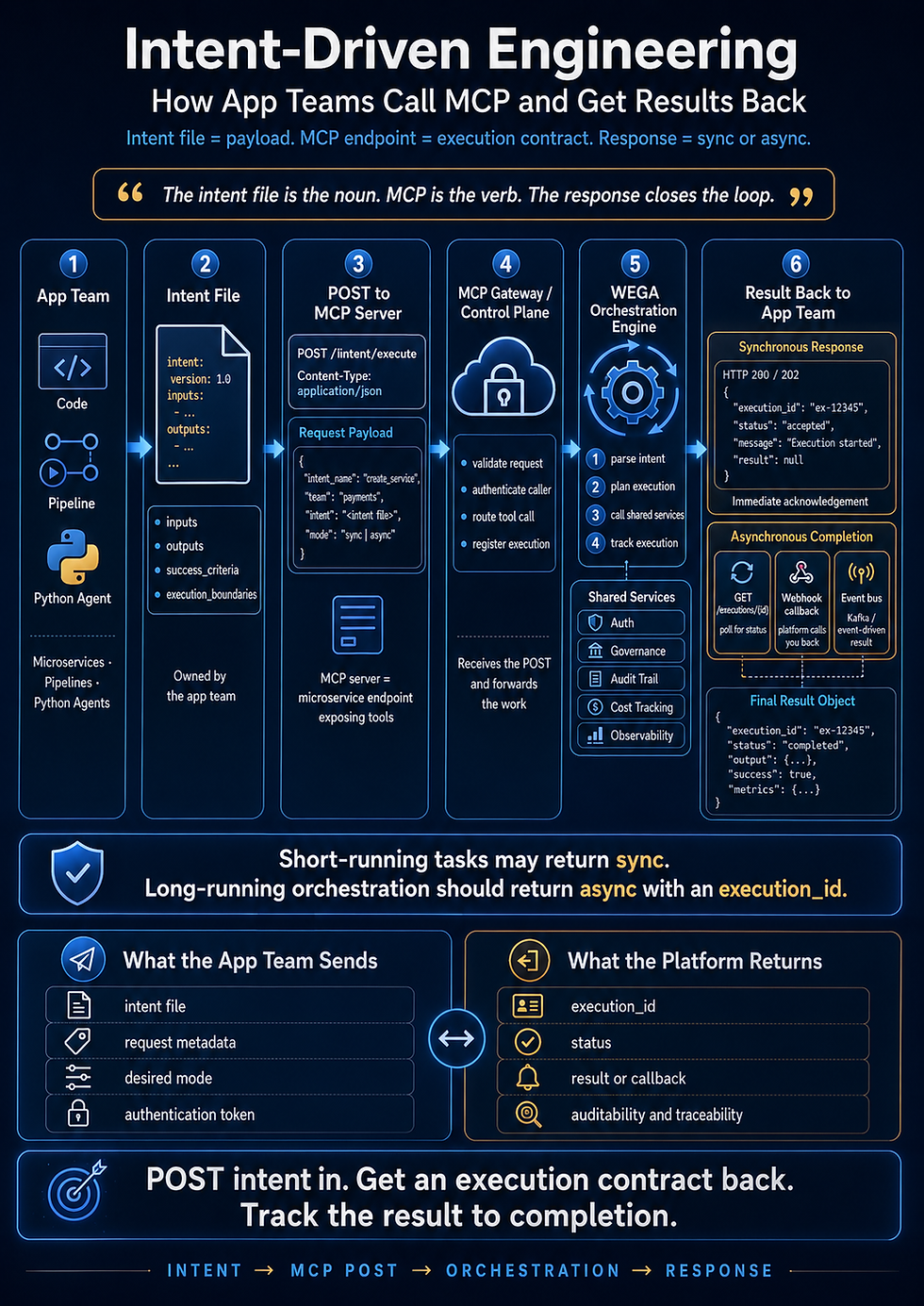
Step 6 — Freeze Intent as Machine-Readable Guardrails
This is where everything changes.
We created a full set of intent files for the epic:
Epic intent
Scope guardrails
Delivery intent
Logging intent
Testing intent
Environment intent
Rollout intent
Design intent
External systems intent
Async/sync policy intent
Governance enforcement intent
These files define:
What must happen
What must not happen
What is delivery vs design
What async rules apply
What logging is mandatory
What testing is mandatory
What the AI is allowed to block vs only report
This becomes the record of truth.
Not a wiki.
Not a slide deck.
Not someone’s memory.
Actual versioned, enforceable intent.
Step 7 — Create Stories and the Implementation Plan
Only now do you create stories.
Why?
Because now:
Scope is frozen
Architecture boundaries are explicit
Delivery rules are explicit
Async/sync policy is explicit
Logging and testing are non-negotiable
Now your stories can’t silently drift.
Step 8 — Install the Governance Agent in CI/CD
This is the governance breakthrough.
We installed an AI-based governance agent into the CI/CD pipeline to:
Compare repo reality vs intent files
Detect architectural drift
Flag violations
Classify findings as:
WARN (must fix)
REPORT (informational)
The agent now acts as:
An architectural conscience embedded in the pipeline.
Not a gatekeeper.
Not a bureaucracy engine.
A quiet guardrail.
Step 9 — Run Drift Analysis Continuously
Now every change is evaluated against intent:
Did we add sync calls?
Did we add new runtime components?
Did we skip tests?
Did we remove correlation IDs?
Did we add business logic beyond scope?
Did we violate environment rules?
Nothing drifts silently anymore.
Step 10 — Budgeting and Staffing Become Rational
Here’s the hidden superpower.
When management went into budgeting:
This epic was no longer:
A vague platform dream
A political compromise
A guessing game
It was now:
A scoped delivery plan
With explicit design work
With explicit non-goals
With staffing clarity
With a known blast radius
This turned budgeting into engineering math instead of theater.
What This Process Actually Is
This is not Agile.
This is not Waterfall.
This is not SAFe.
This is:
Intent-Driven Delivery with Embedded Governance.
It combines:
Human negotiation
Architecture discipline
AI-assisted reasoning
Machine-readable intent
Pipeline enforcement
Continuous drift detection
Why This Is a Low-Cost, High-Impact Governance Model
Here’s the honest business reality.
For a few thousand dollars per engagement, a company gets:
Epic refinement facilitation
Architecture sanity checking
AI-assisted scope modeling
Intent file generation
Governance agent installation
Drift detection in CI/CD
Repo-level enforcement
A repeatable delivery method
That is absurdly cheap compared to:
One failed quarter
One botched platform rewrite
One production meltdown
One runaway integration project
Final Thought
This is the first time I’ve seen:
Architecture
Delivery
Governance
AI
CI/CD
And human negotiation
come together into one coherent, operational system.
This isn’t theory anymore.
We just ran it end-to-end.
And it worked.
If You Want to Try This in Your Own Company
This method works for:
Any epic
Any microservices repo
Any modernization effort
Any integration project
Any platform rewrite
It doesn’t require a new framework.
It doesn’t require a re-org.
It doesn’t require a six-month transformation.
It requires:
Discipline
Explicit intent
One governance agent
And the willingness to slow down for one week to go fast for three months.
Comments