

How We Turned 25 Engineers Into the Effective Output of 50
- Mark Kendall
- 4 days ago
- 4 min read

How We Turned 25 Engineers Into the Effective Output of 50
The Real Story Behind Intent-Driven Engineering, Claude Code, and AI-Assisted Delivery
For the last couple of years, the technology industry has been flooded with headlines about AI replacing engineers, eliminating jobs, or magically generating software with a single prompt.
That is not what happened here.
What happened inside our organization was much more practical, much more disciplined, and honestly much more difficult than people realize.
We did not replace engineers.
We amplified them.
Over time, through Intent-Driven Engineering, governed AI workflows, Claude Code, ChatGPT, modern automation pipelines, and disciplined engineering practices, we effectively doubled the delivery capacity of a 25-engineer organization.
Not overnight.
Not with hype.
And definitely not by telling engineers to “just use AI.”
We did it systematically.
What Is Intent-Driven Engineering?
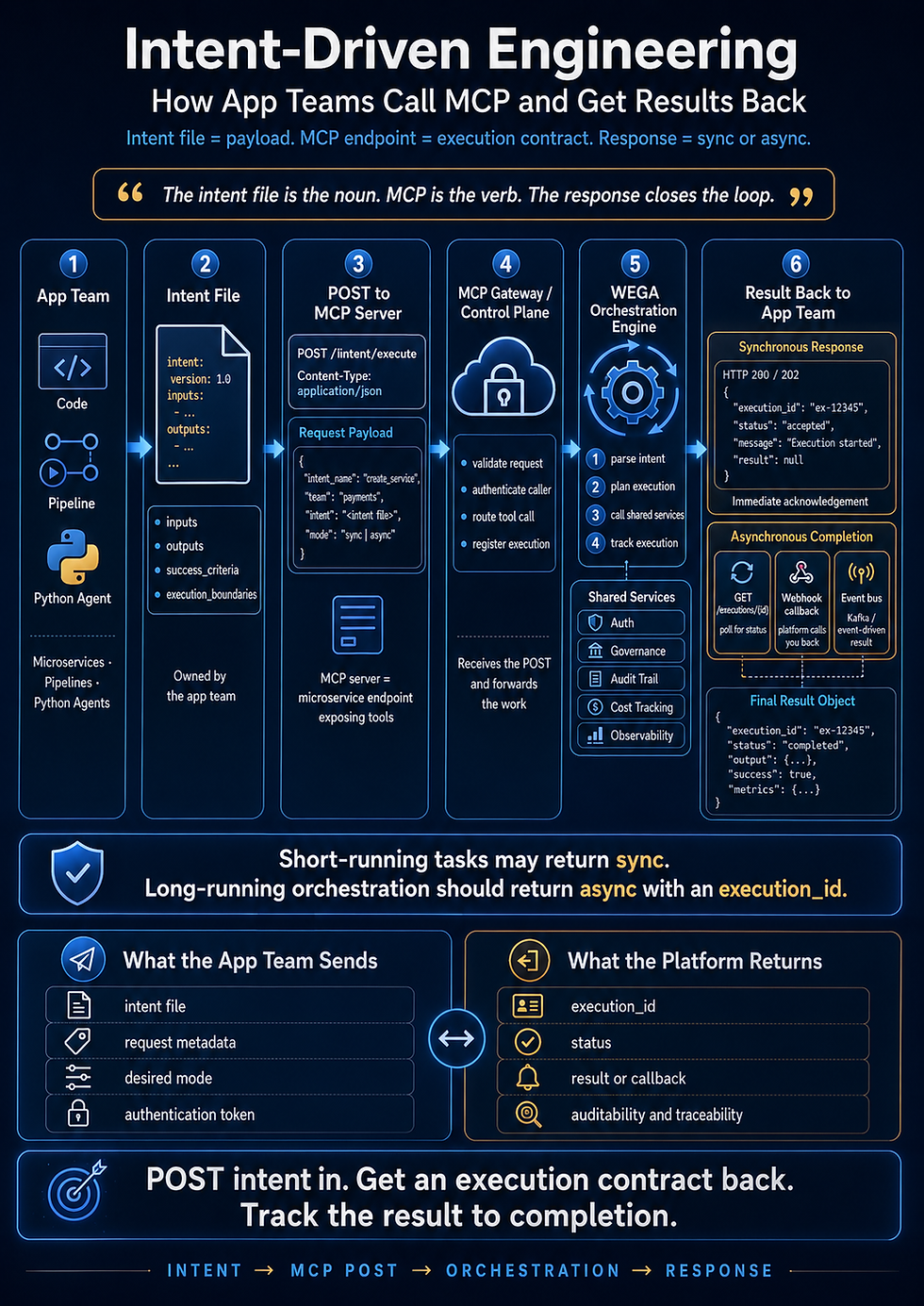
Intent-Driven Engineering is the shift from manually constructing every implementation detail toward defining:
desired outcomes
constraints
governance
architecture boundaries
validation criteria
operational expectations
success measurements
Instead of engineers spending most of their energy wiring systems together manually, the system increasingly helps generate, validate, orchestrate, and enforce implementation patterns automatically.
The engineer moves from:
typing everything manually
to:
directing, validating, governing, and refining outcomes.
That changes everything.
The Starting Point: Chaos
Like many enterprise organizations, we started with:
scattered repositories
inconsistent standards
duplicated patterns
tribal knowledge
slow onboarding
architecture drift
repetitive coding tasks
documentation gaps
delivery bottlenecks
inconsistent APIs
inconsistent testing approaches
Every new engineer had to rediscover the same information repeatedly.
Every project solved similar problems differently.
Every team had slightly different patterns.
And every delivery cycle accumulated more entropy.
AI alone does not solve this problem.
In fact, unmanaged AI can make it worse.
Phase 1: Standardization Before Acceleration
This was the first major lesson.
Before AI could truly accelerate engineering, we had to reduce organizational randomness.
So we standardized:
API patterns
project structures
testing conventions
CI/CD expectations
observability approaches
architecture guardrails
reusable templates
deployment patterns
governance models
This became critical because AI performs dramatically better when patterns are predictable.
The cleaner the engineering system became, the more powerful AI assistance became.
Phase 2: Introducing AI Carefully
At first, engineers used:
ChatGPT
Claude
Copilot
Claude Code
AI plugins
local prompts
code assistants
But early usage was inconsistent.
Some engineers became dramatically faster.
Others barely improved.
Why?
Because prompting is not engineering strategy.
Random prompting creates random results.
So we shifted away from:
“Ask AI to help.”
Toward:
“Engineer governed intent into the workflow.”
That distinction changed the trajectory entirely.
Phase 3: Intent Becomes the System
This was the turning point.
Instead of treating prompts as temporary chat interactions, we began defining:
structured intent files
execution boundaries
reusable engineering patterns
validation criteria
governance policies
architecture expectations
success measurements
The intent itself became reusable organizational knowledge.
Not just human memory.
Not tribal knowledge.
Machine-readable intent.
This allowed:
faster onboarding
more consistent output
reusable delivery patterns
automated governance
automated validation
reduced architecture drift
safer AI-assisted generation
Over time, engineers stopped reinventing common implementation details.
The organization began compounding knowledge instead of losing it.
Phase 4: Claude Code Changed Engineering Velocity
This is where things accelerated significantly.
Claude Code enabled engineers to:
analyze large repositories quickly
refactor safely
understand unfamiliar systems
generate scaffolding
automate repetitive implementation work
trace dependencies
modernize codebases
accelerate testing
improve documentation
identify architectural inconsistencies
But the real value was not code generation alone.
The real value was cognitive acceleration.
Engineers could process and reason about systems faster than before.
That reduced:
onboarding time
investigation time
debugging time
architecture review cycles
repetitive coding effort
The engineer stayed in control.
But the engineer stopped working alone.
Phase 5: Governance Becomes Executable
This may have been the biggest breakthrough of all.
Traditional governance depends on humans remembering rules.
That does not scale.
So we increasingly shifted governance into:
validators
pipelines
architecture enforcement
automated checks
reusable policies
intent constraints
remediation workflows
Governance stopped being documentation.
Governance became executable.
That dramatically reduced:
review friction
inconsistency
rework
production defects
architecture drift
And most importantly:
it increased organizational confidence.
The Real Productivity Multiplier
People often ask:
“Did engineers become 10x developers?”
No.
That framing misses the point entirely.
What actually happened was:
less wasted motion
less duplication
less manual discovery
fewer repetitive tasks
faster onboarding
better architectural consistency
faster validation cycles
reusable organizational intelligence
dramatically improved engineering flow
Over time, the organization achieved approximately:
2x effective engineering throughput
Not because humans suddenly became superhuman.
But because friction was systematically removed.
What This Means for the Industry
Most organizations are still approaching AI as:
isolated prompts
disconnected copilots
unmanaged experimentation
random plugins
fragmented agent systems
That creates temporary gains.
But sustainable transformation requires:
governance
standardization
reusable intent
observable execution
architectural discipline
organizational learning systems
The future is not:
“AI replacing engineers.”
The future is:
“Engineers operating through governed intent systems.”
That is a very different world.
Key Takeaways
AI alone does not double engineering productivity.
Standardization must come before acceleration.
Intent is more powerful than prompting.
Governance must become executable.
Claude Code and ChatGPT amplify engineers best inside disciplined systems.
Organizational learning compounds when intent becomes reusable.
The biggest gains come from removing friction, not replacing humans.
Most importantly:
We did not build a faster coding environment.
We built a better engineering system.
And over time, that system allowed 25 engineers to consistently deliver at the effective output level of roughly 50.
That is the real story behind Intent-Driven Engineering.
Comments