

If You’re Using Claude Code, Every Repo Needs a CLAUDE.md — But That’s Just the Start

If You’re Using Claude Code, Every Repo Needs a CLAUDE.md — But That’s Just the Start
From AI Guidance Files to Intent-Driven Engineering Systems
Intro
As AI-assisted development becomes standard, a new pattern is emerging:
Teams are introducing a simple file—CLAUDE.md—to guide how AI behaves inside a repository.
And let’s be clear:
If you’re using Claude Code, every single repo should have a CLAUDE.md file. No exceptions.
Why?
Because without it, you’re not engineering with AI…
You’re hoping with AI.
But here’s where most teams stop—and where the real opportunity begins:
A better AI assistant does not equal a better engineering system.
CLAUDE.md is the foundation.
It’s not the system.
What Is CLAUDE.md?
A CLAUDE.md file is a structured Markdown document that defines how an AI assistant (like Claude Code) should behave within your codebase.
It acts as:
A behavioral contract for AI
A shared standard for engineers
A guardrail system to prevent drift
Typical guidance includes:
Plan before executing
Break work into steps
Validate before completion
Follow repo patterns
Continuously improve
In simple terms:
It upgrades AI from “autocomplete” to “disciplined contributor.”
The Non-Negotiable Standard
If your team is using Claude Code, this is not optional.
Every repo should include:
/CLAUDE.md → AI behavior rules
/docs/lessons.md → captured learnings
/tasks/todo.md → structured execution tracking
Without this:
AI outputs become inconsistent
Engineers prompt differently
Quality drifts across repos
You lose the very thing AI is supposed to give you: leverage
What a Good CLAUDE.md Should Look Like
Start simple—but structured:
## 1. Plan First
- Create a plan for any task with 3+ steps
- Stop and re-plan if execution deviates
## 2. Execution
- Break work into discrete, testable steps
- One responsibility per task
## 3. Verification
- Never mark complete without validation
- Run tests, check logs, confirm outputs
## 4. Standards
- Follow existing repo patterns
- Prefer simplicity over complexity
- Minimize surface area of change
## 5. Feedback Loop
- Capture mistakes in /docs/lessons.md
- Apply learnings to future work
Why this works
Without structure, AI will:
Drift from intent
Over-engineer solutions
Miss edge cases
Break consistency
CLAUDE.md introduces discipline.
Where CLAUDE.md Delivers Real Value
When implemented across repos, it:
Improves consistency of AI output
Reduces prompt randomness
Aligns engineers on how work gets done
Creates a repeatable interaction model with AI
👉 This is a meaningful step forward.
And it signals something important:
The industry is realizing AI needs structure—not just access.
But Here’s Where It Breaks Down
Even with a perfect CLAUDE.md…
You’re still operating inside a traditional engineering model:
Requirements are scattered
Architecture is implied
Integration is manual
Governance is inconsistent
The result?
You get:
Faster code
Cleaner outputs
…but still:
Rework
Misalignment
Fragile systems
Because the problem isn’t just how AI behaves.
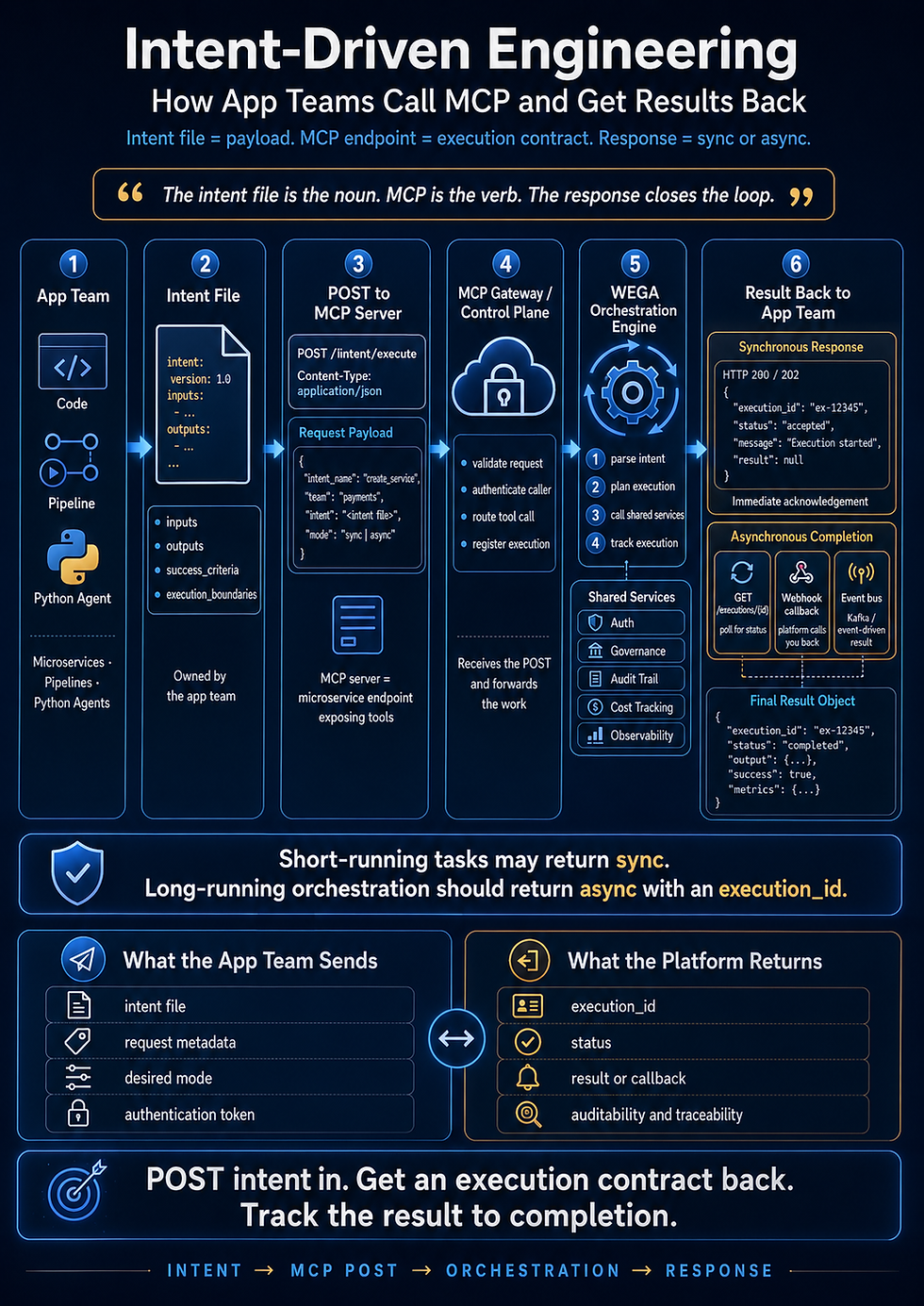
What Is Intent-Driven Engineering?
Intent-Driven Engineering takes the next step.
Instead of focusing on AI behavior…
It defines what the system should do—before implementation begins.
Core principles:
Intent is the source of truth
AI executes against structured intent
Orchestration replaces manual coordination
Patterns become reusable across systems
Governance is built-in—not added later
In simple terms:
CLAUDE.md tells AI how to behave
Intent-Driven Engineering tells the system what to become
The Shift That Changes Everything
Focus
Intent-Driven Engineering
Scope
Developer-level
System-level
Purpose
Guide AI behavior
Define system intent
Consistency
Per repo
Across enterprise
Execution
Manual + AI assisted
Orchestrated
Outcome
Better code
Predictable systems
Why This Matters Now
Right now, most teams are:
Moving faster with AI
Generating more code than ever
But still struggling with:
Alignment
Integration
Long-term maintainability
The truth is simple:
Speed without structure just accelerates chaos.
CLAUDE.md helps individuals move faster.
Intent-Driven Engineering ensures teams move in the same direction.
Key Takeaways
If you’re using Claude Code → CLAUDE.md is mandatory
It creates structure, discipline, and consistency for AI usage
It’s a critical first step in AI-enabled engineering
But:
It does not solve system-level problems
It does not define architecture
It does not provide orchestration or governance
👉 Intent-Driven Engineering is the next evolution
Final Thought
Every repo should have a CLAUDE.md.
That’s how you get control of AI.
But if you stop there…
You’ve improved your tools—
not your system.
And the teams that win next won’t just use AI better…
They’ll engineer with intent from the start.
#IntentDrivenEngineering #AICode #ClaudeCode #SoftwareArchitecture #EngineeringLeadership #LearnTeachMaster
Comments