

Intent-Driven Engineering: A Playbook for Mastering Unstructured Data
- Mark Kendall
- 4 days ago
- 3 min read

Intent-Driven Engineering: A Playbook for Mastering Unstructured Data
Intro
Most organizations are drowning in unstructured data.
Word documents. PDFs. Diagrams. Screenshots. Old architecture decks. Meeting notes. Half-finished process flows.
The problem isn’t lack of information.
It’s lack of structure, context, and direction.
So teams fall into the same trap:
Open a document
Ask a few questions
Get a summary
Move to the next file
Repeat. Over and over.
It feels productive.
It isn’t.
Because nothing connects.
This playbook introduces a different approach:
Don’t prompt documents.
Build a system that understands them.
What Is Intent-Driven Unstructured Data Processing?
Intent-Driven Engineering treats AI not as a responder, but as a system.
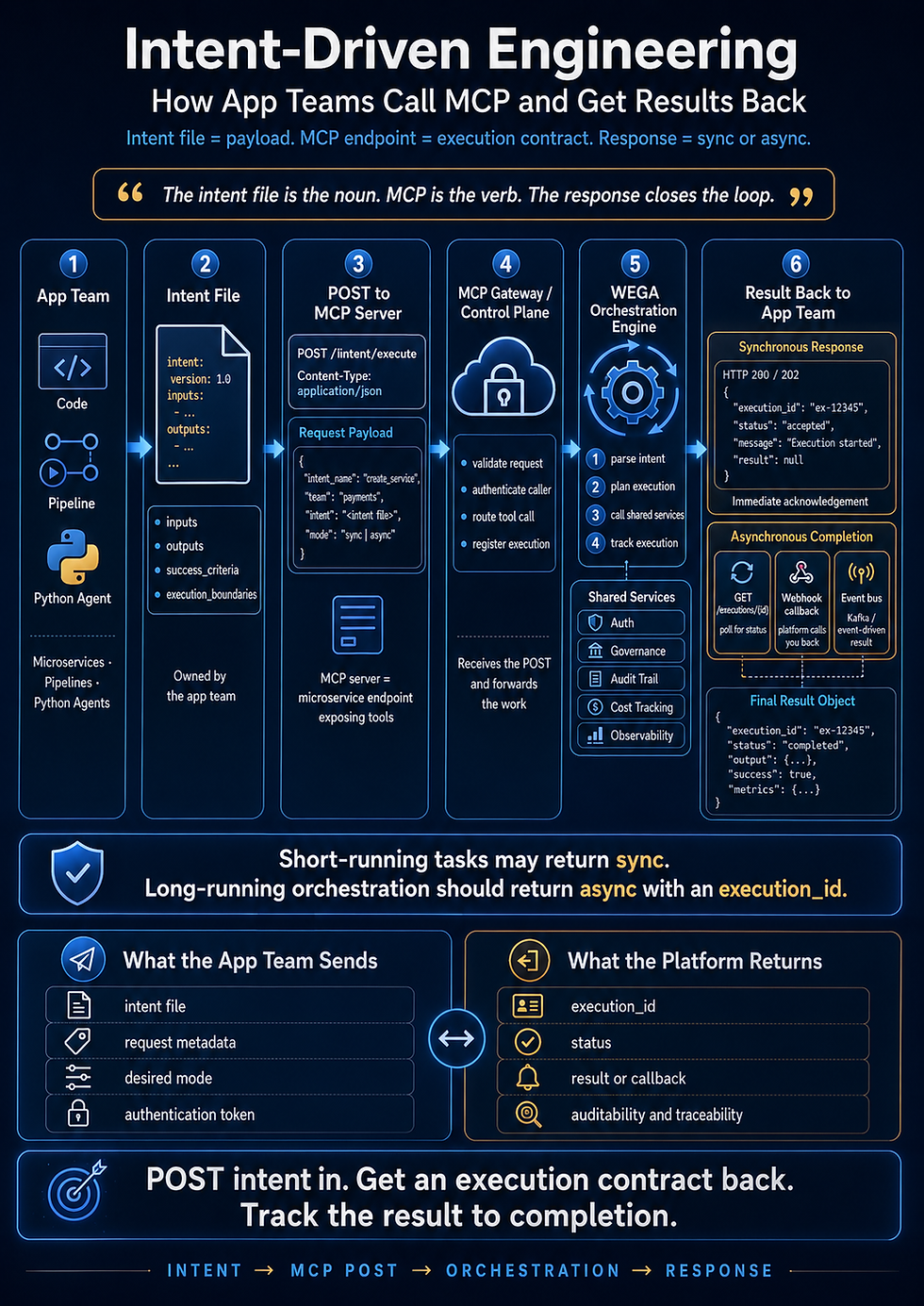
At the center of that system is the intent file.
The intent file is not documentation. It is the system.
It defines:
What you are trying to accomplish
What data you have
What must be produced
What success looks like
What must NOT happen
In this model:
Intent = Operating System
Prompts = Commands
Outputs = Engineering Artifacts
The Problem with Traditional Prompting
Without intent, working with unstructured data leads to:
Repeated questions across documents
No shared understanding
No accumulation of knowledge
Loss of context between sessions
Inconsistent outputs
No path to implementation
You’re not building knowledge.
You’re generating isolated answers.
The Shift: From Prompting to Systems Thinking
Instead of asking:
“What is this document?”
You define:
“Here is the system. Analyze everything within it.”
This changes everything.
The Intent-Driven Workflow (Aligned to the Image)
1. Unstructured Inputs (The Reality)
Start with what you actually have:
Word documents
PDFs
Diagrams & architecture images
Sequence diagrams
Spreadsheets
Meeting notes
Screenshots / ping charts
These are messy, scattered, and incomplete.
That’s normal.
2. Intent as the Operating System
Before analyzing anything, define the system:
Your intent file should include:
Purpose → Why are we doing this?
Context → Domain, goals, problems
Tasks → What needs to happen
Inputs → What data exists
Outputs → What must be produced
Constraints → Rules and boundaries
Success Criteria → What “done” means
Execution Boundaries → What not to do
This is the control layer.
This is what prevents chaos.
3. Prompts as Commands
Now — and only now — do you prompt.
But your prompts are no longer random.
They are executions inside the system:
“Analyze this file. What is it?”
“How does this connect to other files?”
“Extract domain terms and systems.”
“Identify workflows and actors.”
“Detect gaps, risks, and conflicts.”
“Build a domain summary.”
Same actions — completely different outcome.
4. Outputs as Artifacts
Instead of temporary answers, you produce:
file_inventory.md
domain_summary.md
system_landscape.md
process_flows.md
gaps_and_risks.md
recommended_next_steps.md
These are not notes.
These are reusable engineering assets.
The End-to-End Playbook
Step 1 — Collect & Organize
Create a local structure:
/domain-analysis
/source-docs
/outputs
/intents
Group documents by domain or function.
You are creating context before intelligence.
Step 2 — Define the Intent
Write your intent file.
This is the most important step.
If this is weak, everything downstream breaks.
Step 3 — Discover & Classify
Run your first phase:
Identify every document
Determine its purpose
Classify its type
Note initial relationships
No deep thinking yet — just structure.
Step 4 — Extract & Connect
Now extract:
Domain concepts
Systems
Actors
Processes
Business rules
Then connect them.
This is where understanding starts forming.
Step 5 — Synthesize & Validate
Build:
Summaries
Models
Relationships
Then validate:
What’s missing?
What conflicts?
What’s outdated?
Step 6 — Plan & Act
Now you can produce:
Backlogs
Architecture
Modernization plans
Integration strategies
Implementation starting points
This is where Claude Code can take over.
Tool Strategy (Critical for Teams)
Claude AI (Chat)
→ Best for understanding unstructured data
Claude Code
→ Best for turning that understanding into:
structured repos
generated artifacts
implementation scaffolding
Escalation Path (From Chaos to Value)
Unstructured Data
↓
Understanding (Claude AI)
↓
Structured Knowledge
↓
Engineering Assets (Claude Code)
↓
Business Value
Intent drives every step.
Governing Principles
Do not invent facts
Clearly mark assumptions
Separate business vs technical knowledge
Preserve original references
Stay within intent boundaries
Produce outputs that create value
Why This Matters
This approach turns:
Weeks of manual analysis → Hours of structured discovery
Scattered documents → Connected domain knowledge
Conversations → Systems
Outputs → Assets
Most importantly:
It creates a repeatable, scalable way to understand any system — even when nothing is documented properly.
Key Takeaways
Prompting alone does not scale
Structure must come before intelligence
Intent defines behavior
Prompts execute within intent
Outputs must be reusable
AI becomes a system — not a tool
Final Thought
“We’re not asking AI questions anymore.
We’re defining the system it operates in.”
Comments