

Intent to Velocity: The Metric Companies Actually Care About With Claude Code
- Mark Kendall
- 1 day ago
- 7 min read

Intent to Velocity: The Metric Companies Actually Care About With Claude Code
Most companies experimenting with Claude Code are not really asking, “Can AI write code?”
They already know it can.
The real question is much sharper:
When does intent turn into velocity?
That is the metric that matters.
Call it ITV: Intent to Velocity.
Intent to Velocity measures how quickly a company can move from a clearly stated business or engineering intent to measurable delivery acceleration: more completed stories, more shipped features, less rework, fewer handoffs, and better engineering output per sprint.
This is where Intent-Driven Engineering becomes more than a philosophy. It becomes an operating model.
The Real Enterprise Question
A typical enterprise team might say:
“We are completing 25 story points per sprint. We have 360 points in the backlog. At this pace, we need 11 to 15 sprints to complete the work. We are spending money on Claude Code. How does this change the math?”
That is the boardroom question.
Not whether Claude helped generate a class.
Not whether it wrote a test.
Not whether a developer liked using it.
The question is:
Does Claude Code, when combined with a disciplined intent-driven process, increase delivery velocity in a measurable way?
If a team is producing 25 points per sprint today, then a serious AI-enabled engineering model should eventually move that number.
Not someday.
Not theoretically.
Soon.
A 3x improvement means 25 points becomes 75 points.
A 5x improvement means 25 points becomes 125 points.
That changes the entire delivery conversation.
A 360-point backlog no longer looks like a 12-sprint mountain. It starts looking like a much shorter, more manageable execution window.
That is the promise of Intent to Velocity.
Intent Comes Before Velocity
Most companies make the mistake of throwing AI into the existing software delivery process and expecting magic.
They give Claude Code vague tasks.
They let developers experiment.
They ask it to generate code, write tests, summarize tickets, or scaffold components.
That may help, but it does not automatically create enterprise velocity.
Velocity comes when the work is structured correctly before Claude Code begins.
That is the role of intent.
Intent defines:
What are we building?
Why are we building it?
Who is it for?
What business outcome does it support?
What architecture should guide it?
What constraints matter?
What must be true for this to be considered done?
What should Claude Code generate, validate, test, document, and deploy?
Without that intent layer, Claude Code becomes a very powerful assistant trapped inside an unclear delivery system.
With the intent layer, Claude Code becomes part of a production engine.
The ITV Formula
Intent to Velocity can be thought of simply:
Clear Intent + Repo Context + AI Execution + Engineering Governance = Increased Velocity
Each part matters.
Clear intent gives the AI direction.
Repo context gives the AI awareness of the system.
AI execution accelerates implementation.
Engineering governance keeps the output safe, consistent, testable, and aligned with enterprise standards.
The companies that win with Claude Code will not be the ones who merely buy tokens.
They will be the ones who convert those tokens into repeatable delivery outcomes.
Establish the Baseline First
Before a company can claim acceleration, it must establish a baseline.
That means measuring the current state of delivery before the intent-driven AI model is applied.
At minimum, teams should know:
Current sprint velocity.
Average story cycle time.
Average lead time from backlog to production.
Defect rate.
Rework percentage.
Number of stories completed per sprint.
Time spent on design, coding, testing, reviews, deployment, and documentation.
This baseline is critical because it prevents vague AI success stories.
A company should not say, “Claude Code is helping.”
It should say:
“Before Intent-Driven Engineering and Claude Code, we delivered 25 points per sprint. After four to six weeks of structured adoption, we are delivering 50. After deeper workflow integration, we are targeting 75 or more.”
That is how AI becomes measurable.
That is how it earns trust.
The First Phase: Intent Capture
The first step is not coding.
The first step is capturing intent.
This is where the business problem, delivery goal, architecture, constraints, acceptance criteria, and expected output are written down in a form Claude Code can use.
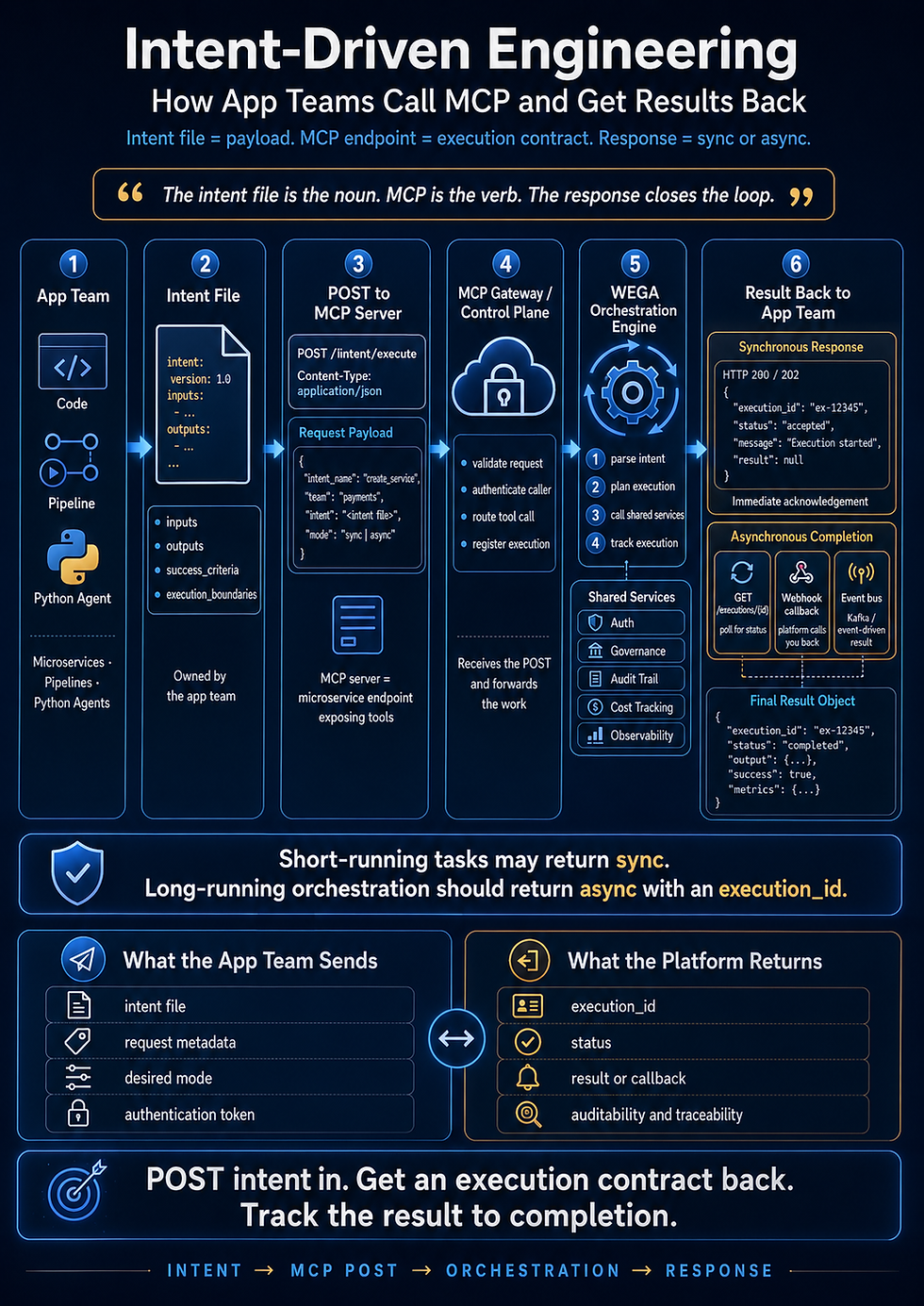
In Intent-Driven Engineering, this often becomes an intent file.
The intent file becomes the bridge between the business request and the engineering system.
It tells Claude Code what matters.
It prevents random generation.
It reduces ambiguity.
It gives the team a shared operating model.
Instead of saying, “Build this feature,” the team defines the intent behind the feature and the boundaries around the work.
This is the first move from chaos to velocity.
The Second Phase: Repo-Driven Execution
Claude Code becomes far more valuable when it works inside a real repository with real context.
That means it can see the architecture, patterns, naming conventions, existing components, tests, services, deployment files, and documentation.
This is where token spend starts becoming engineering leverage.
Claude is no longer answering isolated prompts.
It is operating inside the actual system.
It can generate code that fits the repo.
It can modify existing services.
It can add tests.
It can explain changes.
It can refactor safely.
It can update documentation.
It can help create pull requests that are closer to production quality.
Velocity increases because the AI is not just producing code.
It is producing code that belongs in the system.
The Third Phase: Attack the Bottlenecks
Once the baseline is established and Claude Code is operating from intent, the company can begin attacking velocity directly.
This means identifying where work slows down.
Is it story clarification?
Architecture decisions?
Frontend scaffolding?
Backend service creation?
Test writing?
Code review?
CI/CD failures?
Documentation?
Environment setup?
Dependency issues?
Security review?
Intent-Driven Engineering breaks the delivery system into visible bottlenecks and then applies Claude Code where it creates the highest leverage.
This is why the productivity gain can be dramatic.
The point is not to make one developer type faster.
The point is to compress the entire engineering lifecycle.
The Fourth Phase: Measure Sprint Impact
The first serious ITV checkpoint should happen after one or two sprints.
The question is not whether the team feels faster.
The question is whether the numbers changed.
Did more stories get completed?
Did cycle time drop?
Did rework decrease?
Were fewer handoffs required?
Were tests generated earlier?
Did pull requests move faster?
Did documentation improve?
Did the team spend less time waiting for clarification?
If the answer is yes, the company is starting to convert intent into velocity.
At this stage, a team might move from 25 points to 35 or 45.
That is already meaningful.
But the larger gains come when the team stops treating Claude Code as an assistant and starts treating it as part of the delivery operating model.
The Fifth Phase: Scale the Pattern
Once one team proves the model, the company can scale the pattern.
This is where Intent-Driven Engineering becomes powerful across multiple teams.
The organization can create reusable intent templates for:
New features.
API services.
React components.
Backend workflows.
Data integrations.
Security controls.
Testing strategies.
Deployment patterns.
Documentation.
Production readiness.
Observability.
The more reusable the intent structure becomes, the faster every future project moves.
This is where the 3x to 5x productivity claim becomes realistic.
Not because Claude Code magically solves everything.
Because the organization has created a repeatable system for turning intent into execution.
The ROI Conversation
The ROI of Claude Code should not be measured only in token cost.
That is too small of a lens.
The real ROI calculation should include:
How much delivery time was reduced?
How many more features shipped?
How many fewer defects were introduced?
How much developer time was saved?
How much architecture and documentation work was accelerated?
How much rework was avoided?
How much earlier did the business receive value?
If a company spends more on tokens but delivers a feature set six weeks earlier, the token cost is usually not the issue.
The issue is whether the company has the operating discipline to turn those tokens into measurable business velocity.
From 25 Points to 75 Points
If a team currently completes 25 points per sprint, the first target should not be fantasy.
The first target should be controlled acceleration.
A realistic path might look like this:
Baseline: 25 points per sprint.
Initial adoption: 30 to 40 points.
Intent-file maturity: 45 to 60 points.
Repo-driven Claude execution: 60 to 75 points.
Scaled operating model: 75 points or more.
That is Intent to Velocity.
It is not a random productivity claim.
It is a methodical path.
First, measure the baseline.
Then structure the intent.
Then connect Claude Code to the repo.
Then attack bottlenecks.
Then measure sprint impact.
Then scale the pattern.
Better Engineering, Not Just More Output
The goal is not simply to produce more features.
Bad velocity is dangerous.
Shipping more low-quality code faster does not help the enterprise.
Intent-Driven Engineering is about better engineering at higher speed.
That means the output must still be:
Architecturally aligned.
Secure.
Tested.
Documented.
Observable.
Maintainable.
Deployable.
Connected to business value.
Claude Code should not be used to bypass engineering discipline.
It should be used to amplify it.
That is the difference between AI-assisted coding and Intent-Driven Engineering.
What Companies Should Expect
Companies should expect early benefits quickly if they apply the model correctly.
Within the first few weeks, they should see better story clarity, faster scaffolding, improved documentation, and reduced friction around implementation.
Within one or two sprints, they should begin seeing measurable delivery improvements.
Within 45 days, a serious team should have enough evidence to know whether the model is working.
The target should be clear:
Can we move from 25 points to 50?
Can we move from 50 to 75?
Can we reduce the total number of sprints required?
Can we deliver more business value with the same or smaller team?
Can we make engineering more predictable?
That is the conversation executives want to have.
The Future Belongs to Intent-Driven Teams
Claude Code is not the strategy.
Claude Code is the accelerator.
The strategy is Intent-Driven Engineering.
The companies that win will not simply ask developers to use AI tools.
They will redesign the path from business intent to engineering delivery.
They will measure velocity before and after.
They will build reusable intent patterns.
They will connect Claude Code to real repositories.
They will govern the output.
They will measure ROI.
They will compress delivery cycles.
They will turn intent into velocity.
That is the new metric.
That is ITV.
Intent to Velocity.
And for companies spending serious money on AI engineering tools, it may become the most important productivity measurement they have.
Comments