

Introducing Intent-Driven-Engineering.com: The Open Operating Model for AI Engineering Teams
- Mark Kendall
- 24 hours ago
- 5 min read

Introducing Intent-Driven-Engineering.com: The Open Operating Model for AI Engineering Teams
There is a lot of noise right now around AI-assisted software delivery.
Some of it is real.
Some of it is consulting language.
Some of it is repackaged agile.
Some of it is people trying to explain what developers are already discovering inside their repositories every day.
But here is the truth I keep seeing inside companies:
Teams are using AI coding tools, but they are not always getting faster.
They have Claude Code.
They have Copilot.
They have ChatGPT.
They have repositories full of code.
They have Jira stories, epics, standards, architecture rules, pipelines, pull requests, and delivery pressure.
And yet the question keeps coming back:
Why aren’t features moving 3x faster?
That question is exactly why Intent-Driven-Engineering.com exists.
You can visit it here:
The Problem Is Not the AI Tool
The problem is not that the tools are weak.
The problem is that most teams are still using powerful AI tools inside an old delivery model.
They are asking AI to write code, but they are not giving it enough intent.
They are asking AI to complete tasks, but they are not giving it the architecture, constraints, standards, patterns, acceptance criteria, test expectations, repo context, deployment rules, and evidence model required to do the job correctly.
That is the gap.
And that gap is what Intent-Driven Engineering is designed to close.
If your team is using AI tools but not seeing measurable acceleration, start here:
What Intent-Driven Engineering Actually Means
Intent-Driven Engineering is not just prompt engineering.
It is not just “write better prompts.”
It is not just throwing a Jira story into Claude Code and hoping the agent figures it out.
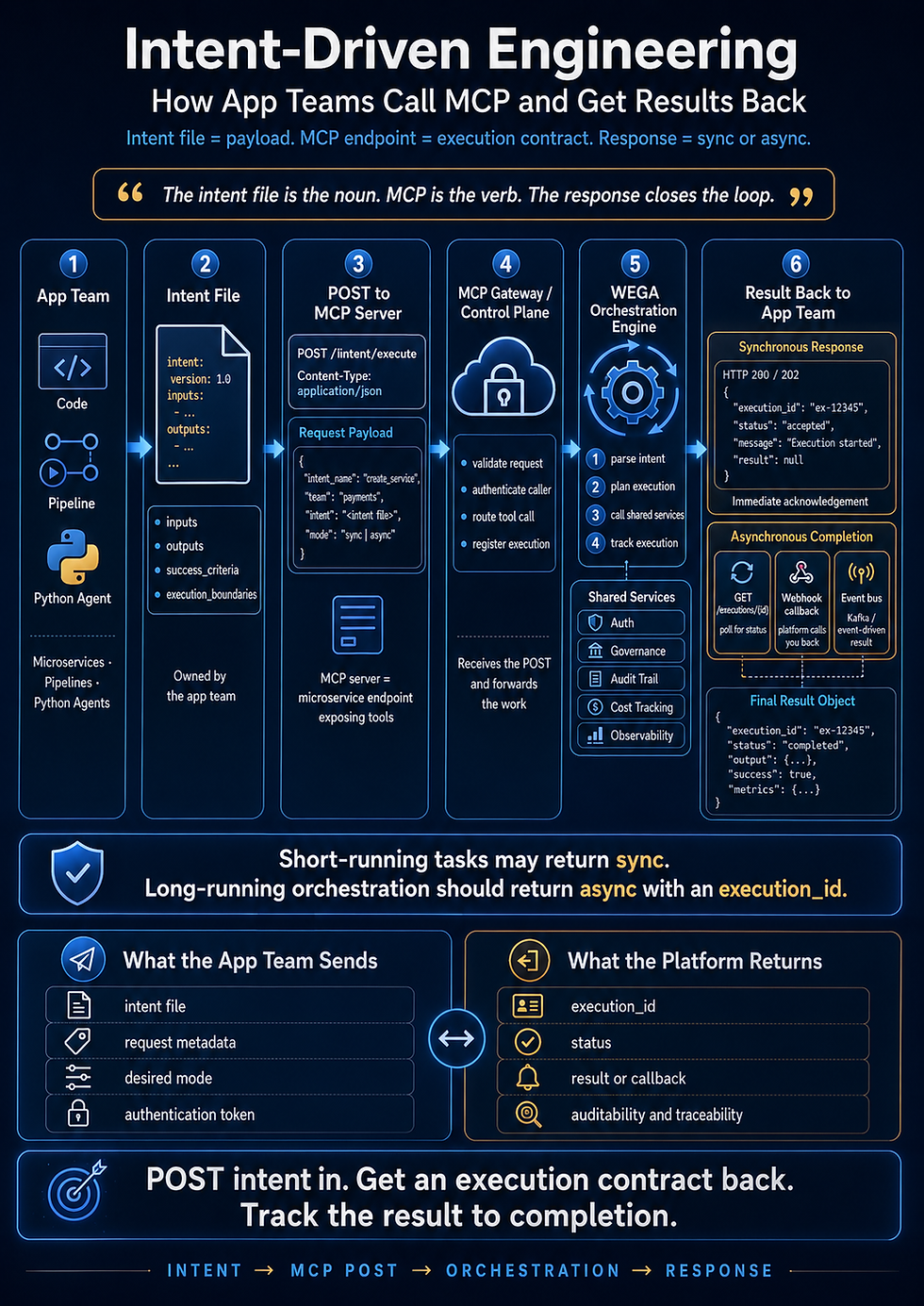
Intent-Driven Engineering is a disciplined way of telling an AI engineering agent what needs to be built, why it matters, where it belongs, what constraints it must follow, how success will be measured, and what evidence must be produced before the work is considered complete.
It turns vague work into executable engineering intent.
That intent can include:
business outcome
user outcome
feature scope
repo location
architecture constraints
UI expectations
API behavior
database impact
security rules
testing requirements
deployment expectations
observability requirements
acceptance criteria
evidence links
This is the difference between asking an AI tool to “help with code” and giving an AI engineering agent the operating context it needs to deliver production-quality work.
That is the model behind:
Why Intent-Driven-Engineering.com Exists
Intent-Driven-Engineering.com was created to make this practical.
Not theoretical.
Not locked behind a consulting deck.
Not hidden inside a paid workshop.
Not wrapped in language that only enterprise transformation teams understand.
The purpose of the site is simple:
Help teams create better intent so AI tools can produce better engineering outcomes.
The site gives teams a place to understand the model, create structured intent, use templates, export intent files, and bring that intent directly into tools like Claude Code.
Because the intent file is the real product.
The website is just the delivery mechanism.
Start here:
It Is Free. It Is Open. Just Register.
The site is open for people who want to learn and use the model.
Go to:
Register for free and start working with the templates and intent structure.
There is no consulting fee required.
There is no paywall.
There is no 90-day assessment before you can start.
Register for free.
Get your authorization code.
Log in.
Start creating intent.
If you do not see the authorization code right away, check your spam folder. The system will send you a code so you can complete registration and access the site.
That is it.
No drama.
Just get in, learn the model, and start applying it.
Again, the site is:
You Can Listen to the People Selling the Theory
There will be plenty of people selling AI transformation.
There will be plenty of firms creating maturity models, frameworks, decks, roadmaps, and advisory packages.
Some of that work may be useful.
But most engineering teams do not need another 90-day assessment before they start improving.
They need a better way to work this week.
They need to know how to take a story, turn it into clear intent, place it into the repo, guide the AI tool, review the output, test the result, and move the feature toward production faster.
That is the practical layer.
That is where Intent-Driven Engineering lives.
And that is what you can start learning and applying at:
Or You Can Learn From Someone Doing It With Real Teams
I am not writing about this from the outside.
I am inside companies working with engineering teams that are trying to make AI-assisted delivery real.
I am training engineers.
I am working through repos.
I am looking at feature branches, standards, Jira stories, team structures, architecture constraints, pipelines, and the actual friction that slows teams down.
And what I keep seeing is this:
AI does not automatically make a team faster.
A better operating model does.
Claude Code can be powerful.
AI agents can be powerful.
Repo-aware development can be powerful.
But without intent, teams get inconsistent results.
With intent, teams can start turning AI from a coding assistant into an engineering execution partner.
That is the shift.
That is why the practical work is available at:
The Goal Is Not Credit. The Goal Is Adoption.
There is always a debate around who said something first.
Who named it first.
Who published it first.
Who got cited first.
Who turned it into a framework first.
That debate matters less than this:
Are teams actually getting better?
Are features moving faster?
Are developers getting clearer instructions?
Are AI tools producing better output?
Are pull requests cleaner?
Are tests more complete?
Are acceptance criteria more visible?
Are teams reducing rework?
Are leaders seeing measurable improvement?
That is the standard.
Intent-Driven-Engineering.com exists to help teams meet that standard.
The Open Path Forward
I could have made this harder to access.
I could have wrapped it in a paid engagement.
I could have hidden the templates, language, methods, and playbooks behind a consulting package.
Instead, the goal is to make the model open enough that teams can start immediately.
Use the templates.
Create the intent.
Put it into the repo.
Run it through Claude Code.
Measure what happens.
Improve the workflow.
Teach the team.
Repeat.
That is how this becomes real.
Not through speeches.
Not through hype.
Not through claims.
Through repeated engineering evidence.
The open path starts here:
The Next Layer of Software Delivery
The next layer of software engineering is not just AI writing more code.
It is AI working from clearer intent.
It is teams learning how to describe outcomes, constraints, architecture, verification, and evidence in a form that agents can actually use.
It is the movement from prompt-driven experimentation to intent-driven execution.
That is where software delivery is going.
And that is what Intent-Driven-Engineering.com is here to help teams do.
Not someday.
Now.
Final Thought
If you are already using AI coding tools but not seeing the results you expected, the answer may not be to buy another tool.
The answer may be to change how your team defines the work.
Start with intent.
Make the work clear.
Make the constraints visible.
Make the expected outcome measurable.
Make the evidence required.
Then let the AI help you execute.
That is Intent-Driven Engineering.
And that is why Intent-Driven-Engineering.com exists.
Register for free here:
Check your spam folder for the authorization code if you do not see it.
Then start building the next layer of software delivery.
Comments