

LearnTeachMaster.org | Intent-Driven Engineering vs Thoughtworks: From Intent Vision to Real Execution
- Mark Kendall
- Apr 9
- 3 min read

LearnTeachMaster.org | Intent-Driven Engineering vs Thoughtworks: From Intent Vision to Real Execution
Intro
The industry is waking up to something big.
Organizations are moving from building interfaces…
to building systems that understand intent.
A recent article by Thoughtworks titled:
…lays out a strong vision for what this future looks like.
And to be fair — they’re right.
But they only tell half the story.
This article finishes it.
What Is Intent-Driven Engineering?
Intent-Driven Engineering is a structured approach to building software where:
Systems are designed around user goals (intent)
Engineering starts with structured intent definitions
AI + systems interpret, orchestrate, and execute outcomes
👉 Not just:
“What screens do we build?”
👉 But:
“What outcome are we guaranteeing?”
What Thoughtworks Gets Right
To their credit, Thoughtworks nails the macro shift.
1. The Shift from Interfaces → Intent
They clearly explain:
Users no longer want to navigate systems
They want to express goals and get outcomes
Organizations will compete on how well they interpret intent, not UI
That’s a powerful and correct insight.
2. The “Intent-Ready Organization”
They define three pillars:
Mindset → Think in goals, not workflows
Architecture → Handle ambiguity, context, orchestration
Strategy → Move from apps to capability ecosystems
They also emphasize:
Measuring success by intent resolution, not task completion
👉 This aligns strongly with modern AI-native systems.
3. The Rise of MCP (Model Context Protocol)
They introduce MCP as a key enabler:
A layer that connects AI to systems
Enables context-aware orchestration
Supports multi-step execution across services
MCP is real. It matters.
And yes — it’s part of the future.
Where the Gap Is (And Why It Matters)
This is where things change.
Thoughtworks explains:
“Why intent matters”
But they do NOT answer:
“How do engineers actually build it?”
❌ Missing Piece #1: No Intent Structure
They say:
“Start with intent”
But don’t define:
What an intent actually looks like
How it is written
How it is validated
👉 Without structure, intent becomes:
Conversations
Not engineering artifacts
❌ Missing Piece #2: No Engineering Workflow
There is no:
Intent file format
Team role mapping
Iteration model
Delivery lifecycle
👉 This means:
Every team will reinvent it
Inconsistency will explode
❌ Missing Piece #3: No Execution Pattern
They talk about orchestration…
But don’t show:
How services are wired
How systems fan out
How retries, DLQs, observability work
👉 This is where real systems succeed or fail.
❌ Missing Piece #4: No Signal Discipline
Intent is not just “what someone says.”
It must be:
High signal
Low ambiguity
Constrained and testable
Without this:
AI drifts
Systems hallucinate
Outcomes become unreliable
The LearnTeachMaster Shift: From Intent → Engineering
This is where Intent-Driven Engineering takes over.
🔥 The Core Principle
Intent without structure is conversation.
Intent with structure becomes engineering.
What We Add That Thoughtworks Doesn’t
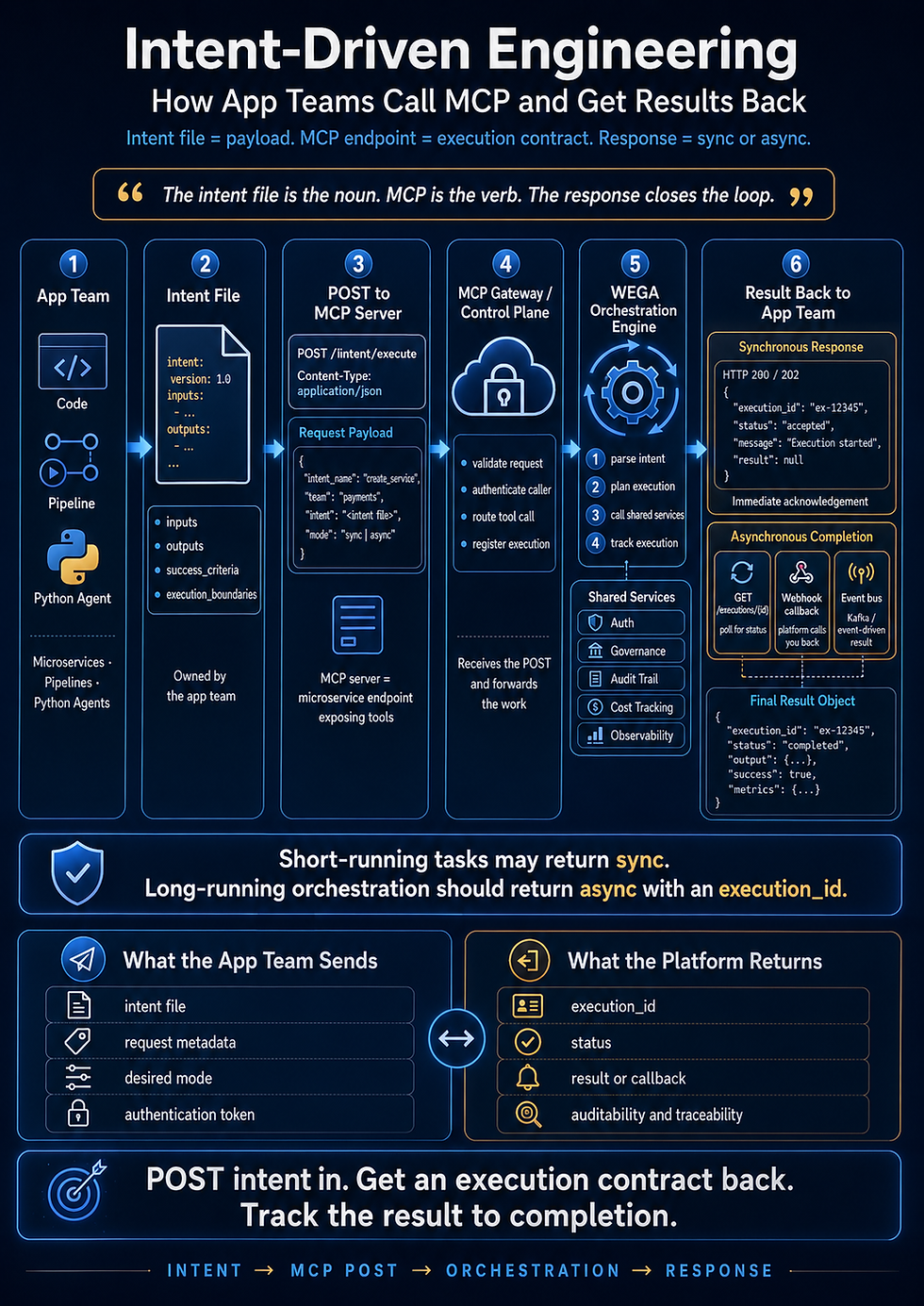
1. Structured Intent Files
Instead of vague intent:
We define:
Clear objectives
Constraints
Roles
Inputs / Outputs
Acceptance criteria
👉 Intent becomes:
A compile-able artifact
2. Repeatable Engineering Model
We don’t just say “build for intent.”
We provide:
Team role definitions
Intent ownership
Iteration loops
Delivery patterns
👉 This makes it:
Scalable across enterprises
3. Proven Architecture Pattern
Intent → Orchestration → Execution
Including:
API + event-driven models
Kafka fan-out patterns
Retry + DLQ handling
Observability built-in
👉 This is production-ready — not conceptual.
4. Signal-to-Noise Discipline
We enforce:
High-signal inputs
Guardrails
Drift control
👉 This is what makes AI systems:
Reliable
Governable
Enterprise-safe
Why This Matters
Thoughtworks is right about one thing:
The Age of Intent is here
But here’s the reality:
Vision alone doesn’t scale
Strategy alone doesn’t ship
Concepts alone don’t run in production
The Real Divide
Layer
Thoughtworks
LearnTeachMaster
Vision
Strong
Strong
Business framing
Strong
Strong
Architecture concept
Medium
Strong
Execution model
Missing
Defined
Engineering system
Missing
Core
Repeatability
Missing
Built-in
The Bottom Line
Thoughtworks opened the conversation.
They helped the industry understand:
👉 Why intent matters
But LearnTeachMaster defines:
👉 How to build it, scale it, and run it in production
Key Takeaways
The shift from interfaces → intent is real
Organizations must become intent-ready
But readiness without execution is incomplete
👉 The future belongs to teams who can:
Define intent
Structure intent
Compile intent
Execute intent
Final Thought
The industry is entering a new phase.
Not AI-first.
Not API-first.
👉 Intent-first.
And the teams that win won’t just talk about intent…
They’ll engineer it.
Comments