

Only the Best Will Realize What Just Happened

Only the Best Will Realize What Just Happened
For years, the technology industry focused on tools.
New frameworks.
New languages.
New cloud platforms.
New APIs.
New abstractions.
But something fundamentally different has now arrived — and many people still do not fully understand it.
The breakthrough is not simply AI-generated code.
The breakthrough is accelerated thought.
What Just Changed?
We are entering a phase where engineers can think with systems instead of merely using them as passive tools.
That sounds subtle.
It is not.
A skilled engineer working alongside modern AI systems can now:
explore architectures in minutes instead of weeks,
prototype production concepts conversationally,
validate assumptions rapidly,
externalize complex reasoning,
compress research cycles dramatically,
and iterate at near thought-speed.
This is not traditional automation.
This is interactive cognition.
The engineer remains the strategist, architect, validator, and decision-maker — but the friction between idea and execution has collapsed.
That is the real disruption.
Most People Still Think It’s About Prompts
Many organizations are still approaching AI with outdated mental models.
They see:
prompt engineering,
chatbot interfaces,
code autocomplete,
or novelty demos.
But the real shift is far deeper.
The highest-performing engineers are beginning to operate at the level of:
intent,
orchestration,
governance,
constraints,
executable systems,
and outcome-driven engineering.
The conversation is no longer:
“Can AI write code?”
The conversation is becoming:
“How quickly can we transform validated intent into governed execution?”
That is an entirely different category of engineering.
The Hidden Advantage
The biggest advantage is not raw generation speed.
It is thinking velocity.
When an engineer can:
test ten architectural directions in one afternoon,
simulate operational tradeoffs instantly,
generate documentation while designing,
create observability strategies during implementation,
and refine systems conversationally,
they begin operating at a different cognitive scale.
The bottleneck shifts from:
typing,
to:
judgment,
clarity,
systems thinking,
and decision quality.
That means experienced engineers become exponentially more valuable.
Because now expertise compounds faster.
Why Many People Will Miss It
History repeats itself during every major technological transition.
People initially resist:
cloud platforms,
CI/CD,
containers,
Git,
smartphones,
and modern automation.
Not because the new systems are weak.
But because old workflows feel familiar.
The same thing is happening now.
Many organizations will:
force AI into outdated processes,
recreate manual workflows around intelligent systems,
or reduce transformational capability into “better autocomplete.”
And many engineers will return to old habits because:
the old ways feel safe,
organizational culture lags innovation,
and transformational shifts are uncomfortable while they are happening.
But eventually the environment changes around them.
Quietly.
Then suddenly.
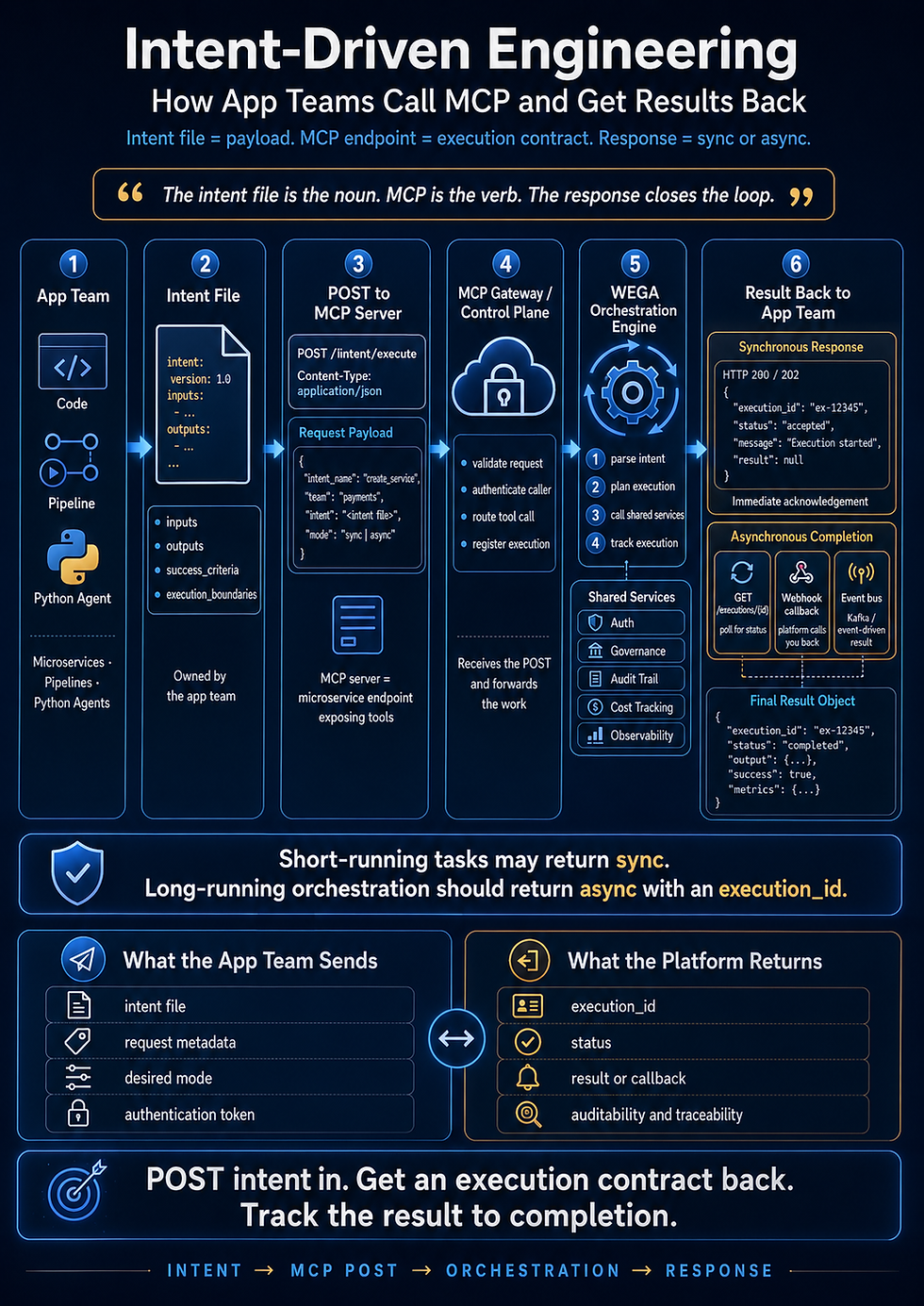
Intent-Driven Engineering Changes the Conversation
This is why Intent-Driven Engineering matters.
The future is not about engineers manually stitching together:
prompts,
sub-agents,
orchestration chains,
callback flows,
and fragmented tooling.
The future is about declaring:
desired outcomes,
execution boundaries,
success criteria,
governance,
operational constraints,
and measurable intent.
Then allowing intelligent systems to determine the optimal execution path.
The engineer moves from:
constructing every mechanical step,
to:
designing governed operational intent.
That is a profound shift in software engineering itself.
Only the Best Will Fully Realize It
The engineers who will thrive are not necessarily the loudest people online.
They will be the ones who:
adapt quickly,
think systemically,
maintain engineering discipline,
understand operational reality,
and learn how to collaborate with intelligent systems instead of competing against them.
Because the true power is not replacing engineers.
It is amplifying capable engineers.
And once someone experiences:
intent-level design,
conversational architecture,
rapid governed execution,
and production-speed iteration,
it becomes very difficult to willingly return to slower ways of working.
The next era of engineering is already here.
Most people just have not realized it yet.
Comments