
Stop Reading About MCP. Start Building One.
- Mark Kendall
- Jul 22
- 2 min read

Stop Reading About MCP. Start Building One.
If you’ve been following AI development over the past few months, you’ve almost certainly heard about the Model Context Protocol (MCP).
Every week there seems to be another article explaining what MCP is, why it’s important, or how it will change AI applications.
The problem?
Most of those articles stop just before the interesting part.
They explain the protocol.
They don’t teach you how to actually build something useful.
Local MCP Servers Are Where You Learn
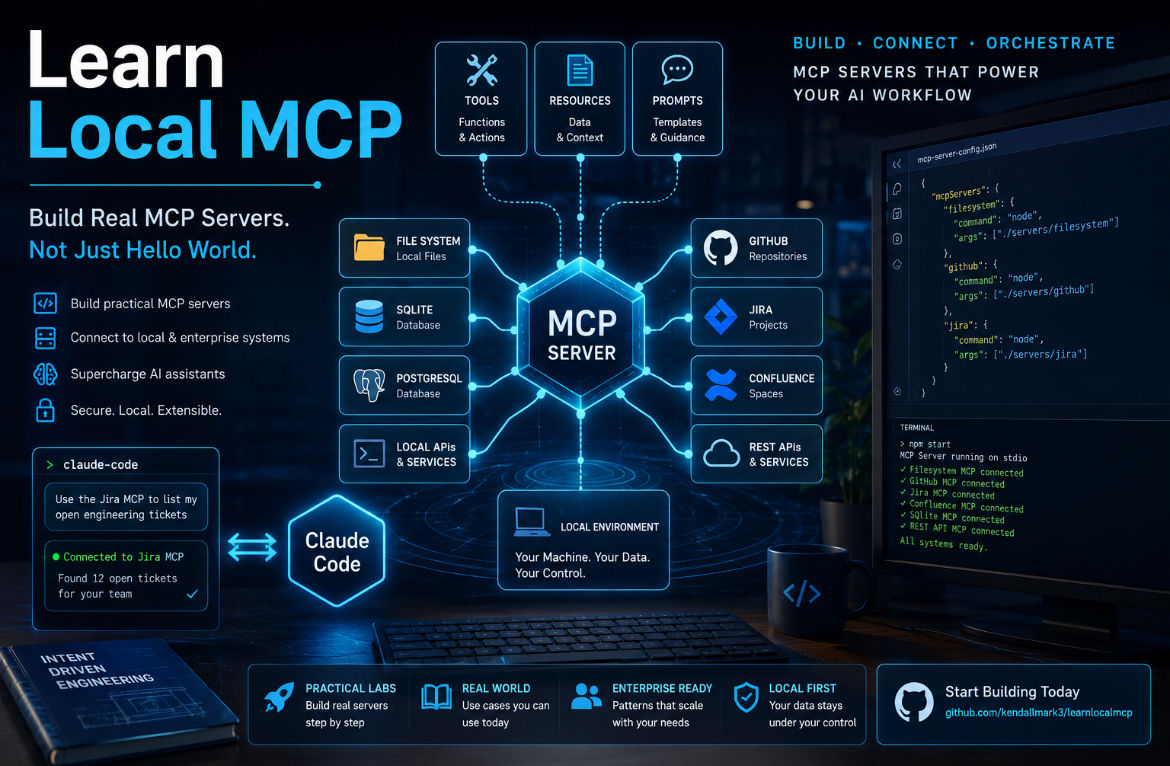
Before worrying about cloud deployments or enterprise infrastructure, every AI engineer should learn how to build MCP servers that run locally.
A local MCP server is simple enough to understand, easy to debug, and gives you immediate feedback while you experiment with tools, resources, prompts, and integrations.
More importantly, the same patterns you learn locally are the foundation for enterprise AI systems.
Learn by Building
That’s exactly why I created the Learn Local MCP repository.
Instead of another collection of “Hello World” examples, the goal is to build practical MCP servers that solve real problems.
You’ll build things like:
File System MCP servers
SQLite and PostgreSQL MCP servers
REST API integrations
GitHub MCP servers
Jira MCP servers
Confluence MCP servers
Enterprise Context MCP servers
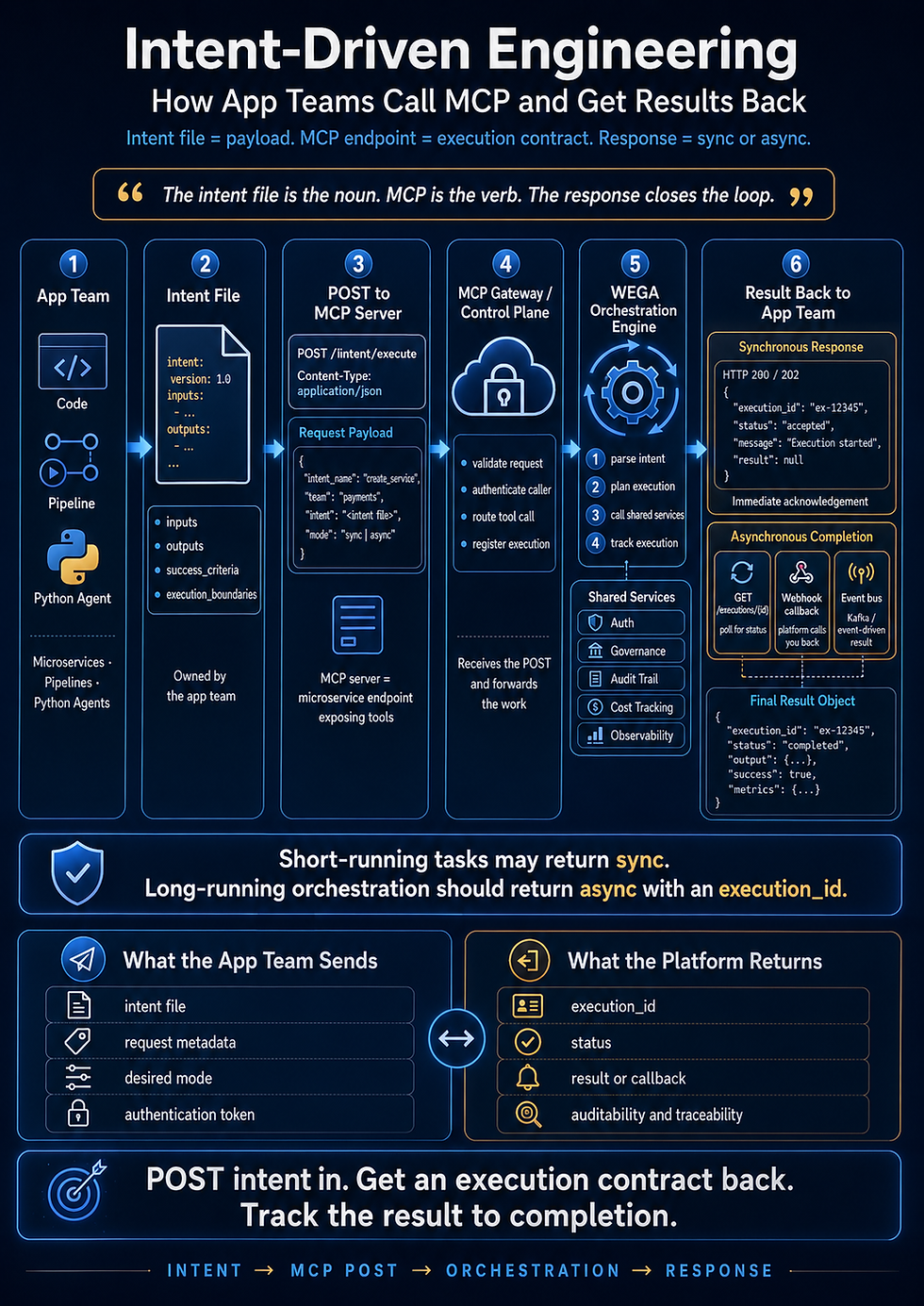
Intent Repository MCP servers
Multi-server orchestration examples
Each project focuses on something you can actually use in your own development environment.
A Structured Learning Path
The repository walks through MCP development step by step.
Understanding the MCP architecture
Creating your first local server
Building custom tools
Working with resources and prompts
Connecting databases
Calling enterprise APIs
Authentication patterns
Testing with Claude Code
Production architecture
Multi-server orchestration
Enterprise implementation patterns
Every chapter finishes with a hands-on lab so you’re writing code instead of just reading documentation.
Enterprise Developers Need More Than Tutorials
The most valuable MCP servers aren’t weather demos or calculator examples.
They’re the servers that connect AI assistants to the systems your organization already depends on.
Imagine building MCP servers that expose:
Internal documentation
Architecture repositories
Jira projects
Confluence spaces
Source code
API catalogs
Business rules
Intent repositories
Once those become available to an AI coding assistant, the assistant stops acting like a general-purpose chatbot and starts behaving like a teammate that understands your engineering environment.
That’s where MCP becomes transformational.
Start Building
If you’re serious about learning MCP, don’t spend another week watching videos.
Clone the repository.
Build the labs.
Break things.
Fix them.
By the time you’re finished, you’ll understand not only how MCP works, but why it has become one of the most important building blocks for modern AI-assisted software development.
Repository:
I hope it saves you the hours of trial and error that many of us went through while learning this technology. If it helps you build something useful, then it’s already accomplished its goal.
Comments