
Stop Teaching the AI. Teach the Repository. Claude Code Has Skills, Agents and Hooks. So Does the Pattern.
- Mark Kendall
- 9 hours ago
- 5 min read

Stop Teaching the AI. Teach the Repository.
Claude Code Has Skills, Agents and Hooks. So Does the Pattern.
Something interesting is happening in AI-assisted software engineering.
Developers keep asking:
Which AI should we standardize on?
Claude Code? GitHub Copilot? Cursor? Gemini? Something that hasn’t been released yet?
I think that’s increasingly the wrong question.
A better question is:
How do we engineer a repository so that an AI coding agent understands how work is supposed to be done?
That’s a much more durable problem to solve.
And once you look at Claude Code and GitHub Copilot through that lens, the similarities become more interesting than the differences.
The Repository Is Becoming an AI Operating Environment
We’ve traditionally thought of a repository as:
Source code + configuration + tests + documentation.
Agentic development changes that.
A modern AI-ready repository can contain:
Code + Intent + Instructions + Skills + Agents + Hooks + Contracts + Validation
The repository doesn’t merely contain the application anymore.
It teaches an AI how to work on the application.
That’s a significant architectural shift.
Start With the Claude Code Mental Model
Claude Code makes this relatively easy to understand.
You can provide repository instructions, reusable Skills, specialized agents, deterministic Hooks, MCP tools and an Intent describing what needs to become true.
The important part isn’t the terminology.
It’s the separation of responsibilities.
Instructions
Persistent context:
This is how we work in this repository.
Skills
Reusable procedural knowledge:
This is how we perform this type of work.
Agents
Specialized, bounded workers:
This is who should reason about this particular problem.
Hooks
Deterministic enforcement:
This must happen regardless of what the AI decides.
MCP / Tools
External capabilities:
This is how the agent obtains context or performs actions outside the repository.
Intent
The outcome contract:
This is what must become true.
Put them together and you stop relying entirely on prompts.
You begin engineering the environment in which the agent operates.
Now Look at GitHub Copilot
Here’s where it gets interesting.
GitHub Copilot increasingly exposes many of the same architectural primitives.
A Copilot-ready repository can contain structures along these lines:
.github/
│
│
├── instructions/
│ ├── api.instructions.md
│ └── intent.instructions.md
│
├── skills/
│ ├── start/
│ │ └── SKILL.md
│ ├── intent-creator/
│ │ └── SKILL.md
│ └── execute-intent/
│ └── SKILL.md
│
├── agents/
│ ├── architecture-reviewer.md
│ └── intent-normalizer.md
│
└── hooks/
└── secret-guard.json
Different platform.
Very familiar architecture.
Here’s the Translation
If you’re already comfortable with Claude Code, don’t relearn everything from zero.
Think conceptually:
Engineering Concept
Claude Code
GitHub Copilot
Repository operating rules
Copilot instructions / AGENTS.md
Reusable knowledge
Skills
Skills
Specialized worker
Agent/Subagent
Custom Agent/Subagent
Deterministic enforcement
Hooks
Hooks
External capabilities
MCP/Tools
MCP/Tools
Desired outcome
Intent
Intent
Evidence
Tests/validation
Tests/validation
The implementation details matter.
But the engineering principles matter more.
Let’s Build a Tiny One
Suppose I want every AI working in my repository to follow one simple rule:
Understand the repository before changing it.
Instead of typing that into every prompt, make it reusable.
Create something conceptually like:
.github/skills/start/SKILL.md
The Skill could tell the agent:
Before editing:
1. Locate repository guidance.
2. Identify languages and frameworks.
3. Find the closest existing implementation.
4. Identify reusable capabilities.
5. Discover build, test and lint commands.
6. Determine the smallest safe implementation surface.
7. Report blockers before introducing new architecture.
Now we’ve moved knowledge out of somebody’s head—and out of a temporary chat prompt—and placed it with the software.
That’s powerful.
Add a Specialized Architecture Agent
Maybe architecture review deserves isolated reasoning.
Create a bounded architecture reviewer.
Its job isn’t to write code.
Its job is to answer:
What pattern already exists?
What is the smallest required delta?
What can be reused?
What architectural impact does this introduce?
What are the risks?
What evidence supports the recommendation?
Recommendation:
REUSE / EXTEND / NEW ARCHITECTURE
Then restrict its tools.
Maybe it can read and search, but not modify code.
That’s intentional.
An agent shouldn’t receive every tool merely because the platform supports them.
Minimum sufficient context. Minimum sufficient authority.
Now Add a Hook
Suppose secrets absolutely cannot enter the repository.
You could write:
Please make sure you don’t commit credentials.
That’s useful guidance.
But it’s still guidance.
Instead, attach a deterministic secret scan to an appropriate lifecycle event.
Now the architecture becomes:
Agent finishes work
↓
Secret Guard Hook
↓
Inspect changed content
↓
Credential detected?
/ \
YES NO
↓ ↓
FAIL CONTINUE
That’s the distinction between asking AI to behave and engineering a boundary.
Don’t Bring an Agent to a Skill Job
This may be the most important lesson.
Agentic engineering does not mean:
Planner Agent
↓
Architecture Agent
↓
Developer Agent
↓
Testing Agent
↓
Security Agent
↓
Documentation Agent
for every feature.
That’s architecture theater.
Sometimes the correct workflow is simply:
INTENT
↓
SKILL
↓
IMPLEMENT
↓
TEST
↓
EVIDENCE
Use an agent when specialization, isolation, parallel reasoning or restricted authority provides actual value.
Use a Skill when you’re encoding reusable knowledge.
Use a Hook when something must be enforced.
Use a Tool when an external action must occur.
And use orchestration only when the problem actually requires orchestration.
This Is Bigger Than Copilot or Claude
That’s the part I find most interesting.
Imagine defining an enterprise engineering capability once:
ENGINEERING CAPABILITY
│
┌─────────────┼─────────────┐
▼ ▼ ▼
Intent Contracts Governance
│ │ │
└─────────────┼─────────────┘
▼
Engineering Patterns
│
▼
Vendor Adapters
│
┌──────────────┼──────────────┐
▼ ▼ ▼
Claude Code Copilot Cursor
Now we’re not betting the enterprise on one AI.
We’re betting on engineering.
Claude may package something one way.
Copilot may package it another way.
Cursor may introduce another mechanism.
Those implementations will continue changing.
But concepts like intent, context boundaries, reusable knowledge, specialized workers, deterministic governance, contracts and evidence are much more durable.
Your First AI-Native Repository Doesn’t Need to Be Complicated
Start small.
Give the repository:
1. An Intent contract
Define what needs to become true.
2. Repository instructions
Define how engineering work should be performed.
3. One useful Skill
Capture a procedure your team repeats constantly.
4. One bounded Agent
Use it only where specialized reasoning genuinely helps.
5. One meaningful Hook
Automate a rule that should never depend solely on AI judgment.
6. Validation
Require evidence before declaring completion.
Then use it.
Break it.
Learn from it.
Improve the pattern.
That’s how engineering practices emerge.
The Bigger Idea: AI Shouldn’t Own Your Engineering System
The AI model will change.
The IDE will change.
The agent framework will change.
The terminology will definitely change.
Your engineering principles shouldn’t have to.
That’s why I believe the future isn’t simply AI-assisted coding.
It’s repositories that carry enough intent, context, procedure, governance and evidence that multiple capable AI systems can operate within them safely.
The AI becomes replaceable.
The engineering system remains.
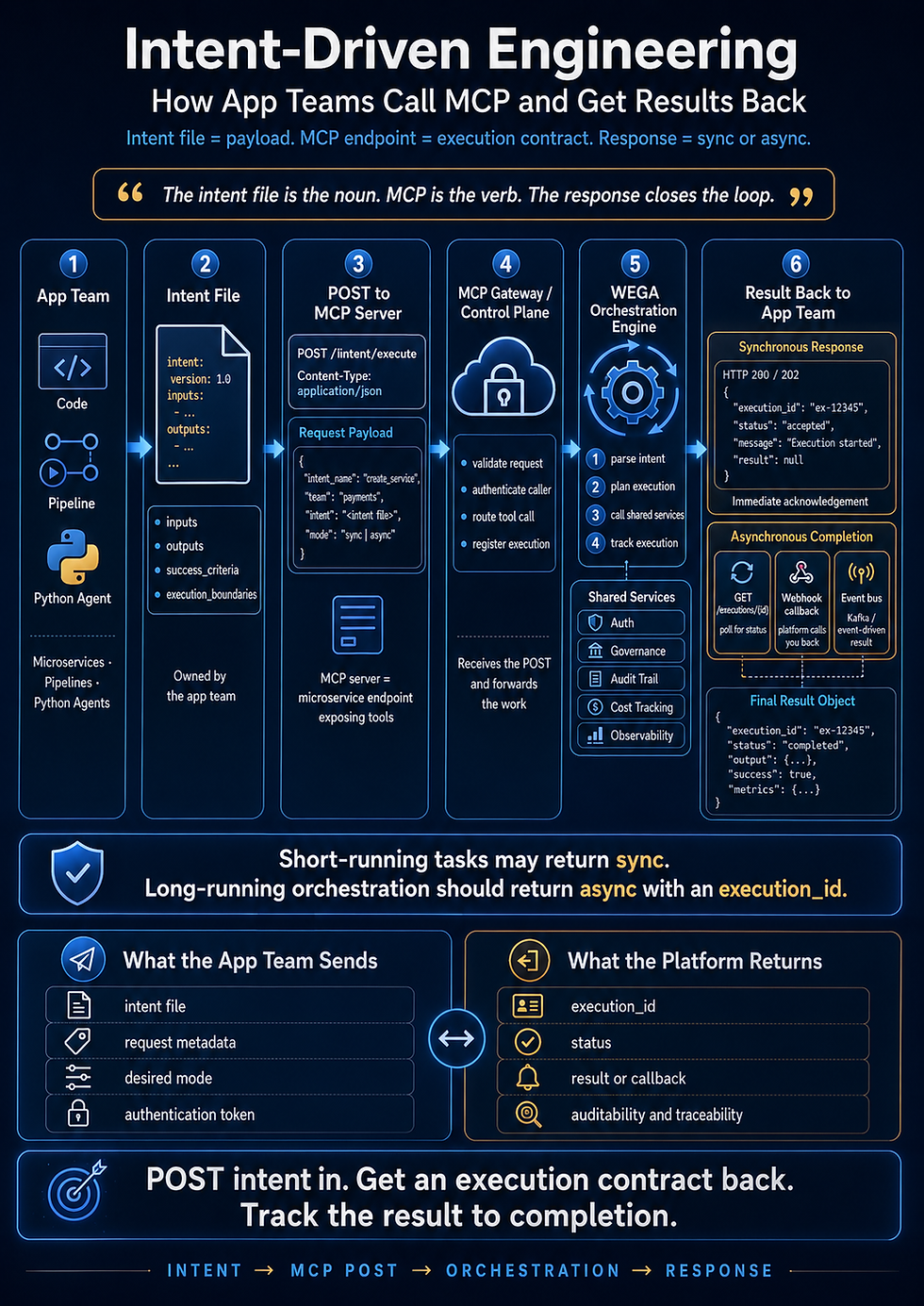
That’s the direction we’re exploring with Intent-Driven Engineering and Learn Teach Master:
Learn it.
Teach it.
Turn it into a pattern.
Govern the pattern.
Then let the AI execute it.
And maybe the most important principle of all:
Don’t teach every AI your engineering process from scratch. Teach the repository.
Comments