

When Claude Code Just Isn’t Giving You the Results You Expect
- Mark Kendall
- 1 day ago
- 5 min read

When Claude Code Just Isn’t Giving You the Results You Expect
Claude Code was not introduced as another autocomplete tool.
That is the first thing teams need to understand.
Claude Code was positioned as something much bigger: an engineering agent that can live inside your repository, understand your codebase, reason across files, write code, refactor systems, create tests, automate work, help with builds, support pull requests, and accelerate delivery from inside the actual engineering environment.
That is not a small promise.
That is not “better code completion.”
That is the beginning of a new developer interface.
For years, the IDE was where developers wrote code. Now the repository itself is becoming the workspace, the terminal is becoming the interface, and the AI agent is becoming part of the engineering team.
So when a company says, “We have Claude Code, but we are not seeing the productivity gains,” my first reaction is simple:
Then something is wrong with the way it is being used.
Not necessarily with Claude Code.
With the operating model around it.
The Problem Is Not the Tool
A lot of companies are approaching Claude Code the same way they approached earlier AI coding tools.
They install it.
They give developers access.
They expect velocity to magically increase.
Then a few sprints later, leadership asks the obvious question:
“Why are we still delivering the same number of stories?”
That question matters.
If a team was delivering 25 stories per sprint before Claude Code, and they are still delivering 25 stories per sprint after Claude Code, then the organization has not changed the system. It has only added a new tool into an old process.
That is the mistake.
Claude Code does not automatically fix unclear stories, weak architecture, poor repo structure, missing tests, bad environments, slow approvals, overloaded teams, broken CI/CD, vague acceptance criteria, or disconnected engineering practices.
It can write code.
But it cannot rescue a team that has not given it a clear engineering mission.
Claude Code Needs Intent
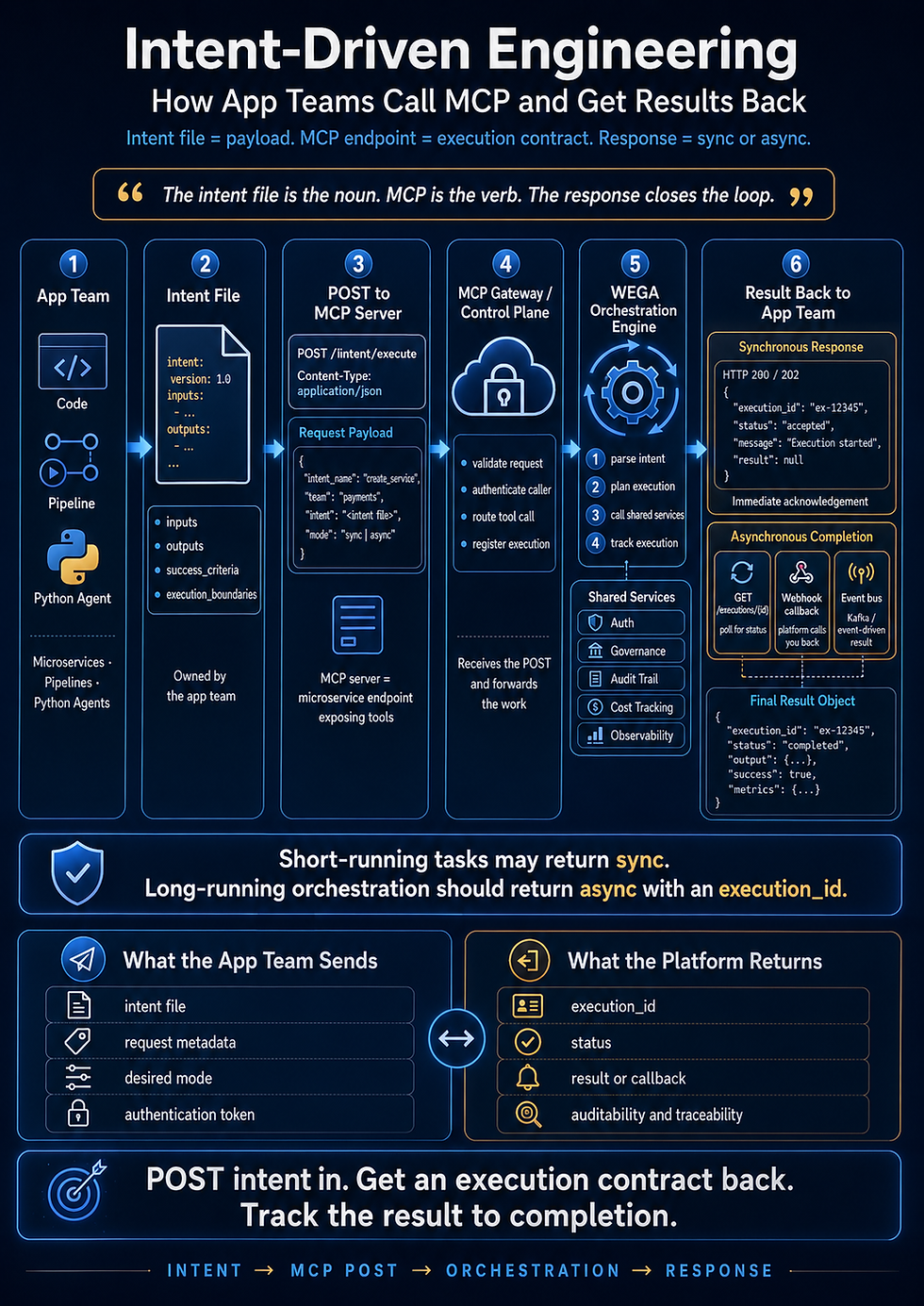
This is where Intent-Driven Engineering becomes critical.
Claude Code is the engine.
Intent is the steering system.
Without intent, developers ask Claude Code to “build something,” “fix something,” or “look at this repo,” and then they wonder why the output is inconsistent.
But what did the team give it?
Did they provide the objective?
Did they define the expected outcome?
Did they explain the architecture constraints?
Did they identify the files that matter?
Did they document the patterns already used in the repo?
Did they define what must not change?
Did they give it test expectations?
Did they require evidence?
Did they ask Claude Code to explain the impact before changing code?
Did they make it work from a feature intent file instead of a random prompt?
If not, then the team is not really using Claude Code as an engineering agent.
They are using it as a chatbot pointed at a repository.
That is a very different thing.
The Repo Has to Be Ready
Claude Code becomes powerful when the repo gives it structure.
A good repo tells the agent how the system works.
A weak repo forces the agent to guess.
That means teams need to look at their repositories differently. The repo is no longer just a storage location for code. It is now the operating environment for AI-assisted engineering.
The repo should contain clear patterns, readable architecture, consistent naming, useful tests, local setup instructions, build commands, deployment notes, and intent files that describe how work should be done.
If every service is different, every team has a different style, every feature is implemented a different way, and nobody knows where the real patterns live, Claude Code will struggle.
Not because it is weak.
Because the system is noisy.
AI amplifies the quality of the engineering environment around it.
Clean repo, clean intent, clean patterns: better output.
Messy repo, vague intent, tribal knowledge: unpredictable output.
What Teams Should Check First
When Claude Code is not producing the results you expected, do not start by blaming the tool.
Start by checking the system around the tool.
Ask these questions:
Are we giving Claude Code real intent, or just loose prompts?
A developer saying “add this feature” is not enough. Claude Code needs objective, scope, constraints, acceptance criteria, known patterns, and verification steps.
Does the repo explain itself?
Can a new engineer understand the architecture from the repo? If not, Claude Code will have the same problem. The agent needs context, not mystery.
Are stories written for human interpretation or AI execution?
Most Jira stories were never written for AI agents. They are vague, incomplete, and dependent on meetings. Teams need to convert stories into executable intent.
Are tests part of the workflow?
If Claude Code writes code but no one asks it to update tests, run tests, explain failures, and provide evidence, then the team is only automating part of the job.
Is Claude Code being used end-to-end or only for snippets?
The real power is not in generating isolated code. The real power is in planning, changing, testing, documenting, refactoring, and preparing the work for review.
Are developers still doing all the old manual steps?
If Claude Code writes code but humans still manually investigate, manually wire files, manually update tests, manually document changes, and manually prepare pull requests, the process has not been redesigned.
Is leadership measuring the wrong thing?
Do not only measure “lines of code generated.” Measure story cycle time, lead time, rework, defects, test coverage, review time, deployment readiness, and feature throughput.
The goal is not more code.
The goal is more completed, verified, production-ready work.
The Future Belongs to Teams That Change the Workflow
The companies that win with Claude Code will not be the ones that simply buy access for every developer.
They will be the ones that redesign engineering around AI execution.
They will create intent files.
They will standardize repo patterns.
They will build reusable skills.
They will define verification rules.
They will connect AI work to CI/CD.
They will measure before and after.
They will teach developers how to manage agents, not just prompt them.
They will stop treating AI as a side assistant and start treating it as part of the delivery system.
That is the shift.
Claude Code is not just a coding helper.
It is a signal that software engineering is moving from manual implementation to intent-driven execution.
If You Are Not Seeing Results, Look Deeper
If Claude Code is not changing your delivery numbers, something is blocking the value.
Maybe your stories are too vague.
Maybe your repo is too inconsistent.
Maybe your developers are using it only for small code tasks.
Maybe your tests are weak.
Maybe your pull request process is still slow.
Maybe your architecture is undocumented.
Maybe your team has not created reusable agent workflows.
Maybe leadership is expecting acceleration without changing the system that work flows through.
That is why Claude Code alone is not the answer.
Claude Code plus Intent-Driven Engineering is the answer.
The agent needs a mission.
The repo needs structure.
The workflow needs evidence.
The team needs a new operating model.
The Bottom Line
Claude Code gave developers something powerful: an AI engineering agent that can work inside the repo.
But power is not the same as productivity.
Productivity comes when the organization learns how to direct that power.
If Claude Code is not giving you the results you expected, do not just ask, “What is wrong with Claude?”
Ask a better question:
“Have we created the engineering system that allows Claude Code to succeed?”
Because when the intent is clear, the repo is ready, the tests are real, and the workflow is redesigned, Claude Code can do what it was meant to do.
It can help teams move faster.
It can reduce rework.
It can improve engineering quality.
It can turn vague ideas into working software.
And ultimately, it can help companies build a better future — not because AI replaced engineering, but because engineering finally learned how to operate with AI.
:::That title is strong. I’d use it exactly as-is: “When Claude Code Just Isn’t Giving You the Results You Expect.”
Comments