

AgentCore, LangChain, or LlamaIndex? A Practical Guide for Developers
- Mark Kendall
- 1 day ago
- 3 min read

AgentCore, LangChain, or LlamaIndex? A Practical Guide for Developers
Introduction
One of the most common questions developers ask when they begin building AI-powered systems is:
“Should I use AgentCore, LangChain, LlamaIndex, or all three?”
Unfortunately, most discussions quickly turn into framework comparisons, feature matrices, and technology debates.
The better question is:
What problem are you trying to solve?
As AI engineering matures, developers need less framework hype and more architectural clarity.
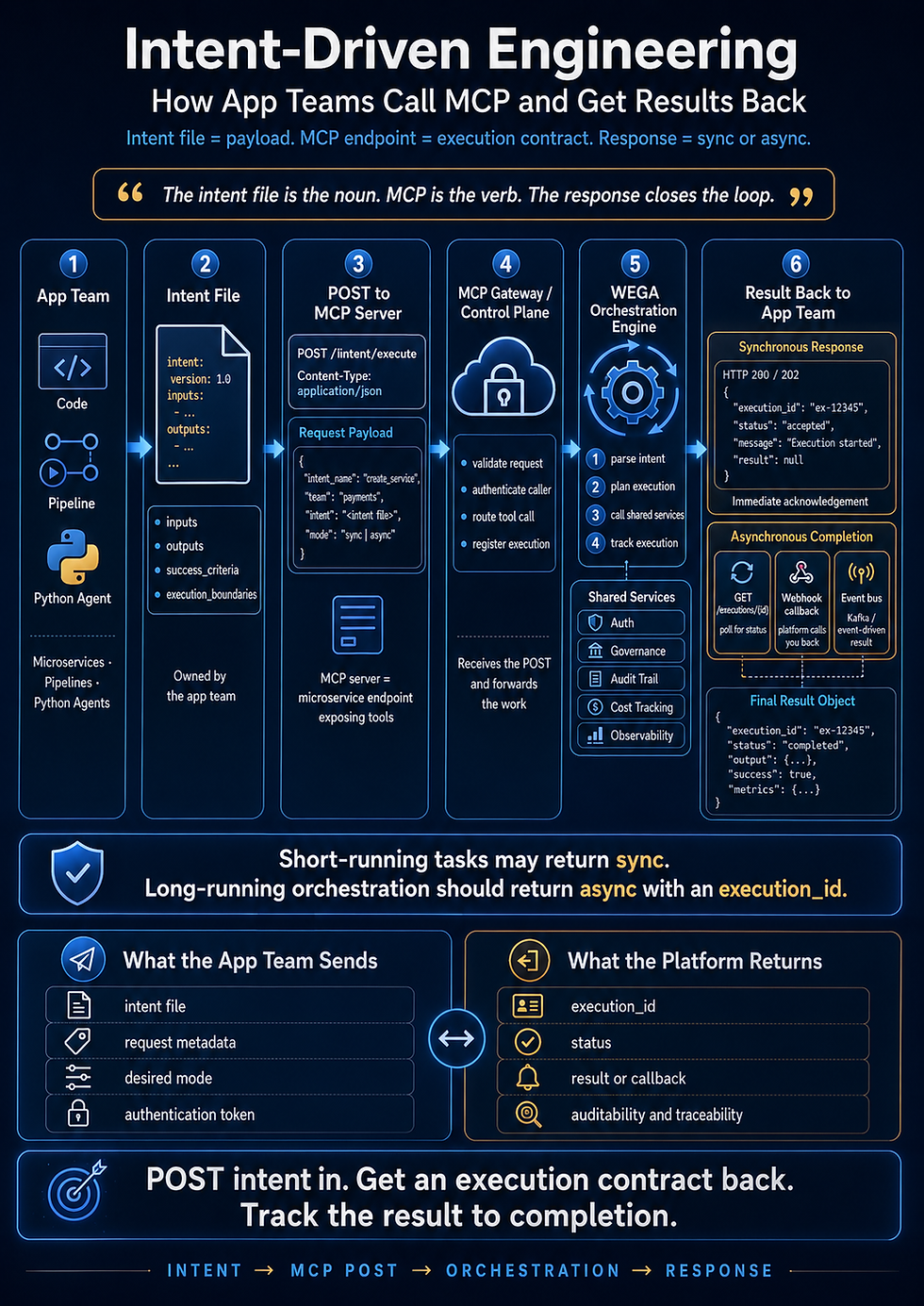
This is where Intent-Driven Engineering becomes useful. Instead of starting with tools, we start with outcomes.
What Are AgentCore, LangChain, and LlamaIndex?
AgentCore
AgentCore provides a managed runtime for agents.
Think of it as the place where your agent lives and executes.
It provides capabilities such as:
Agent deployment
Runtime execution
Tool invocation
Security controls
Guardrails
Monitoring
Scalability
AgentCore is primarily focused on running agents in production.
LangChain
LangChain is an orchestration framework.
Its primary goal is helping developers connect:
LLMs
Tools
APIs
Memory
Agent workflows
LangChain shines when complex decision trees and tool chains are required.
LlamaIndex
LlamaIndex focuses on information retrieval.
Its purpose is helping agents work with knowledge.
Examples include:
Document collections
Knowledge bases
Vector databases
Enterprise content
Retrieval-Augmented Generation (RAG)
LlamaIndex helps agents find the right information before generating answers.
The Mistake Many Teams Make
Many teams start by choosing frameworks.
They ask:
Should we use LangChain?
Should we use CrewAI?
Should we use LangGraph?
Should we use AutoGen?
Before long, developers are spending more time building orchestration than solving business problems.
The architecture becomes the product.
The framework becomes the project.
And the actual business outcome gets pushed further away.
A Simpler Mental Model
Think of the stack this way:
AgentCore = Runtime
AgentCore answers:
“Where does my agent execute?”
LlamaIndex = Knowledge
LlamaIndex answers:
“How does my agent find information?”
LangChain = Orchestration
LangChain answers:
“How do I coordinate complex workflows?”
Each solves a different problem.
They are not direct competitors.
A Practical Example
Imagine a warehouse inventory assistant.
The user asks:
“How many pallets of Product X are available?”
A practical architecture might look like this:
Frontend Application
↓
AgentCore Runtime
↓
Inventory Agent
↓
LlamaIndex
↓
ChromaDB
↓
Inventory Data
In this scenario:
AgentCore hosts the agent
LlamaIndex retrieves knowledge
ChromaDB stores embeddings
The agent generates the response
No complex orchestration is required.
No workflow engine is required.
No graph framework is required.
The system remains simple.
When Should You Add LangChain?
LangChain becomes valuable when orchestration complexity increases.
Examples include:
Multiple specialized agents
Complex tool routing
Dynamic workflow selection
Long-running agent processes
Multi-step reasoning chains
If your architecture requires significant coordination logic, LangChain may be worth introducing.
If not, it may simply add complexity.
Why This Matters
Many AI projects become harder than they need to be.
Developers are often told they need:
Multiple frameworks
Agent graphs
Workflow engines
Memory layers
Tool registries
Complex orchestration
Sometimes they do.
Most of the time they do not.
The fastest path to production is usually:
Define the intent.
Build the simplest solution that satisfies the intent.
Add complexity only when the system demands it.
Key Takeaways
AgentCore is a runtime.
LlamaIndex is a knowledge layer.
LangChain is an orchestration layer.
They solve different problems.
Most projects should start simple.
Complexity should be introduced only when justified.
Intent should drive architecture—not framework selection.
This is one of the core principles of Intent-Driven Engineering.
When developers start with intent instead of technology choices, they spend less time debating frameworks and more time delivering outcomes.### Custom Image Concept (Apple-style / LearnTeachMaster)
Title on image:
“Start With Intent, Not Frameworks”
Visual Layout:
White background
Clean Apple-style aesthetic
Center: Large circle labeled Intent
Three smaller connected circles:
AgentCore (Runtime)
LlamaIndex (Knowledge)
LangChain (Orchestration)
Thin elegant connecting lines
Small caption at bottom:
“The best architecture begins with the outcome, not the framework.”
LearnTeachMaster.org in subtle gray at the bottom.
Comments