

Claude Architect Certification Articles 14–17: From Prompts to Production Architecture
- Mark Kendall
- 7 hours ago
- 8 min read

Claude Architect Certification Articles 14–17: From Prompts to Production Architecture
By the time you reach the middle of a Claude Architect certification journey, the study material starts to shift.
Early on, you can survive by learning the vocabulary.
What is Claude Code?
What is MCP?
What is a tool?
What is an agent?
What is a context window?
What is structured output?
What is a hook?
What is a skill?
What is memory?
But that is not enough.
At the architect level, the exam is not only asking whether you know the parts. It is asking whether you know how those parts fit together into a reliable system.
That is the real shift.
A developer may ask:
“How do I get Claude to write this code?”
An architect asks:
“How do I design a system where Claude can understand the intent, use the right tools, produce evidence, operate safely, and deliver something that can be trusted?”
That is the difference.
This combined article covers four major ideas that sit right in the heart of the Claude Architect mindset:
Prompt engineering is not just wording.
Structured output is an architectural contract.
Context management is system design.
Reliability comes from evidence, validation, and workflow discipline.
Together, these ideas form the bridge between using Claude as a smart assistant and designing Claude-powered enterprise delivery systems.
1. Prompt Engineering Is Not Just Writing Better Prompts
A lot of people still think prompt engineering means finding clever words.
That is too small.
At the architect level, prompt engineering is about shaping the operating conditions for the model.
A good prompt does not simply ask for an answer. It defines the role, task, constraints, inputs, expected output, success criteria, and failure behavior.
In a casual setting, this might be enough:
“Write a test plan for this API.”
But in an enterprise architecture setting, that is not enough.
A better architect-level prompt would say:
“You are acting as a senior QA architect. Review the API requirements, identify functional and non-functional test scenarios, produce positive and negative test cases, flag missing requirements, and return the output in a structured format with traceability back to the original intent.”
That is not just a prompt.
That is an operating instruction.
It tells Claude what role to play, what evidence to use, what kind of reasoning to perform, what output structure to follow, and how to behave when the input is incomplete.
This is why prompt engineering belongs in architecture.
The prompt is not the system, but it shapes how the system behaves.
2. The Architect Thinks in Intent, Not Just Instructions
One of the most important ideas in this certification journey is the difference between an instruction and an intent.
An instruction tells Claude what to do.
An intent tells Claude what outcome matters.
Instruction:
“Create a login page.”
Intent:
“Create a secure login experience for enterprise users that supports authentication, handles invalid credentials gracefully, protects against obvious abuse patterns, and fits the existing application structure.”
The second version gives Claude more architectural context.
It includes the why, the constraints, the success conditions, and the system boundary.
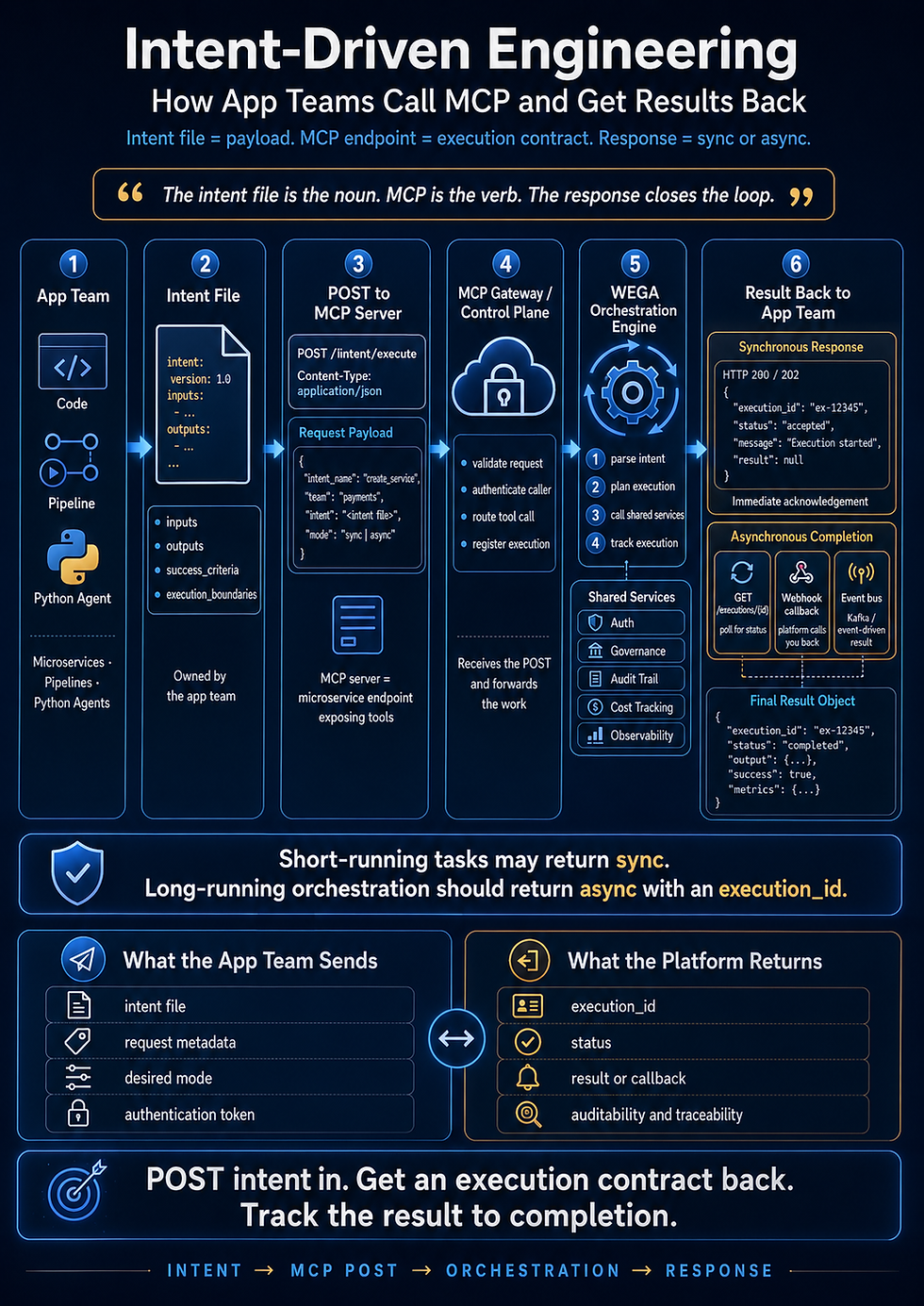
This is the core of Intent-Driven Engineering.
Intent is how business meaning becomes executable.
When we use Claude Code, MCP, tools, agents, skills, hooks, and structured outputs, we are not simply automating coding tasks. We are building a delivery system where intent flows through architecture, implementation, validation, and evidence.
That is the bigger picture.
The architect’s job is to make sure Claude is not just responding to requests, but working within a controlled delivery model.
3. Structured Output Is an Architectural Contract
Structured output is one of the most important concepts in production AI systems.
Why?
Because unstructured text is hard to automate.
If Claude gives you a beautiful paragraph, a human can read it.
But if Claude gives you JSON, YAML, markdown tables, checklists, test cases, risk registers, or decision records in a predictable format, then another system can use it.
That is the architectural leap.
Structured output turns Claude from a conversational assistant into a component in a workflow.
For example, Claude might return:
a feature plan
a test matrix
a risk list
a file-change plan
an API contract
a deployment checklist
a validation report
a decision record
a simulation result
a confidence score
When these outputs follow a predictable structure, they can be reviewed, stored, compared, passed to another agent, used in CI/CD, or attached as evidence.
That is why structured output matters.
It is not formatting.
It is a contract.
The architect should always ask:
Can this output be reused?
Can another agent consume it?
Can a workflow validate it?
Can a human approve it?
Can it become evidence?
Can it support a delivery decision?
If the answer is yes, then structured output is doing its job.
4. Context Management Is System Design
Claude is powerful, but it still needs the right context.
The model cannot reliably perform enterprise work if it does not understand the system, the intent, the constraints, the repo, the patterns, the standards, the interfaces, and the definition of done.
That is why context management is not a side topic.
It is architecture.
Context can include:
the intent file
business requirements
user stories
architecture decisions
repo structure
coding standards
API contracts
test results
deployment rules
security requirements
prior decisions
known risks
domain language
examples of good output
examples of bad output
The architect’s job is to decide what context matters, where it lives, how it is loaded, and when it should be refreshed.
Too little context creates shallow output.
Too much context creates noise.
Wrong context creates dangerous confidence.
That is the challenge.
The best Claude-powered workflows do not simply dump everything into the model. They curate context.
They make context intentional.
This is where files like CLAUDE.md, project memory, intent markdown files, MCP-connected systems, and repo-aware workflows become important.
The goal is not to give Claude more data.
The goal is to give Claude the right enterprise context at the right moment.
5. MCP Turns Context Into Reach
MCP, or Model Context Protocol, is important because it gives Claude a cleaner way to connect with external tools and systems.
Without MCP, the model may be limited to what is pasted into the chat or available in the local project.
With MCP, Claude can be connected to systems such as:
GitHub
Jira
Confluence
databases
file systems
internal APIs
documentation repositories
testing tools
observability platforms
design systems
enterprise knowledge sources
This matters because enterprise work does not live in one place.
Requirements may be in Jira.
Architecture decisions may be in Confluence.
Code may be in GitHub.
Metrics may be in dashboards.
Tests may be in CI/CD.
Security rules may be in internal policy documents.
An architect has to think about how Claude reaches those systems safely and usefully.
MCP is not just a connector pattern.
It is part of the enterprise AI operating model.
The question is not only:
“Can Claude access this tool?”
The better question is:
“Should Claude access this tool, what should it be allowed to do, what evidence should it produce, and where is the approval boundary?”
That is the architect-level view.
6. Tools, Agents, Skills, and Hooks Need a Workflow
Claude Code gives us a powerful environment, but the architect has to avoid turning it into random automation.
Tools, agents, skills, and hooks should not be treated as isolated tricks.
They should be part of a workflow.
A healthy workflow might look like this:
Intent file → context loading → repo analysis → implementation plan → code generation → tests → validation → evidence report → human approval → delivery decision.
That is the kind of flow an architect should be thinking about.
Agents can specialize.
Tools can reach systems.
Skills can package repeatable capability.
Hooks can enforce checks at important moments.
Structured output can preserve evidence.
Memory can retain durable project guidance.
MCP can connect enterprise systems.
Claude Code can operate inside the repo.
But the architect has to define the operating model.
Otherwise, the system becomes powerful but messy.
A good Claude architecture is not about letting AI do everything.
It is about designing the right path for AI to follow.
7. Reliability Comes From Validation, Not Hope
This is one of the biggest exam-level ideas.
Claude can produce impressive results, but impressive is not the same as reliable.
Reliability comes from validation.
That means the architect needs to think about:
test execution
output verification
schema validation
traceability
policy checks
security review
code review
evidence capture
rollback planning
human approval
confidence scoring
In other words, the AI workflow must prove its work.
This is where many teams fail.
They use Claude Code to generate code faster, but they do not change the delivery system around it.
Then they wonder why velocity does not improve.
The answer is simple: coding was only one part of the bottleneck.
Enterprise delivery includes requirements, design, coding, testing, reviews, integration, deployment, governance, operations, and support.
AI has to be inserted into that full lifecycle, not just the typing step.
That is why reliability is an architecture issue.
8. Evidence Is the New Delivery Artifact
In traditional software delivery, the artifact was usually the code.
In AI-assisted delivery, the artifact should also include evidence.
Evidence might include:
what intent was used
what files were changed
what assumptions were made
what tests were run
what risks were found
what validations passed
what validations failed
what decisions were made
what human approvals occurred
what confidence level was assigned
This is extremely important for enterprise teams.
Executives do not only want faster code.
They want safer delivery.
They want to know what changed, why it changed, whether it was tested, whether it aligns to the intent, and whether it is ready to move forward.
This is why I keep coming back to the same architectural flow:
Architecture context → intent file → Claude Code / agents → evidence → simulation → delivery decision.
That is the model.
That is where Claude becomes more than a coding assistant.
Claude becomes part of an enterprise delivery control system.
9. The Certification Mindset: Think Like the System Designer
For the Claude Architect certification, the key is not memorizing every term in isolation.
The key is understanding how the pieces work together.
When you see a question about prompting, think about role, task, constraints, output, and validation.
When you see a question about structured output, think about contracts, automation, parsing, and downstream workflows.
When you see a question about context, think about what the model needs, where that context lives, and how to avoid noise.
When you see a question about MCP, think about safe access to external enterprise systems.
When you see a question about agents, think about orchestration, specialization, boundaries, and handoffs.
When you see a question about Claude Code, think about repo-aware execution, project configuration, workflows, and evidence.
When you see a question about reliability, think about validation, testing, traceability, and human approval.
The architect does not simply ask:
“What can Claude do?”
The architect asks:
“How do I design a system where Claude can do useful work safely, repeatedly, and with evidence?”
That is the certification mindset.
10. What We Should Know at This Point
By this point in the certification journey, we should already understand the basics.
We should know that Claude is not just a chatbot.
We should know that Claude Code is not just autocomplete.
We should know that MCP is not just a plugin system.
We should know that prompts are not just words.
We should know that structured output is not just formatting.
We should know that context is not just more data.
We should know that agents are not magic workers.
We should know that reliability does not happen automatically.
And most importantly, we should know this:
Enterprise AI does not become valuable just because the model is powerful.
It becomes valuable when the architecture around the model is strong.
That architecture includes intent, context, tools, workflows, structured output, validation, evidence, and delivery decisions.
That is what the Claude Architect certification is really testing.
It is testing whether you can think beyond the prompt.
It is testing whether you can design the system.
Final Thought
The deeper I get into this certification journey, the more I believe the real opportunity is not just learning Claude.
The real opportunity is learning how to build with Claude.
There is a major difference.
Learning Claude means understanding the model, the tools, and the features.
Building with Claude means creating an operating model where business intent can move through architecture, engineering, validation, and delivery.
That is where the future is going.
That is also where Intent-Driven Engineering fits naturally.
Intent-Driven Engineering is how enterprise context becomes executable.
Claude Code, MCP, agents, skills, hooks, memory, structured output, and validation are the pieces.
The architect’s job is to turn those pieces into a trusted delivery system.
That is the work.
That is the exam.
And that is the future of enterprise engineering.
:::
This one works well as a combined 14–17 article because it ties several exam domains together instead of treating them as separate definitions.
Comments