

Claude Certified Architect - Foundations (CCA-F)
- Mark Kendall
- 2 hours ago
- 8 min read

LEARNTEACHMASTER
Claude Certified Architect - Foundations (CCA-F)
Community Study Guide: Exam Blueprint, Domain Breakdown, Production Patterns, and Gotchas
Prepared by LearnTeachMaster / Intent-Driven Engineering | July 2026
Purpose of This Guide
This study guide is designed for architects, engineers, delivery leads, and AI practitioners preparing for the Claude Certified Architect - Foundations exam. It is intentionally written as a public learning resource, not as a personal study memo.
The emphasis is architectural judgment: how to design production-grade Claude systems that use context, tools, MCP, Claude Code, structured output, validation, and human review in a reliable operating model.
This guide is not a copy of live exam content and is not endorsed by Anthropic. Use the official Anthropic Academy certification page and exam guide as the source of truth for registration details, policy, and current exam requirements.
How the LearnTeachMaster Series Fits
The LearnTeachMaster Claude Architect preparation series frames the certification as a production architecture journey rather than a prompting exercise. The series consistently connects Claude Code, MCP, agents, skills, hooks, memory, structured output, validation, evidence, and delivery decisions into one operating model.
Several published articles are especially useful companion reading: Article 7 focuses on the production architecture mindset; Article 10 explains structured output as a reliability contract; Articles 14-17 consolidate the shift from prompts to production architecture; and Articles 18-20 bring together context management, MCP/tools, and reliable agentic workflows.
A practical theme running through the series is: Intent -> Context -> Tools/MCP -> Agents -> Validation -> Evidence -> Delivery Decision. That pattern maps naturally to the CCA-F domains because the exam rewards minimal, testable, production-ready design choices.
Public Companion Links
Article 7 - The Claude Certified Architect Mindset: https://www.learnteachmaster.org/post/article-7-the-claude-certified-architect-mindset-designing-for-production-not-demos
Article 10 - Structured Output Is How Claude Becomes Reliable: https://www.learnteachmaster.org/post/article-10-structured-output-is-how-claude-becomes-reliable-testable-and-enterprise-ready
Articles 14-17 - From Prompts to Production Architecture: https://www.learnteachmaster.org/post/claude-architect-certification-articles-14-17-from-prompts-to-production-architecture
Articles 18-20 - The Three Things That Make Claude Enterprise-Ready: https://www.learnteachmaster.org/post/claude-architect-certification-articles-18-20-the-three-things-that-make-claude-enterprise-ready
Official Anthropic Academy certification page: https://anthropic.skilljar.com/claude-certified-architect-foundations-certification/444989
1. What the CCA-F Actually Tests
CCA-F is best understood as an architecture exam for production Claude systems. It is not primarily a trivia quiz, a prompting badge, or a tutorial-completion certificate.
The exam is generally described as a 60-question, 120-minute, closed-book, proctored assessment with a scaled score and a passing mark of 720 out of 1,000. Registration and delivery details should be confirmed through Anthropic Academy because certification access and policies can change.
The expected candidate is someone who can make design tradeoffs across Claude API usage, Claude Code workflows, tool integration, MCP, agent orchestration, structured output, reliability, and human-in-the-loop controls.
Architectural judgment: Choose the smallest reliable design that solves the production problem.
Production constraints: Account for latency, cost, security, permissions, evidence, validation, and review.
System thinking: Understand how prompts, tools, agents, context, and workflow gates interact.
Failure handling: Design retries, escalation paths, and structured error handling instead of hoping the model behaves.
2. The Five Domains
Study time should follow the domain weights. Domain 1 receives the largest emphasis, but the domains are interdependent. Context and reliability may carry the smallest weight, yet weak context handling often breaks agentic, tool, and structured-output designs downstream.
Domain
Weight
What it really tests
Agentic Architecture & Orchestration
27%
Agentic loop design, stop_reason handling, hub-and-spoke orchestration, task decomposition, subagent coordination, error classification, fallback strategy, and escalation boundaries.
Claude Code Configuration & Workflows
20%
CLAUDE.md hierarchy, shared project configuration, slash commands, Agent Skills, hooks, subagents, plan mode, CI/CD non-interactive usage, and session isolation.
Prompt Engineering & Structured Output
20%
System-prompt structure, XML-tagged inputs, few-shot examples, JSON schema output, validation-retry loops, prompt caching, evaluation, and regression testing.
Tool Design & MCP Integration
18%
Tool descriptions, input schemas, structured error contracts, MCP tools/resources/prompts, server/client patterns, built-in tool selection, and permission-aware integration.
Context Management & Reliability
15%
Long-context strategy, summarization vs. external memory, handoff schemas, confidence calibration, error propagation, provenance, and human-in-the-loop design.
3. Domain 1 - Agentic Architecture & Orchestration
Core mental model: Claude operates in a loop. The application sends a request; Claude either returns tool_use or end_turn; the system executes requested tools, appends the tool results to conversation history, and continues until the model returns end_turn. The architect designs the loop, the boundaries, and the escalation path.
What to know cold
Know when an agent is justified and when a simpler workflow or direct API call is better.
Use coordinator/subagent patterns where the coordinator owns decomposition, routing, aggregation, error handling, and final synthesis.
Remember that subagents have their own context. Important findings must be explicitly passed through handoff schemas.
Classify failures separately: tool errors, reasoning errors, environment errors, validation errors, business-rule errors, and permission errors need different responses.
Prefer deterministic controls for critical rules. A prompt instruction is not the same as a production guardrail.
Exam-style gotchas
Do not parse natural-language assistant text to decide when a loop is finished. Use stop_reason.
Do not add extra agents just because the design sounds sophisticated. Minimal sufficient architecture wins.
When synthesis loses facts that discovery found, first inspect the handoff schema before blaming the search agent.
4. Domain 2 - Claude Code Configuration & Workflows
Core mental model: Claude Code becomes enterprise-ready when it is configured as a shared team operating model, not when every developer has private local tricks.
What to know cold
Project-level instructions and rules should be version-controlled so the team gets consistent behavior.
User-level configuration is appropriate for personal preferences and experiments, not shared delivery standards.
Agent Skills, slash commands, hooks, and subagents should be packaged around repeatable engineering workflows.
Use Plan Mode for large, risky, multi-file, or architectural work; use direct execution for simple, scoped changes.
For CI/CD, use non-interactive execution, structured output, and clean session boundaries between generator and reviewer passes.
Exam-style gotchas
If one team member lacks tools or behavior that others have, check whether the config lives in personal user-level files instead of project-level files.
Vague rules like “be conservative” are weak. Use explicit, testable criteria.
Plan Mode everywhere is not always better; it can be inefficient for simple changes.
5. Domain 3 - Prompt Engineering & Structured Output
Core mental model: prompts define operating conditions, but structured output defines contracts. Enterprise workflows need outputs that humans can review and systems can validate.
What to know cold
Design system prompts with role, task, constraints, inputs, output format, failure behavior, and escalation criteria.
Use XML or other clear input delimiters when the prompt has multiple sections, documents, or instructions.
Use structured output when the result drives automation, routing, audit, approval, or downstream processing.
Use nullable fields and missing_information sections so Claude does not invent data that was not present.
Validate schema and semantics. Valid JSON can still contain wrong business facts.
Exam-style gotchas
Do not treat “return valid JSON” as the strongest possible design; tool/schema-based structure is usually more reliable.
Do not batch urgent blocking checks just because batching is cheaper. Match architecture to latency needs.
Do not solve every uncertainty problem with a separate confidence model. Often the fix is explicit criteria, schema, and retry behavior.
6. Domain 4 - Tool Design & MCP Integration
Core mental model: tools are interfaces the model must understand. Tool descriptions, schemas, permissions, and error contracts determine whether Claude can act safely and correctly.
What to know cold
Tool descriptions are the primary routing mechanism. They should explain what the tool does, when to use it, when not to use it, required inputs, returned outputs, and differences from similar tools.
MCP organizes external capability through tools, resources, and prompts. Use project-scoped configuration for shared enterprise behavior and environment variables for secrets.
Prefer existing MCP servers for standard integrations where they fit; build custom servers for team-specific workflows or enterprise-specific policy boundaries.
Keep tool sets focused. Too many overlapping tools degrade selection quality.
Return structured errors that distinguish transient, validation, business, and permission failures. Retry only retryable categories.
Exam-style gotchas
When Claude chooses the wrong similar tool, improve tool descriptions first.
Do not restrict useful built-in tools as the first move when a custom MCP tool is ignored; make the custom tool’s description clearer.
For codebase exploration, search entry points first, then read targeted files. Do not consume context by reading everything upfront.
7. Domain 5 - Context Management & Reliability
Core mental model: context is architecture. The architect decides what the model should know, where durable knowledge lives, what should be summarized, what must keep provenance, and when humans must approve.
What to know cold
Curate context. Too little context creates shallow output; too much creates noise; wrong context creates confident mistakes.
Use explicit handoff schemas between agents so findings, sources, assumptions, and missing information survive the boundary.
Preserve provenance for claims, evidence, test results, and decisions.
Use memory and project files deliberately for durable guidance; do not let private memory become the only source of team behavior.
Define escalation criteria with examples and testable thresholds rather than relying on self-reported confidence alone.
Exam-style gotchas
If an agent escalates easy cases but handles hard cases autonomously, fix the criteria and examples in the system design.
Do not summarize away the facts needed for downstream judgment.
Do not let evidence disappear between discovery, synthesis, and final recommendation.
8. Production Scenario Patterns
Questions are scenario-based. The best preparation is not memorizing definitions; it is practicing how to identify the root cause and select the minimal reliable fix.
Claude-powered chat applications: Message history, context windows, streaming, safe tool use, and escalation.
RAG and knowledge systems: Retrieval quality, source attribution, chunking, summarization, and evidence preservation.
Tool-enabled agent workflows: API calls, database access, business-rule enforcement, tool errors, and approvals.
Developer productivity tools: Repo navigation, Claude Code tools, MCP, file operations, testing, and PR feedback.
Claude Code in CI/CD: Non-interactive execution, structured JSON output, test generation, review separation, and audit artifacts.
Structured data extraction: Schema constraints, nullable fields, validation-retry loops, and missing-data behavior.
9. Intent-Driven Engineering Mapping
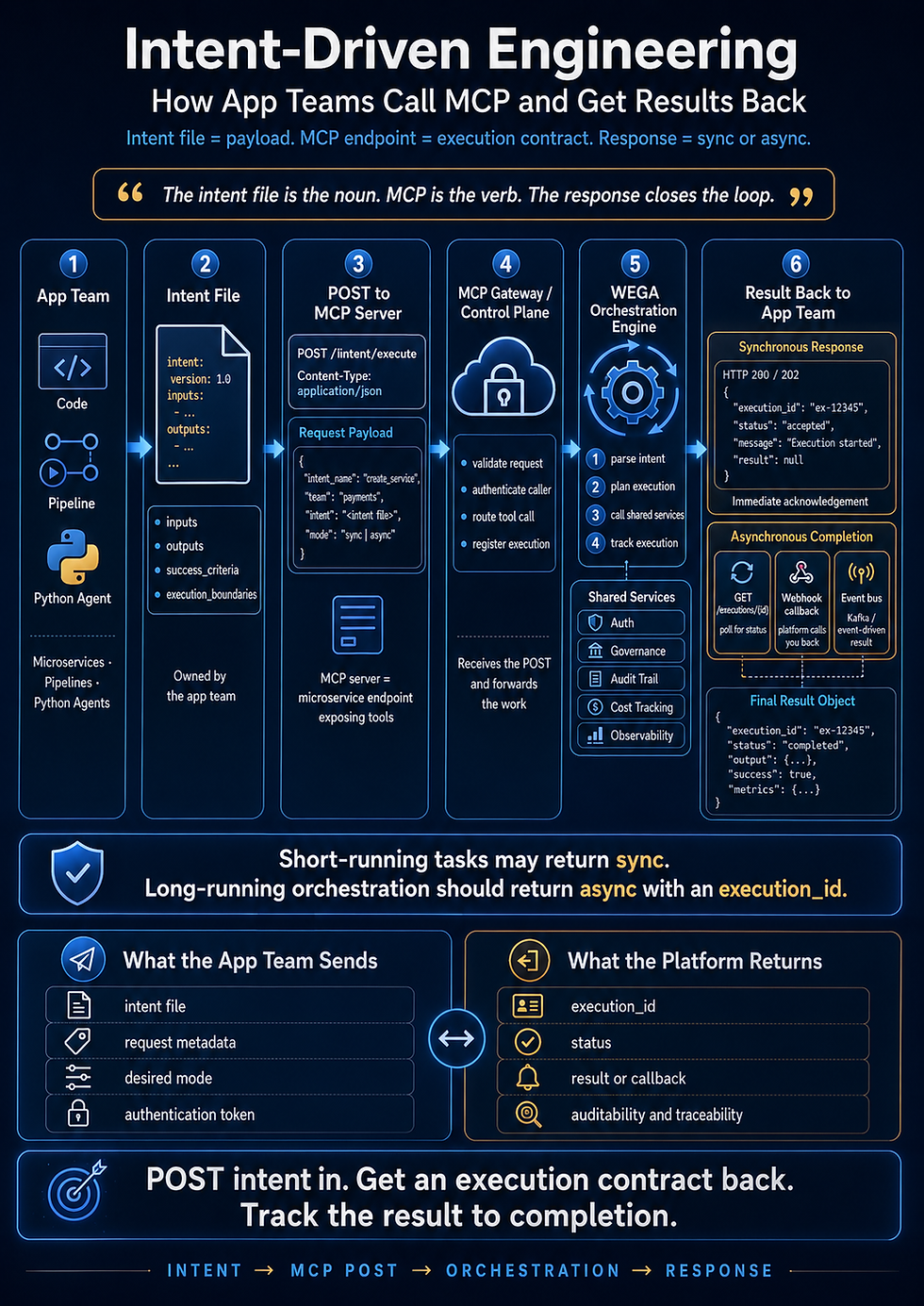
Intent-Driven Engineering provides a useful study lens because it turns enterprise context into executable direction. In the LearnTeachMaster series, the intent file is not just a prompt. It is the architectural bridge between business outcome, system constraints, implementation, validation, and delivery evidence.
IDE Pattern
CCA-F Domain Link
Why it matters
Intent file
Prompt Engineering, Context, Claude Code
Defines objective, constraints, acceptance criteria, and evidence requirements.
Architecture context
Context Management
Gives Claude the right system facts without dumping everything into the prompt.
MCP/tool layer
Tool Design & MCP
Connects Claude to approved enterprise systems with controlled access.
Agent roles
Agentic Architecture
Divides work into specialized responsibilities with explicit handoffs.
Structured output
Prompt Engineering & Reliability
Creates machine-readable contracts, validation reports, and reviewable evidence.
Evidence and delivery decision
Reliability, Claude Code Workflows
Proves what happened and supports human approval or deployment gates.
10. Practical Study Plan
Pass 1 - Blueprint and vocabulary: Read the official guide, then map every term to a real production scenario. Do not study vocabulary in isolation.
Pass 2 - Domain 1 and handoffs: Practice agentic-loop questions, subagent context boundaries, error categories, and orchestration choices.
Pass 3 - Claude Code operating model: Review project vs. user config, CLAUDE.md placement, skills, hooks, slash commands, Plan Mode, and CI/CD execution.
Pass 4 - Structured output and validation: Practice schemas, nullable fields, validation-retry loops, and the difference between syntactic validity and semantic correctness.
Pass 5 - Tool and MCP design: Practice tool routing failures, description quality, input schemas, permissions, structured errors, and tool count limits.
Pass 6 - Reliability review: For every design, ask: what context is preserved, what evidence is produced, what fails safely, and where does a human approve?
11. The Meta-Gotcha: How to Read Answer Choices
The correct answer is usually the minimal, cheapest, most testable fix that solves the stated production problem.
If an answer adds a new model, classifier, or scoring layer to solve a problem that a better schema, tool description, or explicit criterion would solve, treat it with suspicion.
If an answer relies on parsing natural language, self-reported confidence, or asking the model to “be careful,” it is probably weaker than a programmatic control.
If a feature works for one developer but not another, check user-level vs. project-level configuration before assuming the model or tool is broken.
If output is needed for automation, approval, audit, or routing, use structured output and validation instead of free-form prose.
If the model appears wrong after a tool call, inspect the tool description, returned evidence, and handoff context before adding architectural complexity.
12. Final Takeaway
The Claude Certified Architect - Foundations mindset is simple to say but hard to practice: do not just use Claude; design reliable systems around Claude.
Claude becomes enterprise-ready when it has the right context, approved tools, clear workflows, structured outputs, validation gates, evidence, and human approval where the risk requires it.
That is the connection between CCA-F and the LearnTeachMaster architecture series. The goal is not only to pass an exam. The goal is to learn how to build production AI systems that can be trusted.
Source Notes
Official source of truth: Anthropic Academy Claude Certified Architect - Foundations certification page and exam guide.
Community synthesis: the public LearnTeachMaster Claude Architect preparation articles linked above.
This guide summarizes publicly availastudy patterns and does not claim access to live exam questions.
Comments