

From Claude to Code: Turning AI-Generated Ideas into Real, Runnable Systems
- Mark Kendall
- 3 hours ago
- 3 min read

From Claude to Code: Turning AI-Generated Ideas into Real, Runnable Systems
Introduction
There’s a moment happening across engineering teams right now.
Developers are generating working applications inside Claude and thinking:
“This is incredible.”
And it is.
But then comes the real question:
“Can this run outside the sandbox?”
That’s where most teams stall.
This article walks through the complete, real-world process:
Claude Generation → Local Execution → Command Line Run → IDE Refinement → Enterprise Readiness
This is the bridge from AI experimentation to Intent-Driven Engineering.
What Is AI Code Generation (Claude Code)?
AI code generation is the ability to describe a system—and have a model like Claude generate working code from that description.
But here’s the critical distinction:
Prompts generate code snippets
Intent generates systems
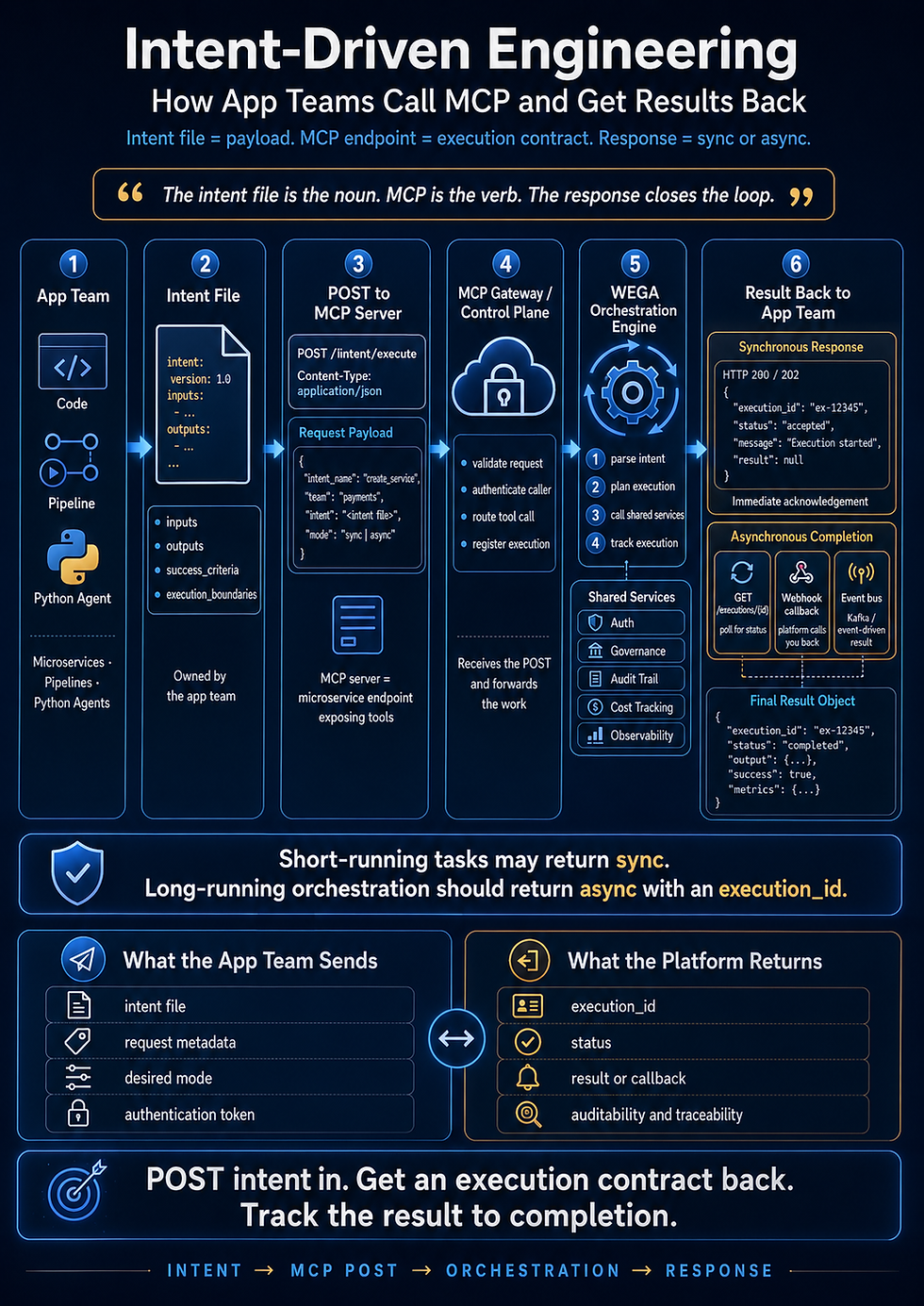
In an Intent-Driven Engineering model, you don’t just ask for code—you define:
Inputs
Outputs
Success criteria
Execution boundaries
The result is something far more powerful:
A repeatable, executable system—not a one-off output
The End-to-End Flow (What Actually Works)
Let’s walk the real process step by step.
1. Define the Intent
Before touching code, define what the system must do.
Example:
intent_id: create-api
runtime:
java_version: 17
outputs:
endpoints:
- /health
success_criteria:
- returns_200: true
This is not documentation.
The intent is the system blueprint.
2. Generate Code in Claude
Use Claude to generate the application.
At this stage:
You validate structure
You validate logic
You explore possibilities
But remember:
This is still a sandbox.
3. Move to Local Execution (The Critical Shift)
This is where most teams fail—and where real engineering begins.
Take the generated output and move it into a local repository:
/intents
/src
/tests
/docs
pom.xml or package.json
Now you’ve moved from:
temporary → versioned
4. Run the System from the Command Line
Execution should not depend on an IDE.
Run it directly:
mvn spring-boot:run
npm install
npm run dev
This works for:
Spring Boot APIs
Node.js / TypeScript apps
Python services
Frontend frameworks
If it runs from the command line, it’s real.
5. Validate the Output
Test against your success criteria:
http://localhost:8080/health → 200 OK
At this point, you have:
Intent → Code → Running System → Verified Outcome
6. Use an IDE for Refinement (Not Creation)
Now bring in your IDE:
This is where the role of the IDE changes.
Not for initial creation—but for:
Debugging
Refactoring
Navigating code
Improving structure
Adding tests
The IDE is where systems mature—not where they begin.
Why This Matters
Most teams stop here:
Claude → Generated Code → “Looks good”
But that’s not engineering.
Real engineering requires:
Repeatability
Local execution
Version control
Environment alignment
Validation
Without that, you don’t have a system.
You have a demo.
The Hidden Challenge: Environment Mismatch
One of the biggest failure points is environment inconsistency.
Example:
Code generated for Java 21
Local machine running Java 17
Result:
Build failure
This leads to a critical realization:
Intent must include execution constraints
Example:
runtime:
java_version: 17
node_version: 18
Now your system becomes deterministic.
Command Line vs IDE (The New Balance)
Capability
Command Line
IDE
Run app
✅
✅
Build system
✅
✅
Generate code
✅
✅
Debug deeply
⚠️
✅
Refactor
❌
✅
Navigate large systems
❌
✅
The shift is clear:
Execution → Command Line
Engineering → IDE
Beyond APIs: What You Can Build
This model is not limited to backend services.
It applies to:
REST APIs
Event-driven systems (Kafka)
Data pipelines
Mobile applications
Internal tools and dashboards
Multi-agent AI systems
The pattern remains the same:
Intent → Generate → Run → Validate → Improve
Key Takeaways
AI code generation is powerful—but incomplete without execution
Local runtime is the dividing line between demo and system
Command line execution proves reality
IDEs remain essential for engineering maturity
Environment constraints must be part of the intent
Intent-Driven Engineering creates repeatable, scalable systems
Final Thought
“If it only works in the sandbox, it’s a demo.”
“If it runs locally, it’s engineering.”
And once it’s engineered…
That’s when it becomes enterprise-ready.
Comments