

From Jira Story to Production in Three Days or Less
- Mark Kendall
- 1 day ago
- 4 min read

From Jira Story to Production in Three Days or Less
How Enterprise Shared Services Can Transform AI-Assisted Software Delivery
By Mark Kendall
For the past several months, I’ve been helping enterprise engineering organizations adopt AI-assisted development with Claude Code. One question keeps surfacing from engineering leaders:
“Can we start with a Jira story and automatically produce a high-quality pull request?”
Not “Can AI write code?”
We already know it can.
The real question is whether an enterprise can build a governed, repeatable delivery pipeline that starts with business intent and ends with a production-ready implementation.
I believe the answer is yes.
Not in one day.
But three days or less? Absolutely.
The Problem Isn’t Writing Code
Most development teams still follow a familiar workflow:
Business Request
↓
Product Owner
↓
Jira Story
↓
Developer Reads Story
↓
Developer Reads Confluence
↓
Developer Interprets Requirements
↓
Developer Creates Technical Plan
↓
Developer Writes Code
↓
Pull Request
The longest part of this process isn’t coding.
It’s gathering context.
Developers spend hours—or days—finding documentation, understanding business rules, interpreting requirements, and deciding what the software should actually do before writing a single line of code.
That’s where AI should help.
The Shared Services Opportunity
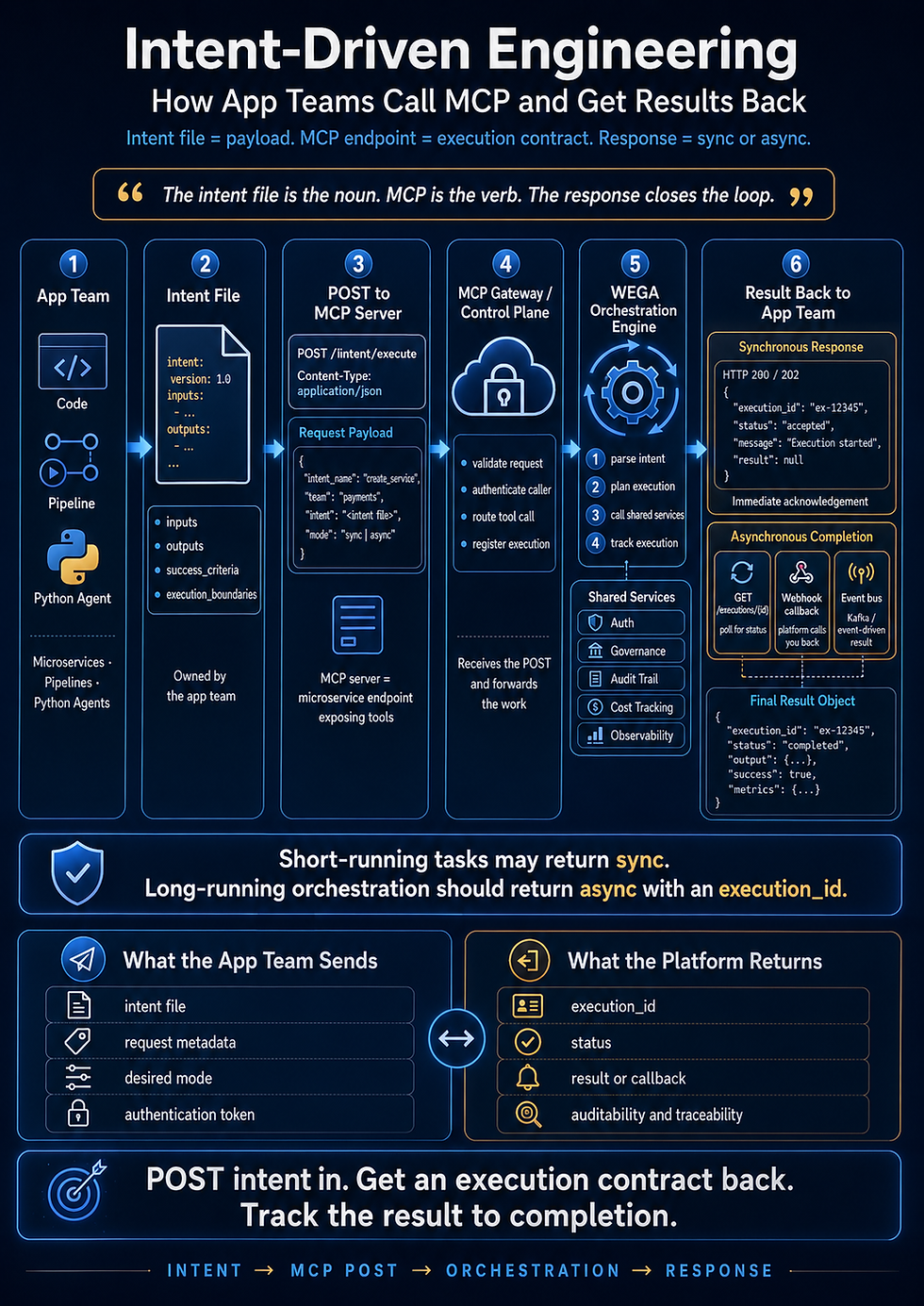
Instead of asking every development team to build their own AI integrations, imagine a centralized Shared Services team that owns the enterprise delivery workflow.
Their responsibility becomes:
Approved Jira connector
Approved Confluence connector
Approved GitHub connector
Enterprise Claude skills
Shared prompts
Intent templates
Governance
Security
Standards
Every engineering team simply consumes these services.
No duplicate effort.
No inconsistent prompts.
No custom integrations scattered across dozens of repositories.
The Three-Day Challenge
Rather than chasing unrealistic promises of “one feature per day,” our goal is straightforward:
Take a well-written Jira story and generate a production-quality pull request in three days or less.
That includes planning, implementation, testing, documentation, and code review preparation.
The Architecture
Jira Story
│
▼
Enterprise Jira Connector
│
▼
Intent Generation
│
▼
Intent Validation
│
▼
Architecture Validation
│
▼
Business Rule Expansion
│
▼
│
▼
Claude Code
│
▼
Implementation
│
▼
Tests
│
▼
Documentation
│
▼
GitHub Pull Request
Notice something important.
The AI isn’t replacing engineering.
It’s eliminating repetitive preparation work.
Building the Proof of Concept
I’m building this using entirely public resources.
No enterprise licenses required.
Development Environment
Free Atlassian Cloud account
Free Jira project
GitHub repository
Claude Code
VS Code
Anthropic MCP connectors
Local development machine
If this works in a personal environment, it becomes much easier to demonstrate inside an enterprise.
Step 1: Create a Real Backlog
Rather than using “Hello World” examples, build a realistic product.
Example:
Epic
Customer Notification Preferences
Stories:
Create notification preferences page
Build REST API
Validate email addresses
Store customer preferences
Add audit logging
Update React interface
Create unit tests
Create integration tests
Now we’re working with something that resembles an actual enterprise backlog.
Step 2: Connect Jira
The first shared service is straightforward.
Read a Jira story.
Convert it into structured data.
Generate an Intent document (Feature.md).
No coding yet.
Just prove that business intent can be consistently extracted.
Step 3: Enrich the Intent
This is where Shared Services begin adding value.
Instead of copying the Jira story, expand it.
Include:
Business objectives
Functional requirements
Non-functional requirements
Architecture considerations
Dependencies
Acceptance criteria
Testing strategy
Security considerations
Rollback approach
Documentation requirements
The resulting Feature.md is significantly richer than the original Jira ticket.
Step 4: Execute with Claude Code
Now Claude Code can work from complete context.
Generate:
Technical implementation plan
Source code
Unit tests
Integration tests
Documentation
Commit messages
Everything starts from validated intent.
Step 5: Open the Pull Request
Using GitHub integration, automatically:
Create feature branch
Commit changes
Push branch
Open Pull Request
Generate implementation summary
Attach testing results
Developers now begin their work reviewing a high-quality implementation rather than starting with a blank editor.
What the Shared Services Team Actually Owns
Many organizations assume Shared Services should build AI applications.
I think the more valuable responsibility is building reusable capabilities.
Examples include:
Jira connector
Confluence connector
GitHub connector
Enterprise prompt library
Intent templates
Claude skills
Repository standards
Governance policies
Security reviews
Quality gates
Feature teams simply consume these services.
The Goal Isn’t Full Automation
The objective isn’t replacing software engineers.
The objective is eliminating repetitive work.
Instead of this:
Developer
↓
Read Story
↓
Read Documentation
↓
Interpret Requirements
↓
Plan
↓
Code
The workflow becomes:
Delivery Lead
↓
Well-Written Jira Story
↓
Enterprise Shared Services
↓
Validated Intent
↓
Claude Code
↓
Ready-to-Review Pull Request
↓
Developer Review
↓
Production
Engineers spend more time reviewing, improving, and solving complex problems instead of reconstructing context.
My Proof of Concept
Over the coming weeks, I’m building this workflow using:
My own Jira Cloud project
My own GitHub repositories
Claude Code
Official MCP connectors where available
Enterprise-style shared services
Intent-Driven Engineering practices
The objective is simple:
Can a well-written Jira story become a production-quality pull request in three days or less?
If the answer is yes, then the conversation around enterprise AI shifts dramatically.
It’s no longer about whether AI can generate code.
It’s about whether organizations can create governed, reusable delivery systems that consistently transform business intent into working software.
I believe that’s where the next wave of enterprise AI adoption will be won.
Learn More
Intent-Driven Engineering — https://intent-driven-engineering.com
Comments