

How to Build a Repogenic Process Into Your Repositories

How to Build a Repogenic Process Into Your Repositories
Most software teams already have the pieces they need to automate far more of the engineering lifecycle.
They have Jira.
They have source control.
They have AI coding assistants.
They have CI/CD.
They have tests.
They have pull requests.
They have documentation.
They have code review.
What they often do not have is a repeatable intent-driven process connecting all of those pieces together.
That is where the Repogenic Loop becomes useful.
A Repogenic process treats the repository as more than a place to store code. The repository becomes the living engineering system around the code: intent, rules, automation, evidence, validation, and accumulated context.
And the process can begin with something as ordinary as a Jira story.
Start With Whatever the Client Gives You
Clients do not always give engineering teams perfect requirements.
Sometimes you receive a well-written feature.
Sometimes you receive:
vague Jira stories,
operational tasks disguised as features,
weak acceptance criteria,
missing story points,
no clear parent feature,
unclear business value,
poorly documented blockers,
or tickets written primarily to satisfy reporting requirements.
You could send every ticket back.
You could ask engineers to spend hours manually rewriting them.
Or you could automate the refinement.
That is the first Repogenic step.
Jira Becomes an Input, Not the Final Engineering Artifact
Imagine a simple repo automation skill called:
Its job is straightforward.
When a feature enters development, the AI agent reads the Jira story and evaluates it against a defined set of engineering rules.
It can check:
whether the item is really a user story,
whether the outcome is clearly stated,
whether acceptance criteria are testable,
whether Given/When/Then structure is appropriate,
whether ownership is missing,
whether the story has a parent feature,
whether blockers are documented,
whether estimates are missing,
and whether the language accurately describes feature development.
The agent then creates a revised Markdown version of the ticket.
It does not invent missing facts.
It does not manufacture story points.
It does not create fake assignees.
It does not disguise operational work as capital development.
It simply improves everything that can safely be improved and identifies what still requires human input.
Now the engineering team has something much stronger than the original ticket.
They have a repo-resident intent artifact.
The First Transformation
The flow becomes:
Jira Story → Jira Quality Skill → Revised Intent Markdown
That may look like a small improvement.
It is not.
You have just changed the quality of everything that follows.
AI systems are extremely sensitive to context.
If the original input is vague, the generated implementation will often be vague.
If the boundaries are unclear, the model has to infer them.
If the success criteria are weak, validation becomes subjective.
Better intent creates better downstream reasoning.
Then Intent-Driven Engineering Takes Over
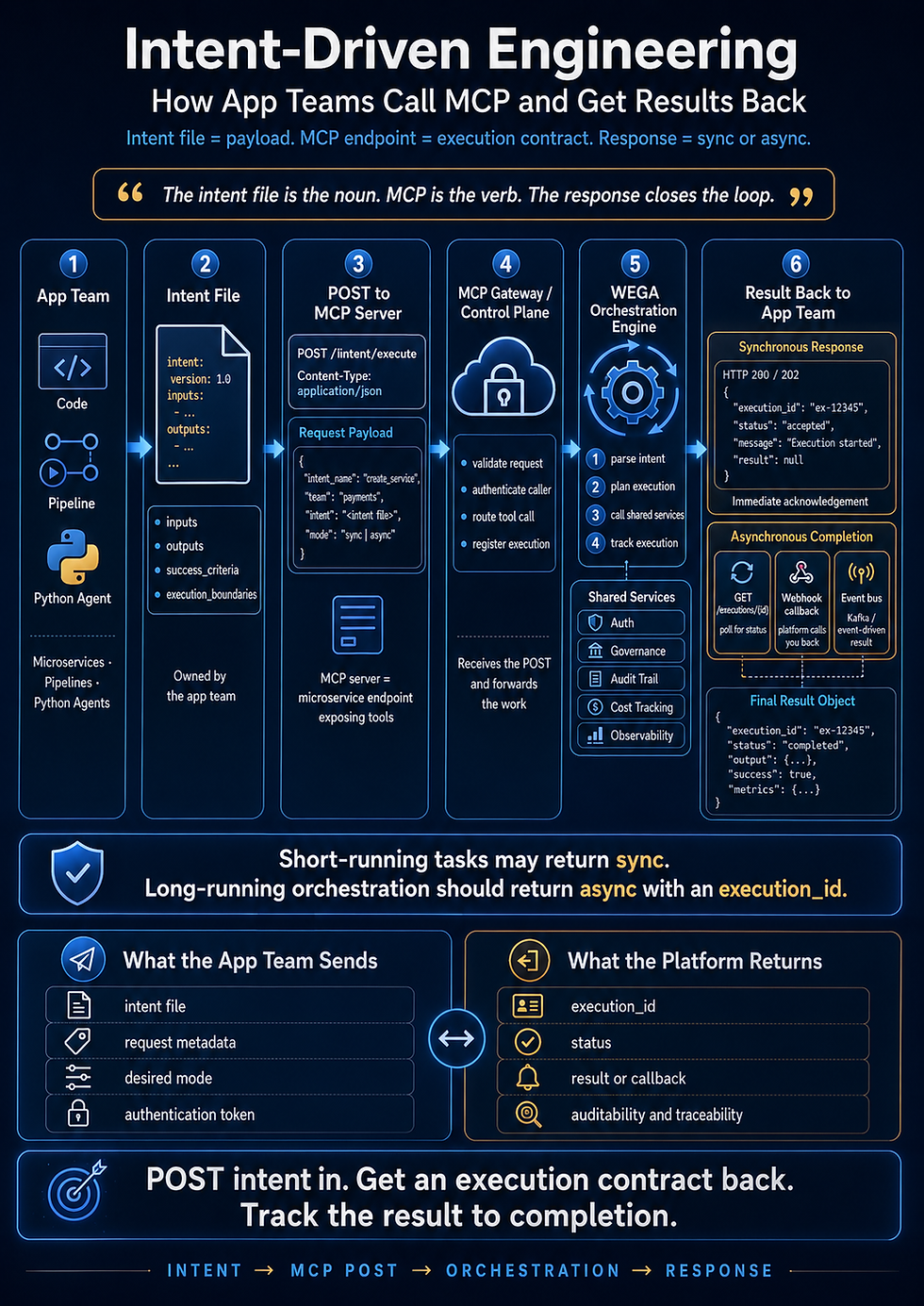
Once the Jira ticket has been converted into a stronger intent artifact, the feature can begin moving through an Intent-Driven Engineering process.
The intent can progressively gain:
Inputs
Outputs
Success Criteria
Constraints
Dependencies
Guardrails
Stop conditions
Architecture references
API contracts
Security requirements
Test expectations
Evidence requirements
The story has now evolved beyond project-management text.
It has become an engineering boundary.
This is an important distinction.
Jira coordinates the work.
The repository governs the work.
Jira can continue to hold the official status, ownership, planning information, and client reporting.
The repository holds the executable interpretation of what the team is actually building.
Now Automate the Entire Feature
Once the intent is in the repository, the same model can continue through the rest of the lifecycle.
For example:
Jira Story
↓
↓
Refined Intent
↓
Architecture / Boundary Validation
↓
Scaffold
↓
Implementation
↓
Tests
↓
Security / Quality Review
↓
Evidence Collection
↓
Pull Request
↓
Deployment Validation
↓
Production Evidence
Each stage can have its own lightweight intent-based automation.
You might have:
The idea is not to create a massive orchestration framework.
The idea is to create small, understandable, repo-level automations that progressively strengthen the feature.
Why This Works Better With AI
Most teams still treat AI like an interactive coding assistant.
They ask a question.
They get some code.
They paste it somewhere.
Then they ask another question.
That works, but it is difficult to repeat and difficult to govern.
Repo-based intent changes the model.
The AI begins each task with better context already available.
It knows:
the feature intent,
the success criteria,
the repository conventions,
the test expectations,
the architecture,
the allowed boundaries,
and the evidence that must be produced.
That means the prompts become smaller.
The outputs become more consistent.
The reasoning becomes more constrained.
And the results become more repeatable.
You stop explaining the same thing over and over again.
The repository explains it.
The Repository Becomes Engineering Memory
This may be the most important part of the model.
After the feature is complete, the repo does not only contain the source code.
It also contains evidence of how and why the code was created.
For example:
feature/
├── intent.md
├── jira-source.md
├── AI Automation/
│ ├── Jira.md
│ ├── Scaffold.md
│ ├── Review.md
│ ├── Test.md
│ └── Evidence.md
├── evidence/
├── tests/
└── src/
Now someone returning six months later can see much more than a commit history.
They can understand:
what the original request was,
how it was refined,
which constraints governed development,
which tests validated it,
what evidence was produced,
and how the feature entered production.
That is engineering memory.
This Is the Repogenic Loop
The repository becomes better after every feature.
The pattern is:
Intent → Generation → Validation → Evidence → Inherited Repository State
The next feature begins with a stronger repository than the previous one.
The repo now contains more context.
More rules.
More reusable automation.
More examples.
More evidence.
More architectural knowledge.
That accumulated state improves the next cycle.
This is why I use the term Repogenic Loop.
The repository is not passive storage.
It is progressively generating better engineering outcomes through accumulated intent, automation, validation, and evidence.
You Do Not Need a New Platform
One of the best parts of this approach is that most teams already own the tools required to do it.
You can implement this pattern with tools such as:
GitHub Copilot
Claude Code
Cursor
Gemini
repository-aware agents
CI/CD pipelines
existing test frameworks
Jira
GitHub, GitLab, Azure DevOps, or Bitbucket
The automation does not have to live inside some expensive new software factory.
Much of it can live directly beside the code.
That is exactly where engineering context belongs.
Start Small
Do not begin by trying to automate the entire SDLC.
Start with one painful repetitive problem.
For us, that might be Jira quality.
Create one Jira.md automation.
Run every new story through it.
Improve the story.
Save the refined intent in the repository.
Then add the next automation.
Maybe scaffolding.
Then testing.
Then review.
Then evidence.
Progressively improve the loop.
That is the same philosophy applied to the automation itself.
The Goal Is Not More Process
The goal is less manual repetition.
You should not need an engineer to manually correct the same Jira problem 1,000 times.
You should not need an architect to repeat the same repository rules 500 times.
You should not need someone to explain the same test expectations to every AI agent.
Encode it once.
Keep it close to the work.
Run it repeatedly.
That is one of the most practical ways to make AI-native engineering faster without making it chaotic.
Structure the Boundary, Not the Reasoning
The AI does not need every keystroke prescribed.
It needs a strong boundary.
Give it:
clear intent,
trustworthy context,
explicit constraints,
measurable success criteria,
and evidence requirements.
Then let the model reason inside those boundaries.
That is where AI becomes powerful without becoming unpredictable.
From Ticket to Production
A Jira ticket does not have to be the weak link in the engineering process.
It can simply be the beginning.
Take the ticket.
Improve it automatically.
Turn it into repo intent.
Add boundaries.
Generate the feature.
Validate it.
Collect the evidence.
Deploy it.
Leave the repository stronger than you found it.
Then do it again.
That is a Repogenic process.
And that is how repositories begin to become active participants in engineering rather than passive containers for source code.
Comments