

Intent-Driven Engineering in Data Teams: Turning Pipelines into Decisions
- Mark Kendall
- 1 hour ago
- 3 min read

Intent-Driven Engineering in Data Teams: Turning Pipelines into Decisions
Intro
Modern data platforms are powerful—but they’re also bloated, expensive, and often underutilized. Companies invest millions into data lakes, warehouses, streaming pipelines, and analytics tools, only to end up with dashboards that look impressive but rarely drive decisions.
The problem isn’t the architecture.
It’s the lack of intent.
Intent-Driven Engineering introduces a control plane over existing data systems—one that aligns business questions, data pipelines, and outcomes into a measurable, repeatable workflow.
What Is Intent-Driven Engineering (in a Data Context)?
Intent-Driven Engineering is the practice of defining:
What question needs to be answered
What data is required
What success looks like
What constraints must be respected
…before any data is pulled, transformed, or visualized.
Instead of starting with data and hoping for insights, you start with intent and outcomes, and let the system execute toward that goal.
The intent file is not documentation. It is the system.
Where to Start (Your Entry Point)
Looking at the architecture:
Left side → Data sources (input)
Middle → Processing (pipelines, lakes, warehouses)
Right side → Analytics + consumers (output)
👉 Your entry point is on the right side, closest to:
Data analysts
Business users
Dashboard/report consumers
Why?
Because:
That’s where money is justified
That’s where decisions are expected
That’s where failure is most visible
You’re not rebuilding pipelines.
You’re fixing how results are produced and consumed.
Step-by-Step Implementation (6–8 Week Engagement Model)
Step 1 — Identify the Highest-Impact Team
Start with a team that:
Produces reports or dashboards regularly
Supports business decisions (sales, marketing, operations)
Has visible demand and pressure
👉 Example:
Sales analytics team
Marketing performance team
Step 2 — Audit Current Workflow
Don’t look at infrastructure. Look at flow:
How do requests come in?
How are they interpreted?
How long does it take to deliver?
Which outputs are actually used?
You will find:
Vague requests
Rework
Duplicate dashboards
Low adoption
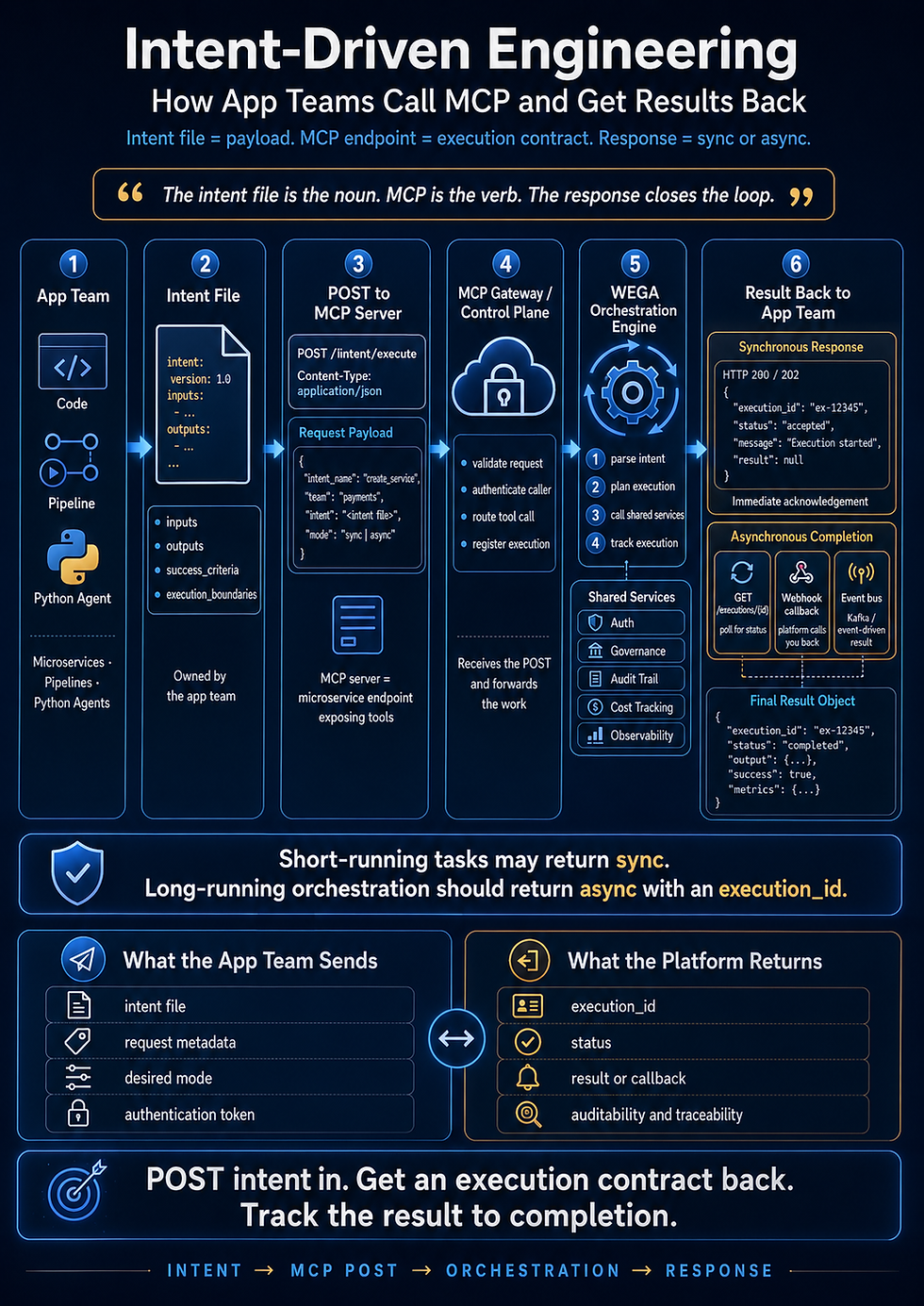
Step 3 — Introduce the Intent Layer (Control Plane)
Replace this:
Slack / email → “Can you pull some data?”
With this:
intent:
question: "Why did conversion drop last month?"
owner: "Marketing"
deadline: "Friday"
inputs:
- campaign_data
- funnel_events
- customer_segments
outputs:
- ranked_root_causes
- dashboard_summary
success_criteria:
- identify top 3 drivers
- segment by channel
- actionable recommendation included
execution_boundaries:
- use approved datasets only
- no PII exposure
👉 This becomes the front door to the system.
Step 4 — Map Intent to Existing Data Capabilities
You are not building new pipelines.
You are:
Mapping intent → existing datasets
Mapping intent → known queries or transformations
Identifying gaps only when necessary
👉 This leverages the existing $7M investment.
Step 5 — Standardize Execution Playbooks
Create repeatable patterns:
Intent Type
Execution Pattern
Trend analysis
time-series queries + visualization
Root cause
segmentation + anomaly detection
Funnel drop
event correlation
Forecast
model + confidence interval
👉 Analysts stop reinventing the wheel.
Step 6 — Execute and Deliver with Intent Context
Every output must include:
Original intent
Data used
Interpretation
Recommendation
👉 No more “dashboard and good luck.”
Step 7 — Measure Outcomes (The Missing Piece)
Track:
Was the question answered?
Was a decision made?
Was there measurable impact?
👉 This is where most data teams fail—and where you win.
Why It Matters
Without intent:
Data teams produce outputs
Business teams interpret them inconsistently
Value is unclear
With intent:
Work is aligned to outcomes
Execution is faster
Results are measurable
Key Takeaways
You don’t need to rebuild the data platform
You need to control how it is used
Start at the output layer (analytics + business)
Introduce a structured intent model
Standardize execution
Measure impact
Final Insight
Most organizations already have:
Data lakes
Warehouses
Pipelines
Dashboards
What they lack is:
A system that ensures those components produce decisions, not just data
Comments