

Is Your Company Deploying Forward-Deployed Engineers—or Just Renaming Consultants?
- Mark Kendall
- 8 hours ago
- 3 min read

Is Your Company Deploying Forward-Deployed Engineers—or Just Renaming Consultants?
Enterprise AI doesn’t need another title. It needs people who leave behind capability.
Over the past year, one term has become increasingly common across the consulting industry:
Forward-Deployed Engineer (FDE).
It’s a compelling concept.
Instead of consultants spending months interviewing stakeholders and producing PowerPoint presentations, forward-deployed engineers embed directly with customer teams, work inside the actual repositories, connect to enterprise systems, and help deliver production software.
That’s exactly what enterprises need.
But here’s the question every CIO and engineering leader should ask:
Are you deploying forward-deployed engineers—or simply giving traditional consultants a more technical title?
AI Has Changed the Definition of Consulting
The age of AI-assisted software development has changed customer expectations.
Organizations no longer want recommendations.
They want implementation.
They don’t want another maturity assessment.
They want a pull request.
They don’t want architecture diagrams.
They want working automation.
The value of an FDE isn’t measured by how many meetings they attend.
It’s measured by what they leave behind.
A Real Forward-Deployed Engineer Builds Capability
A real FDE should arrive with an engineering toolkit—not just a laptop.
That toolkit should include reusable assets such as:
Enterprise context connectors (Jira, Confluence, GitHub, Figma, APIs)
AI skills and reusable agents
MCP servers and tool integrations
Intent templates and implementation workflows
Automated testing and validation
CI/CD integration
Security and governance patterns
Observability and deployment monitoring
Documentation and operational runbooks
These aren’t nice-to-have accelerators.
They’re the foundation for repeatable enterprise AI delivery.
The Engagement Should Produce More Than Software
By the time an FDE engagement is complete, the customer should own:
Working production code
Reusable automation
Documented implementation patterns
Internal engineering knowledge
Repeatable delivery processes
Teams capable of continuing without outside assistance
If the consultants leave and progress stops…
they didn’t transfer capability.
They transferred dependency.
The New Deliverable Isn’t a PowerPoint
Ask any engineering leader what they value today, and the answer has changed dramatically.
Increasingly, the desired outcome looks like this:
Business Request
↓
Jira Story
↓
Enterprise Context
↓
Intent
↓
AI Planning
↓
Implementation
↓
Testing
↓
Pull Request
↓
Production Deployment
That is measurable.
That is repeatable.
That is engineering.
Every FDE Should Pass the “Leave-Behind” Test
Here’s a simple evaluation.
At the end of the engagement, can the customer answer “yes” to these questions?
Can our teams continue without the consultants?
Do we own the automation?
Do we understand how it works?
Can we reuse it on the next project?
Did our engineers become more productive?
Did the engagement reduce future consulting effort instead of increasing it?
If the answer is no…
the engagement may have delivered software…
but it didn’t build capability.
AI Raises the Bar
Enterprise AI has fundamentally changed consulting.
Customers aren’t paying for information anymore.
AI can summarize documentation in seconds.
Customers are paying for:
enterprise integration
operational experience
reusable engineering
production deployment
organizational enablement
In other words…
they’re paying for execution.
The Missing Piece: Shared Services
One lesson has become increasingly clear across enterprise AI implementations.
Feature teams shouldn’t become AI platform experts.
Forward-deployed engineers shouldn’t become permanent members of every project.
Instead, successful organizations establish an AI Shared Services capability that transforms lessons learned from the first implementation into reusable organizational assets.
The first project discovers.
Shared Services productizes.
Every project after that moves faster.
That’s how enterprise capability scales.
The New Standard
Perhaps the simplest definition of a modern Forward-Deployed Engineer is this:
Leave the organization stronger than you found it.
Not because you wrote great code.
But because you built systems, automation, documentation, and engineering practices that continue delivering value long after you’ve left.
That’s what enterprises should expect.
And that’s the standard the consulting industry should aspire to.
About the Author
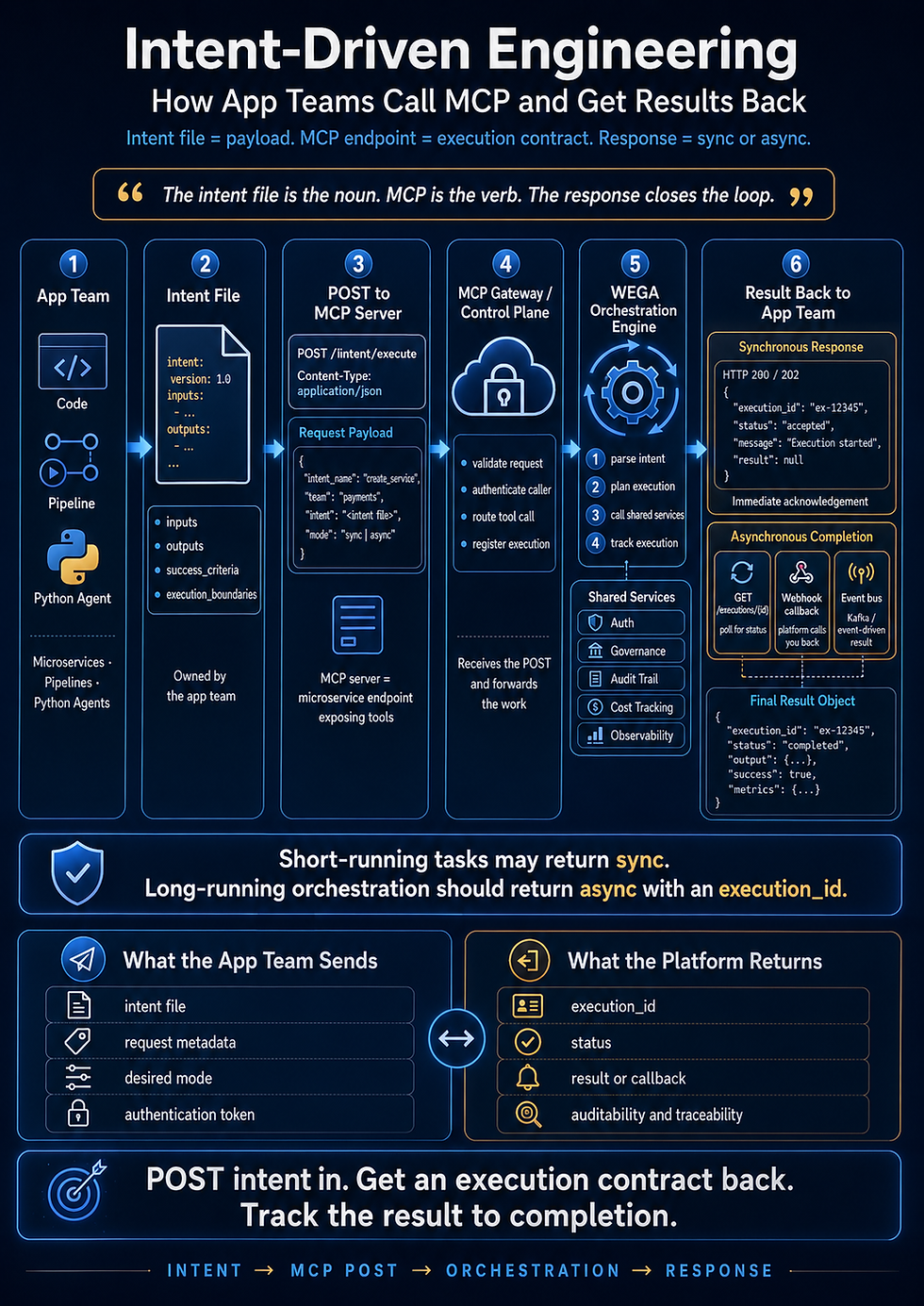
Mark Kendall is an Enterprise AI Architect and Delivery Lead focused on Intent-Driven Engineering—an approach that combines enterprise context, AI-assisted development, reusable automation, and shared engineering services to help organizations move from business intent to production software faster and more consistently.
Learn more:
Learn Teach Master: https://learnteachmaster.org
Intent-Driven Engineering: https://intent-driven-engineering.com
GitHub: https://github.com/kendallmark3
Comments