

Let the Problem Earn the Agent When to Use Skills, Agentic Workflows, and Managed Services

Let the Problem Earn the Agent
When to Use Skills, Agentic Workflows, and Managed Services
Everybody is talking about AI agents.
Agents writing code. Agents running businesses. Agents managing other agents. Orchestrators, frameworks, autonomous enterprises.
But somewhere in all this excitement, we’ve forgotten a fundamental engineering question:
What problem are we actually trying to solve?
After nearly two years of building AI-assisted applications, skills, hooks, MCP integrations, and intent-driven engineering processes, I kept looking for a compelling reason to introduce a separate agentic orchestration framework.
I couldn’t find one.
The problems simply didn’t justify the additional architecture.
Then I encountered a business problem that did.
That experience reinforced three important engineering principles.
1. When Does a Skill Become Insufficient?
A skill becomes insufficient when it cannot reliably manage the scope, state, dependencies, or adaptive investigation required by the business process.
Consider a business that processes customer orders.
A skill might examine an order, check inventory, or generate a customer response.
Simple. Useful. Effective.
But suppose an order fails.
The investigation must examine inventory, payment processing, shipping systems, and customer records.
Each finding may change what needs to happen next.
Now we’re managing dependencies, maintaining state, investigating exceptions, and coordinating decisions across systems.
We’ve moved beyond executing an isolated capability.
But that doesn’t automatically justify an agentic workflow.
It just means we have an architectural decision to make.
2. When Does an Agentic Workflow Make Sense?
An agentic workflow becomes appropriate when intelligent coordination adds measurable value.
Imagine that same order-processing problem.
One agent investigates inventory availability.
Another evaluates payment exceptions.
Another examines fulfillment alternatives.
An orchestrator coordinates the investigation, evaluates findings, and determines the next appropriate action.
Human approval remains available for consequential decisions.
The workflow adapts as new information becomes available.
That’s potentially useful agentic orchestration.
But here’s the test:
Could deterministic automation accomplish the same outcome more reliably and cheaply?
If yes, use it.
If intelligent coordination demonstrably improves resolution time, accuracy, or business outcomes, the agentic workflow has earned its place.
We don’t need agents simply because we know how to build them.
3. When Does It Become a Managed Service?
A managed service becomes appropriate when multiple teams need persistent execution, shared governance, operational reliability, and centralized capabilities.
A workflow serving one application might run perfectly well using AWS Lambda and Step Functions.
Now imagine multiple departments needing the same capabilities.
They require centralized security, observability, identity, policies, evidence, and operational support.
A shared service may now make sense.
Perhaps that’s a managed agent runtime. Perhaps it’s a microservice. Perhaps existing infrastructure already provides everything necessary.
The engineering decision should come from operational requirements, not architectural enthusiasm.
Build on what exists. Create what doesn’t yet.
This Is Not a Maturity Model
Skill → Agentic Workflow → Managed Service
These aren’t levels of sophistication.
A managed service isn’t inherently better than a skill.
An orchestrator isn’t automatically better than a deterministic pipeline.
And autonomy isn’t evidence of business value.
Each architecture exists to satisfy different requirements.
The objective is not to progress through all three.
The objective is to stop at the simplest architecture that reliably delivers the intended outcome.
Let the Problem Earn the Agent
Before introducing agentic orchestration, ask:
What business problem requires it?
Why won’t simpler automation work?
Where does adaptive reasoning add value?
How will we measure success?
What complexity are we introducing?
Businesses don’t need more agents.
They need reliable solutions, hardened processes, defensible architectures, and measurable outcomes.
Sometimes that requires a skill.
Sometimes an agentic workflow.
Sometimes a managed service.
And sometimes a few well-engineered functions are all we need.
Let the problem earn the agent.
Let the complexity earn the orchestrator.
Let the operational requirements earn the platform.
That’s not anti-AI.
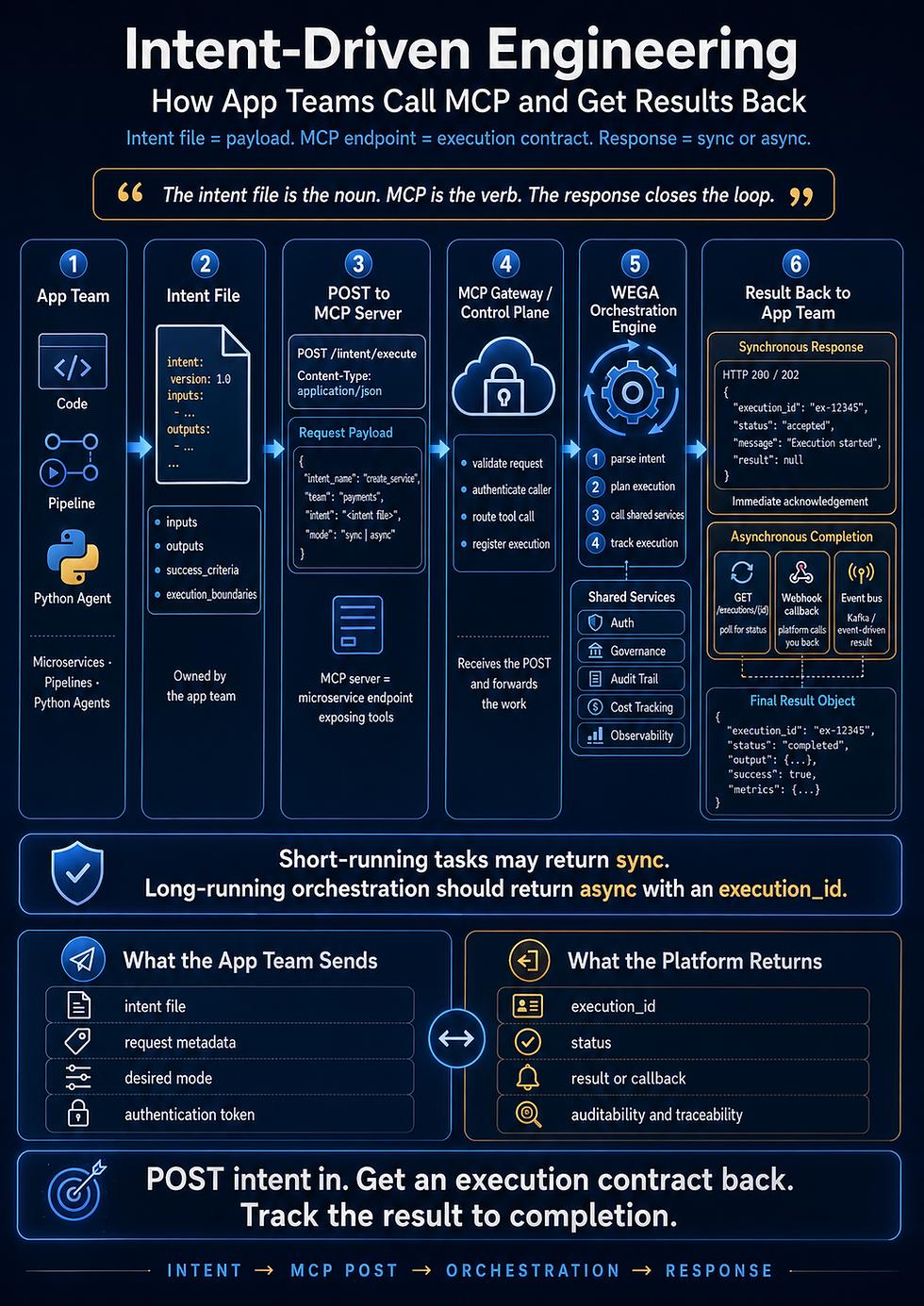
That’s Intent-Driven Engineering.
Intent-Driven Engineering
The title stays: Let the Problem Earn the Agent.
Comments