

The History of Software, Languages, and a Few Tidbits
- Mark Kendall
- 12 minutes ago
- 12 min read

The History of Software, Languages, and a Few Tidbits
Software engineering has a funny history.
Every generation believes it has finally discovered the right language, the right architecture, the right database, the right methodology, and the right way to build systems.
Then twenty years later, another generation arrives, looks at everything that came before it, and asks:
Who built this mess?
The answer, of course, is that we did.
We built it one business requirement, one deadline, one workaround, one database table, one framework, and one production emergency at a time.
Some of it was brilliant.
Some of it was terrible.
Much of it was both.
And an astonishing amount of it is still running.
Before Software Engineering Had a Name
The earliest software systems were not created by people who thought of themselves as modern software engineers.
Programming was closely tied to the machine.
Instructions were written for specific hardware. Memory was scarce. Processing power was expensive. Storage was limited. Programs were often represented through punched cards, paper tape, machine code, or low-level assembly instructions.
There was little separation between the software and the equipment that executed it.
A programmer needed to understand the machine intimately.
Today, developers can install a framework, import a library, call an API, and deploy an application without knowing the physical location of the server.
Early programmers did not have that luxury.
They often knew exactly where data lived in memory because they had no other choice.
COBOL and the Business World
COBOL emerged in 1959 and became one of the defining languages of commercial computing.
Its name stood for Common Business-Oriented Language, and that was exactly what it was designed to be.
COBOL was built for:
financial transactions,
payroll systems,
insurance processing,
government records,
banking operations,
reporting,
and large-scale business data processing.
Modern developers sometimes laugh at COBOL because of its verbose syntax.
But COBOL was not trying to be elegant in the modern sense.
It was trying to make business logic readable, durable, and portable across large computer systems.
It succeeded.
Many of the world’s most important transaction-processing systems still contain COBOL today.
That does not mean every COBOL system is healthy.
It means many of them became deeply embedded in the organizations they supported.
Once a system begins processing payroll, settling transactions, administering policies, or managing government benefits, replacing it becomes far more difficult than simply choosing a newer language.
The old code may look outdated.
The business dependency is not.
Codd and the Relational Model
One important historical correction is worth making.
Edgar F. Codd introduced the relational model in 1970, not 1957.
That work fundamentally changed how organizations thought about data.
Before the relational model, data systems were often tightly connected to physical storage structures and navigational access paths.
Codd proposed that data could instead be represented through logical relations—what most people now think of as tables.
From that foundation came many concepts that continue to define enterprise systems:
rows and columns,
primary keys,
foreign keys,
relationships,
normalization,
constraints,
transactions,
and declarative querying.
The relational model became one of the most durable ideas in software history.
Oracle, IBM Db2, Microsoft SQL Server, PostgreSQL, MySQL, and many other systems still depend on those principles.
We have added document databases, graph databases, key-value stores, vector databases, data warehouses, and data lakes.
Yet the relational model remains at the center of corporate technology because business itself is relational.
Customers have accounts.
Accounts have transactions.
Orders contain products.
Employees belong to departments.
Claims reference policies.
Payments satisfy obligations.
The technology changes.
The relationships remain.
C and the Foundations Beneath Everything
The C programming language appeared in the early 1970s and became one of the most influential languages ever created.
C provided a powerful balance.
It was close enough to the hardware to build operating systems and infrastructure, but high-level enough to be more portable and productive than assembly language.
C helped shape:
operating systems,
compilers,
databases,
networking software,
embedded systems,
device drivers,
and performance-sensitive libraries.
A great deal of modern software still rests on foundations written in C.
Developers may spend their days working in JavaScript, Python, Java, C#, or another higher-level language, but underneath those systems they frequently depend on runtimes, operating systems, databases, and libraries written partly in C.
C did not dominate every layer of software development.
It dominated the foundations.
Unix and the Power of Small Ideas
Unix introduced another collection of ideas that stood the test of time.
Its influence can be seen in Linux, macOS, cloud infrastructure, containers, developer tooling, and modern server environments.
Some of its most enduring concepts were remarkably simple:
files,
processes,
command-line tools,
pipes,
text streams,
permissions,
and small utilities that could be combined.
The philosophy was not that every program should do everything.
It was that small tools should perform focused jobs and work together.
That concept remains visible today in command-line development, automation pipelines, container images, Git workflows, and cloud-native tooling.
The interfaces improved.
The philosophy survived.
The Rise of C++
C++ extended C with object-oriented programming and additional abstractions.
It became important in areas where performance and control remained essential:
operating systems,
game engines,
financial trading platforms,
desktop applications,
browsers,
databases,
telecommunications,
and real-time systems.
C++ gave developers enormous power.
It also gave them countless ways to create complexity.
That became a recurring pattern in software history.
As languages became more powerful, developers gained more abstraction.
With greater abstraction came greater productivity.
But it also became easier to create systems that very few people fully understood.
Visual Basic and the Democratization of Corporate Software
Visual Basic deserves more historical credit than it often receives.
It allowed large numbers of business users and corporate developers to build Windows applications quickly.
A developer could create a form, place buttons and fields on it, connect it to a database, and produce an internal business application without building everything from scratch.
This enabled an explosion of departmental software.
Companies built applications for:
inventory,
scheduling,
reporting,
finance,
customer service,
workflow management,
and countless specialized internal processes.
Some of those applications were carefully engineered.
Many were not.
Visual Basic made software development more accessible, but it also made it possible for organizations to create thousands of applications without consistent architecture, testing, documentation, or governance.
The productivity was real.
So was the technical debt.
Microsoft, .NET, and the Corporate Desktop
Microsoft’s technology journey created one of the largest enterprise software footprints in history.
Over time, organizations adopted technologies such as:
Visual Basic,
classic ASP,
COM,
Windows Forms,
Web Forms,
SQL Server,
SharePoint,
BizTalk,
WCF,
.NET Framework,
and C#.
Not all of these technologies aged equally well.
Some encouraged tightly coupled applications.
Some depended heavily on Windows-specific environments.
Some created complex deployment and maintenance challenges.
But C# became one of Microsoft’s strongest technical achievements.
It provided a modern, strongly typed, managed language with excellent tooling and a large enterprise ecosystem.
The problem with many older Microsoft systems was not necessarily the language.
The problem was the environment around it:
tightly coupled architectures,
proprietary frameworks,
server dependencies,
limited automated testing,
long deployment cycles,
and years of accumulated business logic.
Many companies still depend on these systems because they perform important work.
They are not simply old applications.
They are embedded business operations.
Java and the Enterprise Internet Era
Java emerged in the 1990s with the promise of portability.
The famous idea was that developers could write code once and run it anywhere that supported the Java Virtual Machine.
Java became one of the defining enterprise languages of the internet era.
It offered:
managed memory,
strong typing,
portability,
mature development tools,
enterprise frameworks,
large application servers,
and a massive developer ecosystem.
Java became deeply established in:
banking,
insurance,
telecommunications,
healthcare,
government,
logistics,
commerce,
and large-scale corporate systems.
Many early Java applications became enormous monoliths.
They used application servers, XML configuration, SOAP services, stored procedures, shared databases, and complicated release processes.
Later generations moved toward Spring, Spring Boot, APIs, containers, microservices, Kubernetes, and cloud platforms.
Java survived because it continued evolving.
Many Java systems are still perfectly viable.
The real challenge is often not Java itself.
It is the architecture, deployment model, dependency structure, testing quality, and organizational history surrounding the application.
JavaScript Escaped the Browser
JavaScript began as a scripting language for web pages.
Few people predicted that it would eventually become one of the most widely used languages in the world.
JavaScript moved from simple browser interaction into:
rich web applications,
mobile applications,
server-side development,
cloud functions,
desktop applications,
build systems,
automation,
and distributed platforms.
Node.js allowed JavaScript to become a server-side language.
TypeScript added static typing and structure for larger systems.
Modern front-end frameworks transformed the browser into a serious application platform.
JavaScript survived partly because the browser became universal.
Once the web became the dominant application interface, JavaScript gained a position that was extremely difficult to displace.
It may not always be loved.
It is difficult to avoid.
Python and the Language of Accessibility
Python has survived and expanded because it made programming approachable.
Its readable syntax lowered the barrier to entry.
It became valuable for:
scripting,
automation,
scientific computing,
data analysis,
machine learning,
artificial intelligence,
testing,
APIs,
cloud operations,
and developer tooling.
Python became the connective tissue of modern technical work.
It may not be the ideal language for every high-volume transaction system or every performance-sensitive application.
But it is exceptionally useful for connecting systems, exploring data, building models, automating processes, and turning ideas into working software quickly.
The rise of AI strengthened Python’s position even further.
Much of the machine-learning and data-science ecosystem grew around it.
SQL May Be the Greatest Survivor
Programming languages rise and fall in popularity.
Frameworks appear and disappear.
Database products change.
Yet SQL continues.
That is partly because SQL is declarative.
The developer states what data is required rather than explicitly describing every step the database must take to retrieve it.
That separation proved powerful.
The database engine can optimize the execution while the user focuses on the desired result.
SQL is not perfect.
It has vendor differences, unusual syntax, and decades of historical baggage.
But it remains one of the clearest examples of a technology that solved an enduring problem well enough to survive generations of change.
What Really Stood the Test of Time?
The technologies that survived were not always the most fashionable.
They endured because they solved fundamental problems.
COBOL survived because business transactions still matter.
C survived because machines still require low-level control.
SQL survived because business data remains relational.
Java survived because enterprises value portability, stability, and mature ecosystems.
C# survived because corporate developers needed a productive, strongly typed platform.
Python survived because accessibility and automation matter.
JavaScript survived because the web became universal.
Unix concepts survived because simple, composable tools remain powerful.
The most durable technologies were those attached to permanent needs.
Why Bad Legacy Code Still Runs
There is an enormous amount of poor legacy code inside corporations.
There is also an enormous amount of old code that works extremely well.
Age alone does not determine quality.
A system may be old and highly reliable.
It may also be modern and terrible.
Legacy systems survive because they often contain business knowledge that exists nowhere else.
The real system is rarely just the source code.
It also includes:
undocumented business rules,
database procedures,
batch schedules,
file transfers,
external integrations,
manual workarounds,
regulatory requirements,
operational habits,
support procedures,
and the knowledge of people who have worked with it for decades.
That is why replacing legacy software is so difficult.
A rewrite may recreate the visible screens and obvious workflows while missing dozens of hidden behaviors that the business depends on.
The ugly code may be carrying institutional knowledge.
We Had Methodologies, but Not a Unified Operating Model
It would be inaccurate to say that earlier generations had no methodologies.
The industry created many of them:
structured programming,
waterfall,
object-oriented analysis,
information engineering,
Rational Unified Process,
capability maturity models,
ITIL,
agile,
DevOps,
site reliability engineering,
and platform engineering.
The problem was fragmentation.
One group gathered requirements.
Another designed the architecture.
Another wrote the code.
Another tested it.
Another deployed it.
Another supported it.
Every handoff created the possibility of lost context.
The original business need became less visible as work moved deeper into the delivery process.
By the time the application reached production, the source code was often the only artifact that accurately described what the system actually did.
The code became the specification.
The database became the documentation.
The senior developer became the operating manual.
That was never a sustainable model.
The Rewrite Fantasy
Every generation eventually looks at the previous generation’s systems and says:
We should rewrite all of this.
That idea is usually attractive and frequently dangerous.
A complete rewrite can take years.
During that time, the existing business continues changing.
Requirements move.
People leave.
Integrations evolve.
Regulations change.
The new system attempts to catch a moving target while reproducing decades of accumulated behavior.
Sometimes a rewrite is necessary.
But replacing old technology does not automatically remove old complexity.
A company can rebuild the same bad architecture in a modern language.
It can move technical debt into the cloud.
It can reproduce the same confusing business rules behind newer APIs.
Modern syntax does not guarantee modern engineering.
Modernization Should Begin With Understanding
The first step in modernization should not be translation.
It should be comprehension.
Before changing a legacy system, an organization must understand:
what the system does,
which capabilities matter,
which behaviors must be preserved,
which behaviors should be eliminated,
which systems depend on it,
what data it owns,
what risks it creates,
and what business outcome modernization is supposed to achieve.
That requires code analysis, runtime telemetry, dependency mapping, database inspection, production logs, interviews, testing, and operational knowledge.
Modernization should begin with evidence.
Preserve Behavior Before Replacing Technology
One of the most important modernization techniques is characterization testing.
Instead of immediately asking whether the old system was designed correctly, the team first captures what it actually does.
That may include:
transaction comparisons,
golden datasets,
interface contracts,
batch results,
performance baselines,
security requirements,
and operational service levels.
This creates a safety net.
The organization can then decide intentionally which behavior should remain and which behavior should change.
Without that evidence, modernization becomes guesswork.
Separate the Business Capability From the Language
A billing capability is not COBOL.
A claims system is not Java.
A customer portal is not C#.
An analytics workflow is not Python.
Those technologies are implementations.
The business capability exists independently of the language used to express it.
This distinction is essential.
Once the organization separates the capability from its current implementation, it can make better decisions.
A capability may be:
preserved,
wrapped,
exposed through an API,
moved to a new platform,
purchased as a commercial service,
gradually decomposed,
redesigned,
or retired entirely.
The goal is not to modernize every line of code.
The goal is to modernize the business’s ability to change.
The Strangler Approach
The safest modernization programs usually replace systems incrementally.
A modern boundary is created around the legacy system.
New capabilities are introduced alongside it.
Traffic and responsibility gradually move toward the new implementation.
The old system becomes smaller over time.
This is often called the strangler pattern.
It reduces risk because the organization does not need to replace everything at once.
A mainframe transaction can remain in place while modern APIs and customer experiences are created around it.
A Java monolith can expose stable domain interfaces before individual capabilities are extracted.
An older .NET application can continue operating while new modules are built on modern .NET.
The objective is controlled evolution.
AI Changes the Modernization Equation
Artificial intelligence may become one of the most important developments in the history of legacy modernization.
AI systems can help:
explain unfamiliar code,
map dependencies,
identify dead code,
generate documentation,
extract business rules,
create characterization tests,
compare old and new behavior,
suggest service boundaries,
produce API wrappers,
and translate common programming patterns.
This can dramatically reduce the effort required to understand old systems.
But AI does not remove the need for judgment.
It cannot independently determine whether an obscure exception is outdated, accidental, contractual, regulatory, or essential.
It cannot decide which business behavior should survive into the future.
It can accelerate discovery and execution.
The enterprise must still decide what the system is supposed to mean.
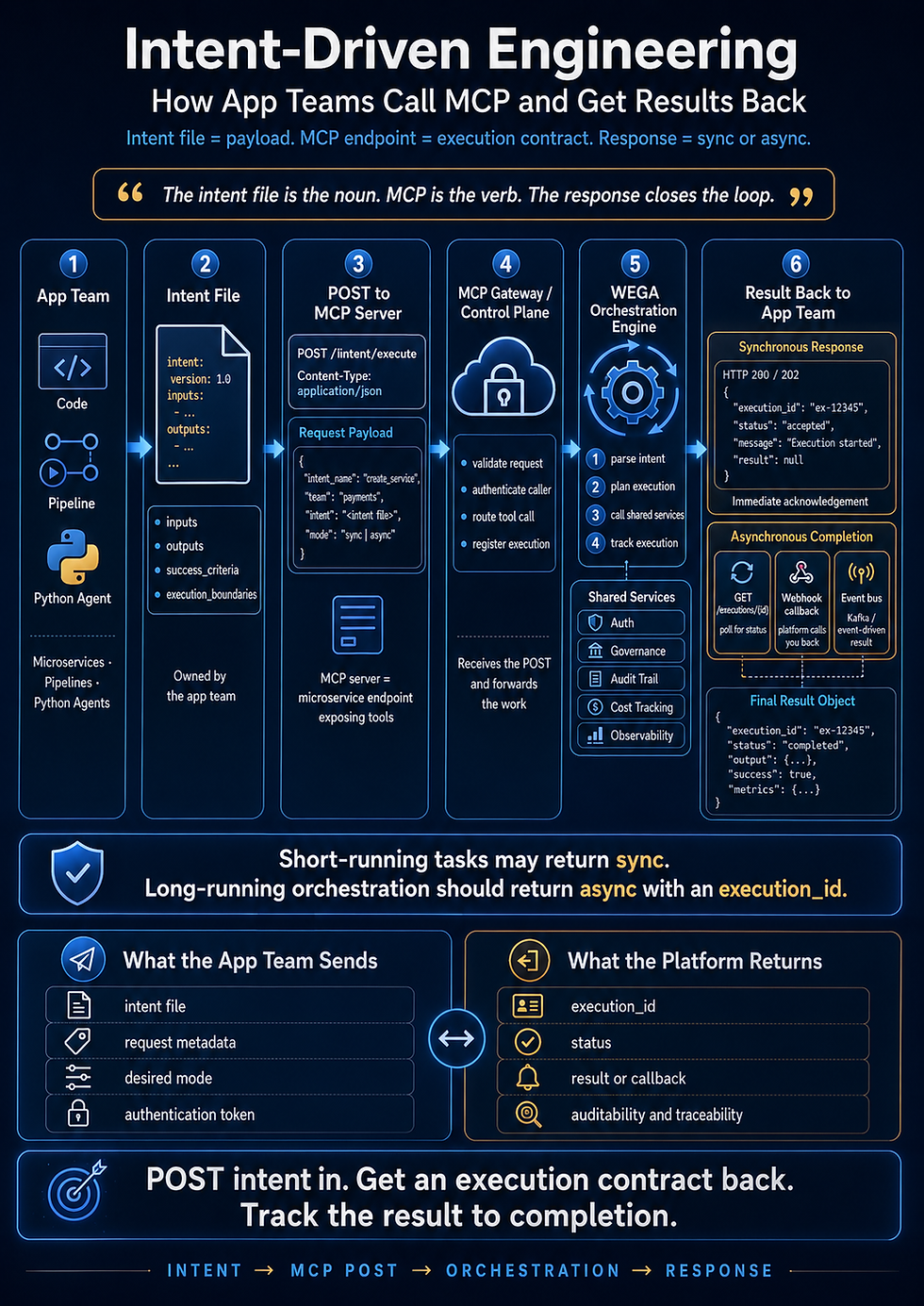
Where Intent-Driven Engineering Fits
This is where intent-driven engineering belongs in the history of software.
For decades, organizations encoded their intentions directly into implementations.
Business meaning became buried inside source code, stored procedures, ticket systems, documents, and individual memory.
The code became the final authority because the original intent had been lost.
Intent-driven engineering reverses that relationship.
It begins by making the purpose explicit.
It captures:
why the capability exists,
what outcome is expected,
which constraints apply,
what context is authoritative,
which behaviors must be preserved,
what may change,
and what evidence will prove success.
The code then becomes an implementation of that intent.
That distinction becomes increasingly important as AI systems generate more of the implementation.
Without a governed intent layer, AI may modernize old syntax while preserving obsolete architecture and outdated business assumptions.
It may produce beautiful new code that recreates the wrong system perfectly.
A New Chapter in Software History
The history of software is not a straight line from bad technology to good technology.
It is a history of tradeoffs.
Every major language and platform solved a real problem.
Every solution also created new complexity.
COBOL made business computing practical.
C made portable systems software possible.
Relational databases brought structure to enterprise data.
Visual Basic opened software development to a broader corporate audience.
Java standardized large-scale enterprise development.
C# strengthened the Microsoft development platform.
JavaScript transformed the browser into an application environment.
Python made automation, data, and AI more accessible.
Cloud computing changed how infrastructure was consumed.
DevOps connected development and operations.
AI is now changing how software itself is understood and produced.
The next step is not simply another language.
It is a new relationship between human purpose and machine execution.
What the Future Must Preserve
Some legacy systems will remain in operation for decades.
That is not necessarily a failure.
A system does not need to look modern to remain valuable.
But every important capability should become:
understandable,
observable,
secure,
governable,
accessible,
economically supportable,
and changeable when the business requires it.
That is the true modernization objective.
The technologies that stood the test of time did so because they captured something valuable.
The responsibility of the next generation is not to erase that history.
It is to preserve the value while removing the limitations of the old implementation.
And perhaps that is the most important software history lesson of all:
Languages change. Platforms change. Architectures change. The business intent remains.This can also be tightened into a shorter, more editorial version with fewer technology sections and a stronger focus on the historical path toward intent-driven engineering.
Comments