

The Three Tenets of a Successful Claude Code Implementation
- Mark Kendall
- 2 days ago
- 7 min read

The Three Tenets of a Successful Claude Code Implementation
Most companies do not fail with Claude Code because the technology is not capable.
They fail because the implementation becomes too complicated.
They launch pilots. They form committees. They debate tools. They compare models. They build dashboards. They schedule training. They create governance documents. They announce adoption targets.
And yet, months later, the organization is still asking the same question:
Why are we not moving faster?
The answer is usually not hidden inside another platform, another framework, or another strategy deck.
It comes down to three things.
Commit to the tool.
Establish the operating discipline.
Scale through shared automation.
Get those three right, in that order, and most of the other pieces begin to fall into place.
Miss one of them, and the implementation will struggle no matter how much money, training, or executive attention is placed around it.
Tenet One: Commit to the Tool
The first requirement is full organizational commitment.
Not curiosity.
Not experimentation.
Not optional adoption.
Commitment.
In many organizations, Claude Code is introduced alongside several existing tools. Some developers use it regularly. Others fall back to Copilot. Some continue working manually. A few experiment with multiple tools depending on the task.
That may be acceptable during an early evaluation, but it cannot become the permanent operating model.
Mixed adoption produces mixed results.
When one developer uses Claude Code for full repository-aware implementation and another uses an autocomplete assistant for isolated code generation, the organization is no longer measuring the same process.
The tools may both involve artificial intelligence, but the development models are fundamentally different.
One is helping write code.
The other can participate in planning, repository analysis, implementation, validation, testing, documentation, and pull-request preparation.
A company cannot accurately measure velocity, quality, or cost while every developer is running a different AI-assisted workflow.
At some point, leadership must establish a clear standard.
That does not mean banning every other tool.
It means deciding where the official engineering workflow lives.
For organizations adopting Claude Code, the standard should be clear:
Final implementation work runs through Claude Code.
Developers may still use other tools for research, brainstorming, note-taking, or lightweight assistance. But when code is being generated, validated, and prepared for delivery, the work should move through the agreed enterprise platform.
This is not primarily a technical decision.
It is an operating decision.
Standards create repeatability.
Repeatability creates measurable performance.
Without commitment, every other improvement becomes harder.
Tenet Two: Establish the Operating Discipline
Once the organization commits to the tool, the next question becomes more important:
How are developers expected to use it?
Claude Code cannot simply be dropped into an engineering team and expected to produce transformational results on its own.
Without discipline, developers will often use it like a faster chatbot.
They will submit vague requests.
They will ask for large amounts of code without sufficient context.
They will skip planning.
They will fail to define constraints.
They will leave business rules unstated.
They will accept implementation before validating whether the result matches the original need.
That approach may produce code quickly, but it does not create a dependable engineering system.
The missing layer is an operating discipline.
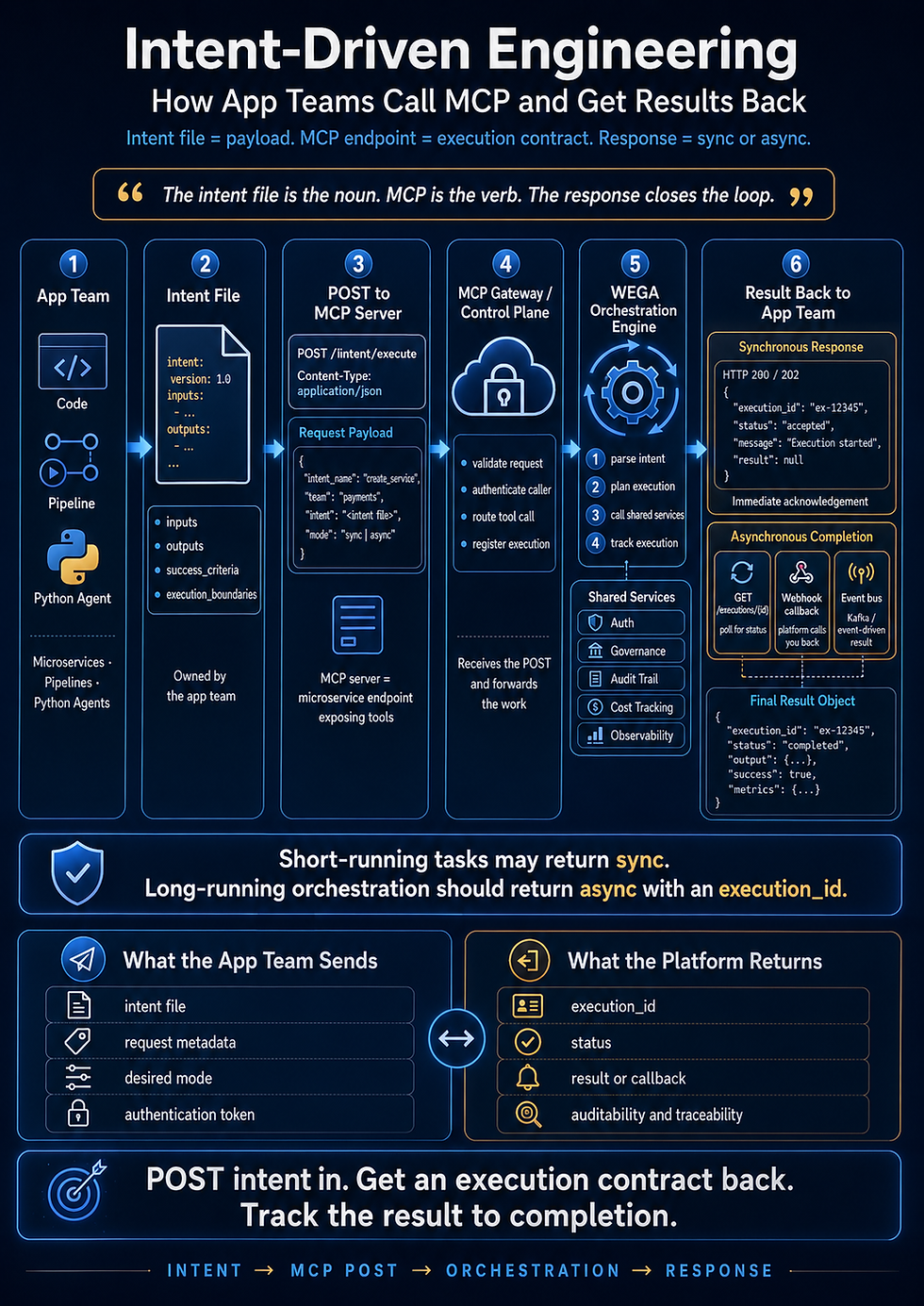
That discipline is Intent-Driven Engineering.
Intent-Driven Engineering requires developers to communicate more than what they want built.
They must also communicate why it is being built, what constraints apply, how success will be measured, which rules must be preserved, and what risks must be controlled.
A strong intent should capture:
The business outcome
The user need
The expected behavior
The relevant repository context
Architectural constraints
Security and compliance requirements
Acceptance criteria
Validation expectations
Known exclusions
The definition of completion
This changes the nature of the interaction.
Claude Code is no longer being asked to guess what the developer means.
It is being given enough context to reason through the work.
That distinction is critical.
AI-assisted development does not become reliable simply because the model becomes more powerful.
It becomes reliable when the organization improves the quality of the intent entering the system.
Poor intent creates rework.
Incomplete intent creates defects.
Conflicting intent creates unpredictable implementation.
Clear intent creates alignment before code is generated.
This is why Intent-Driven Engineering must become more than a document template.
It must become a team habit.
Developers need to plan before implementing.
They need to expose assumptions.
They need to define guardrails.
They need to validate output against the original intent.
They need to refine the intent when the work changes.
The operating discipline must be taught, coached, reviewed, and repeated until it becomes part of normal engineering behavior.
That is the moment Claude Code stops being an individual productivity tool and becomes part of the company’s engineering operating model.
Tenet Three: Scale Through Shared Automation
Once the tool is standardized and the discipline is established, the organization is ready for the third tenet:
Shared automation.
This is where the gains begin to compound.
Most enterprise Claude Code implementations eventually produce reusable assets:
Skills
Agents
Sub-agents
Hooks
Commands
Plugins
MCP servers
Validation routines
Repository templates
Testing workflows
Pull-request automation
Security checks
Documentation generators
Shared service integrations
The mistake is allowing every team to build these independently.
When each project creates its own version of the same capability, the company does not gain scale.
It gains duplication.
One team builds a Jira integration.
Another creates a different Jira integration.
One repository adds a testing agent.
Another builds a similar agent with different rules.
One group creates pull-request automation.
Another creates a separate workflow with different quality gates.
Before long, the organization has dozens of local solutions that are expensive to maintain and impossible to govern consistently.
Shared automation changes that.
Instead of every team beginning from zero, the enterprise creates a common automation layer that all teams can consume and extend.
That shared layer may include centrally maintained skills, approved agents, reusable hooks, MCP integrations, engineering standards, testing patterns, security checks, and repository-level templates.
Teams still retain the flexibility to meet their local needs.
But they begin from an enterprise baseline.
This creates several advantages immediately.
Quality becomes more consistent.
Governance becomes easier.
New developers become productive faster.
Security controls can be applied once and reused broadly.
Improvements made by one team can benefit every team.
The organization begins to accumulate capability instead of recreating it.
That is the real promise of enterprise AI engineering.
The value does not come only from making one developer faster.
The value comes from turning each improvement into a reusable organizational asset.
A new skill should not help one developer once.
It should help hundreds of developers repeatedly.
A new validation agent should not live inside one project.
It should become part of the shared delivery platform.
A successful implementation turns local innovation into enterprise infrastructure.
Why the Order Matters
These three tenets must be implemented in sequence.
Commitment comes first.
Discipline comes second.
Shared automation comes third.
The order matters because each tenet depends on the one before it.
Shared automation cannot scale effectively when teams have not standardized on the same primary tool.
Intent-Driven Engineering cannot become the operating discipline when developers are following entirely different workflows.
Tool adoption alone cannot produce sustained velocity when developers have no consistent way to define, govern, and validate their work.
The sequence is straightforward:
First, standardize how the work is executed.
Second, standardize how intent enters the system.
Third, standardize and reuse the automation surrounding the work.
This is how an organization moves from experimentation to repeatability.
Then from repeatability to scale.
Then from scale to sustained enterprise performance.
The One-Two-Three Operating Model
Companies often make AI transformations harder than they need to be.
They attempt to solve everything simultaneously:
Governance, training, security, tooling, cost control, architecture, delivery, change management, automation, and workforce strategy.
All of those areas matter.
But they become far easier to manage after the foundational operating model is in place.
The foundation is simple.
One: Commitment
Choose the primary development platform and establish it as the standard.
Two: Discipline
Use Intent-Driven Engineering to structure how work is planned, communicated, implemented, and validated.
Three: Shared Infrastructure
Connect teams to a reusable automation layer that grows stronger with every implementation.
That is the model.
One, two, three.
It is not complicated.
But it does require leadership.
It requires clear expectations.
It requires coaching.
It requires teams to stop treating AI-assisted development as an individual preference and begin treating it as an enterprise capability.
The Measure of Success
The success of a Claude Code implementation should not be measured by the number of licenses purchased.
It should not be measured by the number of developers who attended training.
It should not be measured by the number of prompts submitted or the volume of generated code.
The real measures are operational.
Are teams delivering more valuable work?
Is implementation becoming more predictable?
Are pull requests arriving with better tests and clearer documentation?
Are defects decreasing?
Are developers spending less time rediscovering repository context?
Are reusable assets being shared across teams?
Is the organization learning from every implementation?
Is the cost of delivery declining while quality improves?
Those outcomes emerge when the three tenets reinforce one another.
Commitment creates consistency.
Intent creates clarity.
Shared automation creates scale.
Get the Three Things Right
There will always be more to improve.
Models will change.
Tools will evolve.
New agents, protocols, and automation frameworks will appear.
Governance requirements will mature.
Engineering practices will continue adapting.
But the foundation will remain remarkably stable.
A company needs a committed workforce using a common platform.
It needs a disciplined way to translate business intent into executable engineering work.
And it needs a shared automation layer that allows every team to benefit from the progress of the whole organization.
Get those three things right, and you will get most of everything else right.
Commit to the tool.
Operate through intent.
Scale through shared automation.
That is how Claude Code moves fropromising developer tool to a durable enterprise engineering capability.
Comments